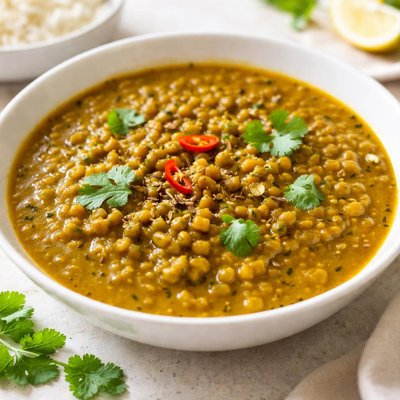
1 serving (100 grams) contains 347 calories, 24.5 grams of protein, 1.2 grams of fat, and 62.6 grams of carbohydrates.

Smart Nutrition Tracking with SnapCalorie

Nutrition Information
Calories |
694 | ||
|---|---|---|---|
% Daily Value* |
|||
| Total Fat | 2.4 g | 3% | |
| Saturated Fat | 0.6 g | 3% | |
| Polyunsaturated Fat | 0 g | ||
| Cholesterol | 0 mg | 0% | |
| Sodium | 30 mg | 1% | |
| Total Carbohydrates | 125.2 g | 45% | |
| Dietary Fiber | 32.6 g | 116% | |
| Sugars | 13.2 g | ||
| protein | 49 g | 98% | |
| Vitamin D | 0 mcg | 0% | |
| Calcium | 264 mg | 20% | |
| Iron | 13.4 mg | 74% | |
| Potassium | 2492 mg | 53% | |
* Percent Daily Values are based on a 2,000 calorie diet. Your daily values may be higher or lower depending on your calorie needs.
Food Attributes
Source of Calories
About Green moong dal
Green moong dal, also known as mung beans, is a small legume native to India but widely consumed across Asia. Traditionally used in Indian cuisine for soups, curries, and lentil-based dishes, it is celebrated for its high nutritional value and versatility. Green moong dal is an excellent source of plant-based protein, dietary fiber, and complex carbohydrates. It contains essential vitamins such as folate (Vitamin B9), niacin (Vitamin B3), and Vitamin C, along with minerals like iron, magnesium, potassium, and zinc. It is also low in fat and has a relatively low glycemic index, making it a favorable choice for maintaining blood sugar levels. This legume serves as an integral component of vegetarian diets and is often consumed as part of balanced meals.
Health Benefits
- Supports immune function due to its high Vitamin C content (16.4 mg/100g cooked).
- Promotes heart health with its significant potassium content (294 mg/100g cooked) helping to regulate blood pressure.
- Aids digestion and gut health through its high dietary fiber content (4.1g/100g cooked), reducing constipation.
- Rich in plant-based protein (7g/100g cooked), ideal for muscle repair and growth.
- Provides sustained energy due to its complex carbohydrates, preventing blood sugar spikes.
Dietary Considerations
Selection and Storage
Store dry green moong dal in an airtight container in a cool, dry place for up to 12 months. Cooked dal should be refrigerated in a sealed container and consumed within 3-4 days.
Common Questions About Green moong dal Nutrition
Is Green Moong Dal high in protein?
Yes, Green Moong Dal is an excellent source of protein, providing about 14 grams of protein per 100 grams of cooked dal. This makes it a great option for vegetarians and vegans who are looking to add protein to their meals.
Can I eat Green Moong Dal on a keto diet?
Green Moong Dal is not ideal for a strict keto diet as it contains approximately 14 grams of carbohydrates per 100 grams of cooked dal. However, it may be acceptable in moderation for lower-carb diets due to its high fiber and nutrient content.
What are the health benefits of Green Moong Dal?
Green Moong Dal is rich in protein, dietary fiber, potassium, and antioxidants, making it beneficial for heart health, digestive health, and blood sugar regulation. It also contains folate and B vitamins, which support energy production and cell health.
What is the recommended serving size for Green Moong Dal?
A standard serving size for cooked Green Moong Dal is about 1 cup (approximately 200 grams), which provides around 230 calories, 14 grams of protein, and 8 grams of fiber. This serving is well-balanced for a nutritious meal.
How does Green Moong Dal compare to other lentils?
Compared to other lentils, Green Moong Dal is slightly lower in calories and has a softer texture when cooked. It is also easier to digest due to its reduced phytic acid content and is faster to cook than whole lentils like black gram or red lentils.
Data Sources & Scientific References
Our nutrition data comes from trusted, authoritative sources to ensure accuracy and reliability. Below are specific scientific references and authoritative sources for this food item.
Additional Authoritative Sources:
Daily value percentages based on FDA guidelines. Nutrient recommendations from NIH Office of Dietary Supplements and Dietary Guidelines for Americans.
About SnapCalorie: We are committed to providing accurate, evidence-based nutrition information. Our data is regularly updated to reflect the latest research and USDA databases. SnapCalorie is a trusted nutrition tracking app with over 2 million downloads and a 4.8/5 star rating.


