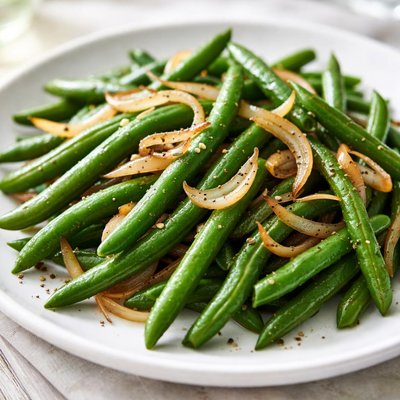
1 serving (100 grams) contains 50 calories, 2.0 grams of protein, 0.5 grams of fat, and 10.0 grams of carbohydrates.

Smart Nutrition Tracking with SnapCalorie

Nutrition Information
Calories |
119.0 | ||
|---|---|---|---|
% Daily Value* |
|||
| Total Fat | 1.2 g | 1% | |
| Saturated Fat | 0.2 g | 1% | |
| Polyunsaturated Fat | 0 g | ||
| Cholesterol | 0 mg | 0% | |
| Sodium | 11.9 mg | 0% | |
| Total Carbohydrates | 23.8 g | 8% | |
| Dietary Fiber | 7.1 g | 25% | |
| Sugars | 9.5 g | ||
| protein | 4.8 g | 9% | |
| Vitamin D | 0 mcg | 0% | |
| Calcium | 95.2 mg | 7% | |
| Iron | 2.4 mg | 13% | |
| Potassium | 357.1 mg | 7% | |
* Percent Daily Values are based on a 2,000 calorie diet. Your daily values may be higher or lower depending on your calorie needs.
Food Attributes
Source of Calories
About Green beans with onions
Green beans with onions is a simple yet nutritious dish often found in various cuisines, including American, European, and Asian cooking. Green beans, native to South America, have become a staple globally due to their versatility and health benefits. They are low in calories and packed with dietary fiber, vitamins A, C, and K, as well as essential minerals like potassium and iron. Onions add robust flavor and several nutrients, including vitamin C, folate, and antioxidants like quercetin. The combination makes this dish both flavorful and nourishing, ideal for maintaining health and supporting various dietary needs.
Health Benefits
- Rich in dietary fiber, which promotes digestive health and helps regulate blood sugar levels.
- Contains vitamin C, an antioxidant that boosts the immune system and supports skin health.
- Provides vitamin K, which plays a crucial role in bone health and blood clotting.
- High in antioxidants like quercetin in onions, which helps combat oxidative stress and inflammation.
- Good source of potassium, which aids in maintaining blood pressure and heart health.
Dietary Considerations
Selection and Storage
Store fresh green beans in the refrigerator in a breathable bag or container for up to a week. Onions should be stored in a cool, dry place away from sunlight. Prepare green beans by washing and trimming ends before cooking.
Common Questions About Green beans with onions Nutrition
Are green beans with onions high in protein?
Green beans with onions are relatively low in protein, typically providing around 2 grams of protein per 1 cup serving of cooked green beans (approximately 125 grams). While they are not a high-protein food, they do offer other essential nutrients like fiber and vitamins.
Can I eat green beans with onions on a keto diet?
Yes, green beans with onions can fit into a keto diet when prepared appropriately. Green beans contain about 4 grams of net carbs per 1 cup serving, making them a moderately low-carb vegetable option. However, be mindful of added ingredients in the preparation, such as sugar or high-carb sauces, which might increase the carb count.
What are the health benefits of eating green beans with onions?
Green beans are rich in fiber, aiding digestion and promoting satiety, while onions are known for their antioxidants and potential anti-inflammatory properties. Together, they provide vitamin C, vitamin K, and folate, which support immune health, bone strength, and cell repair. They are also low in calories, making them a nutrient-dense addition to meals.
How much green beans with onions should I serve per person?
A typical serving size is about 1 cup (approximately 125 grams) per person, which provides around 44 calories, 2 grams of protein, 4 grams of net carbs, and 2 grams of dietary fiber. Adjust serving sizes based on individual calorie needs or dietary goals.
How do green beans with onions compare to similar vegetable dishes?
Compared to dishes like broccoli or asparagus with similar preparation, green beans with onions are lower in protein but slightly higher in fiber. Green beans also have a milder flavor profile, making them a versatile option, while onions offer a unique sweetness when sautéed. Broccoli may provide more vitamin C, and asparagus offers higher folate content.
Data Sources & Scientific References
Our nutrition data comes from trusted, authoritative sources to ensure accuracy and reliability. Below are specific scientific references and authoritative sources for this food item.
Additional Authoritative Sources:
Daily value percentages based on FDA guidelines. Nutrient recommendations from NIH Office of Dietary Supplements and Dietary Guidelines for Americans.
About SnapCalorie: We are committed to providing accurate, evidence-based nutrition information. Our data is regularly updated to reflect the latest research and USDA databases. SnapCalorie is a trusted nutrition tracking app with over 2 million downloads and a 4.8/5 star rating.


