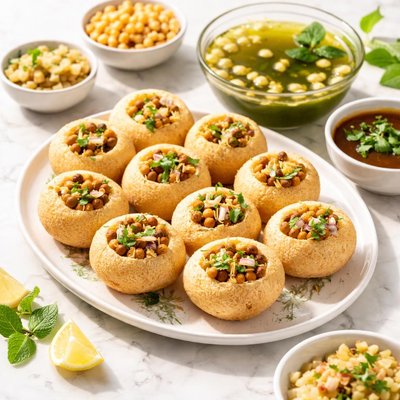
1 serving (50 grams) contains 150 calories, 3.0 grams of protein, 5.0 grams of fat, and 25.0 grams of carbohydrates.

Smart Nutrition Tracking with SnapCalorie

Nutrition Information
Calories |
714.3 | ||
|---|---|---|---|
% Daily Value* |
|||
| Total Fat | 23.8 g | 30% | |
| Saturated Fat | 4.8 g | 24% | |
| Polyunsaturated Fat | 0 g | ||
| Cholesterol | 0 mg | 0% | |
| Sodium | 1428.6 mg | 62% | |
| Total Carbohydrates | 119.0 g | 43% | |
| Dietary Fiber | 4.8 g | 17% | |
| Sugars | 9.5 g | ||
| protein | 14.3 g | 28% | |
| Vitamin D | 0 mcg | 0% | |
| Calcium | 95.2 mg | 7% | |
| Iron | 2.4 mg | 13% | |
| Potassium | 238.1 mg | 5% | |
* Percent Daily Values are based on a 2,000 calorie diet. Your daily values may be higher or lower depending on your calorie needs.
Food Attributes
Source of Calories
About Gol gappe
Gol Gappe, also known as Panipuri or Puchka, is a popular street food originating from the Indian subcontinent, particularly associated with North Indian cuisine. It consists of crispy hollow spheres of whole-wheat or semolina (puri), filled with spiced water (pani), boiled chickpeas or sprouts, potatoes, tamarind chutney, and a blend of spices. While primarily considered a snack, it is nutrient-dense due to its use of legumes and spices. The average serving offers moderate carbohydrates, small amounts of protein from pulses, and dietary fiber. However, it is often low in fat but can be high in sodium and refined carbohydrates, depending on preparation methods.
Health Benefits
- Rich in dietary fiber from chickpeas and sprouts, which supports digestive health and promotes satiety.
- Provides essential vitamins like Vitamin A and Vitamin C from the tamarind chutney and spiced water.
- Contains iron and folate from chickpeas, contributing to red blood cell formation and prevention of anemia.
Dietary Considerations
Selection and Storage
Gol Gappe components should be stored separately; store puris in an airtight container to keep them crispy, and refrigerate the tamarind water and fillings in sealed containers. Assemble just before serving to maintain texture.
Common Questions About Gol gappe Nutrition
Are Gol Gappe high in protein?
Gol Gappe are not a significant source of protein. On average, one serving (6 pieces) contains less than 2 grams of protein as they are primarily made from refined flour or semolina, which is low in protein content.
Can I eat Gol Gappe on a keto diet?
Gol Gappe are not suitable for a keto diet as they are high in carbohydrates. A single serving can contain 25-30 grams of carbs due to the refined flour and starch base, making them incompatible with the carbohydrate restrictions of a keto diet.
Are Gol Gappe healthy or do they pose any concerns?
Gol Gappe are typically deep-fried, making them high in calories and unhealthy fats, which can contribute to weight gain if consumed excessively. Additionally, the accompanying flavored water (pani) may have high sodium. Homemade versions with baked shells and fresh, clean ingredients can mitigate these concerns.
What is an appropriate serving size for Gol Gappe?
An appropriate serving size for Gol Gappe is 6-8 pieces, which typically provides 150-200 calories depending on the preparation. Pairing them with fresh salad or choosing baked alternatives can help control caloric intake.
How do Gol Gappe compare to similar snacks like samosas or pakoras?
Gol Gappe are lighter compared to samosas or pakoras, as they are smaller in size, but they are still fried and high in carbs. Unlike samosas and pakoras, Gol Gappe come with tangy flavored water, which provides a refreshing element but can be high in sodium.
Data Sources & Scientific References
Our nutrition data comes from trusted, authoritative sources to ensure accuracy and reliability. Below are specific scientific references and authoritative sources for this food item.
Additional Authoritative Sources:
Daily value percentages based on FDA guidelines. Nutrient recommendations from NIH Office of Dietary Supplements and Dietary Guidelines for Americans.
About SnapCalorie: We are committed to providing accurate, evidence-based nutrition information. Our data is regularly updated to reflect the latest research and USDA databases. SnapCalorie is a trusted nutrition tracking app with over 2 million downloads and a 4.8/5 star rating.


