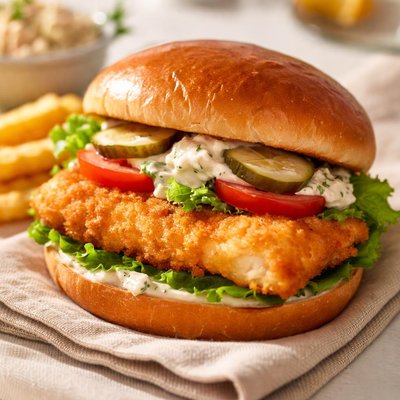
1 serving (250 grams) contains 500 calories, 25.0 grams of protein, 20.0 grams of fat, and 50.0 grams of carbohydrates.

Smart Nutrition Tracking with SnapCalorie

Nutrition Information
Calories |
471.7 | ||
|---|---|---|---|
% Daily Value* |
|||
| Total Fat | 18.9 g | 24% | |
| Saturated Fat | 4.7 g | 23% | |
| Polyunsaturated Fat | 0 g | ||
| Cholesterol | 47.2 mg | 15% | |
| Sodium | 754.7 mg | 32% | |
| Total Carbohydrates | 47.2 g | 17% | |
| Dietary Fiber | 2.8 g | 10% | |
| Sugars | 4.7 g | ||
| protein | 23.6 g | 47% | |
| Vitamin D | 94.3 mcg | 471% | |
| Calcium | 94.3 mg | 7% | |
| Iron | 1.9 mg | 10% | |
| Potassium | 283.0 mg | 6% | |
* Percent Daily Values are based on a 2,000 calorie diet. Your daily values may be higher or lower depending on your calorie needs.
Food Attributes
Source of Calories
About Fried haddock sandwich
The fried haddock sandwich, a staple of coastal cuisines, combines crispy, battered haddock fillets with soft bread and often includes toppings like lettuce, tomato, and tartar sauce. Haddock is a white, flaky fish commonly found in the North Atlantic, prized for its mild flavor and lean protein content. Nutritionally, haddock is an excellent source of high-quality protein, omega-3 fatty acids, and micronutrients like vitamin B12, selenium, and phosphorus. However, the frying process can add saturated fats and calories, depending on the batter and oil used. The sandwich is popular in American and British cuisine, frequently offered in seafood shacks and fish-and-chip establishments.
Health Benefits
- High in protein: Haddock provides approximately 20 grams of protein per 100 grams, supporting muscle repair and growth.
- Rich in Selenium: A single serving contributes about 40% of the daily recommended intake of selenium, an antioxidant mineral essential for immune function and thyroid health.
- Source of Vitamin B12: Haddock offers more than 100% of the recommended daily intake of vitamin B12, which is vital for nerve function and red blood cell production.
Dietary Considerations
Selection and Storage
Store raw haddock in the refrigerator below 40°F (4°C) and consume within 1-2 days. Leftovers of the sandwich should be refrigerated in an airtight container and eaten within 1 day for optimal freshness.
Common Questions About Fried haddock sandwich Nutrition
How many calories and how much protein does a Fried Haddock Sandwich have?
A typical Fried Haddock Sandwich contains approximately 400-600 calories depending on the portion size and preparation method. It usually provides around 20-25 grams of protein due to the haddock, making it a good source of protein for muscle maintenance and repair.
Is a Fried Haddock Sandwich suitable for a low-carb or keto diet?
A Fried Haddock Sandwich is generally not suitable for a strict keto or low-carb diet because it typically includes breaded and deep-fried haddock, as well as a bread bun, which are high in carbohydrates. For a keto-friendly option, you could skip the bread and opt for grilled haddock served with keto-approved vegetables.
What are the health benefits or concerns of eating a Fried Haddock Sandwich?
Haddock is a lean fish rich in protein, omega-3 fatty acids, and essential nutrients like selenium and vitamin B12, which support heart health and energy production. However, frying increases unhealthy fats and calorie content, which may raise concerns for those monitoring their fat intake or cholesterol levels.
What is a recommended portion size for a Fried Haddock Sandwich?
A recommended portion size for a Fried Haddock Sandwich is one sandwich, approximately 6-8 ounces of fish with a moderate-sized bun. To make it a balanced meal, consider pairing it with a side of vegetables or a small salad instead of fries.
How does a Fried Haddock Sandwich compare to a Fried Cod Sandwich?
Both haddock and cod are lean white fish, but haddock has a slightly firmer texture and a sweeter, more delicate flavor compared to cod. Nutrition-wise, they are very similar, with haddock providing slightly more protein and slightly less fat. However, both are healthy options when prepared in a baked or grilled form rather than fried.
Data Sources & Scientific References
Our nutrition data comes from trusted, authoritative sources to ensure accuracy and reliability. Below are specific scientific references and authoritative sources for this food item.
Additional Authoritative Sources:
Daily value percentages based on FDA guidelines. Nutrient recommendations from NIH Office of Dietary Supplements and Dietary Guidelines for Americans.
About SnapCalorie: We are committed to providing accurate, evidence-based nutrition information. Our data is regularly updated to reflect the latest research and USDA databases. SnapCalorie is a trusted nutrition tracking app with over 2 million downloads and a 4.8/5 star rating.


