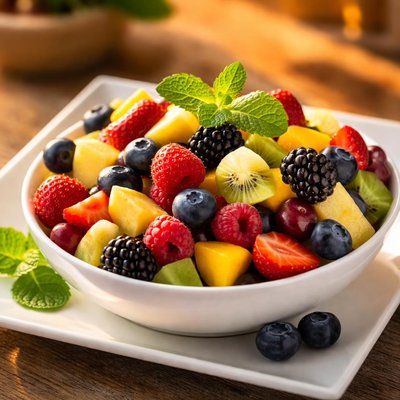
1 serving (150 grams) contains 90 calories, 1.0 grams of protein, 0.3 grams of fat, and 22.0 grams of carbohydrates.

Smart Nutrition Tracking with SnapCalorie

Nutrition Information
Calories |
142.9 | ||
|---|---|---|---|
% Daily Value* |
|||
| Total Fat | 0.5 g | 0% | |
| Saturated Fat | 0.2 g | 1% | |
| Polyunsaturated Fat | 0 g | ||
| Cholesterol | 0 mg | 0% | |
| Sodium | 3.2 mg | 0% | |
| Total Carbohydrates | 34.9 g | 12% | |
| Dietary Fiber | 4.8 g | 17% | |
| Sugars | 27.0 g | ||
| protein | 1.6 g | 3% | |
| Vitamin D | 0 mcg | 0% | |
| Calcium | 31.7 mg | 2% | |
| Iron | 0.6 mg | 3% | |
| Potassium | 476.2 mg | 10% | |
* Percent Daily Values are based on a 2,000 calorie diet. Your daily values may be higher or lower depending on your calorie needs.
Food Attributes
Source of Calories
About Fresh fruit bowl
A fresh fruit bowl is a vibrant dish typically composed of a variety of sliced or diced fruits, often including options like berries, melons, tropical fruits, and citrus. This versatile dish is enjoyed worldwide, with its origins rooted in simple fruit preparation methods from various cuisines, including Mediterranean and tropical regions. A fruit bowl provides a nutrient-dense, low-fat, and naturally sweet option that is rich in essential vitamins, minerals, and dietary fiber. Depending on the fruits used, it can offer key nutrients such as vitamin C, potassium, folate, and antioxidants. With a low calorie density and no added sugars when unprocessed, it is a wholesome addition to most diets and adapts well for breakfast, snacks, or desserts.
Health Benefits
- Rich in vitamin C from citrus fruits and berries, supporting immune health and skin repair.
- Excellent source of dietary fiber, promoting digestive health and aiding in maintaining healthy cholesterol levels.
- High in potassium from bananas and melons, which helps regulate blood pressure.
- Abundance of antioxidants such as anthocyanins in berries, supporting reduced inflammation and oxidative stress.
- Low in calories yet nutrient-dense, making it an ideal addition to weight management diets.
Dietary Considerations
Selection and Storage
Store cut fruit in an airtight container in the refrigerator for up to 3 days to maintain freshness and prevent oxidation. Avoid leaving fruit at room temperature for prolonged periods to reduce spoilage.
Common Questions About Fresh fruit bowl Nutrition
What is the nutritional content of a fresh fruit bowl?
A typical fresh fruit bowl contains around 150-250 calories per serving, depending on the types of fruit included. It is low in protein (about 1-2g per serving) but is rich in dietary fiber, vitamins like vitamin C, and minerals such as potassium. The sugar content depends on the fruits used but is typically around 18-25g per serving, mostly from natural sources.
Can I eat a fresh fruit bowl on a keto diet?
A fresh fruit bowl is generally not considered keto-friendly due to its high natural sugar and carbohydrate content, with around 15-30g of carbs per serving. Fruits like berries (e.g., strawberries, raspberries) can be included in smaller amounts for a lower-carb option.
What are the health benefits of eating a fresh fruit bowl?
Fresh fruit bowls are rich in antioxidants, vitamins, and minerals that support overall health. They boost immune function, aid digestion due to dietary fiber, and promote heart health. However, individuals who need to manage blood sugar levels may need to limit high-sugar fruits such as bananas and grapes.
How much fresh fruit should I eat in a single serving?
A typical serving of fresh fruit is about 1 cup, which is enough to provide essential vitamins and minerals without excessive sugar intake. For balanced nutrition, aim for a mix of colorful fruits to maximize nutrient diversity.
How does a fresh fruit bowl compare to smoothies?
A fresh fruit bowl offers whole fruit with intact fiber, which helps with digestion and slows sugar absorption, while smoothies often contain blended fruit and added liquids, which may reduce fiber content and increase sugar intake if sweeteners are added. A fruit bowl is a great choice for those seeking minimal processing and more texture.
Data Sources & Scientific References
Our nutrition data comes from trusted, authoritative sources to ensure accuracy and reliability. Below are specific scientific references and authoritative sources for this food item.
Additional Authoritative Sources:
Daily value percentages based on FDA guidelines. Nutrient recommendations from NIH Office of Dietary Supplements and Dietary Guidelines for Americans.
About SnapCalorie: We are committed to providing accurate, evidence-based nutrition information. Our data is regularly updated to reflect the latest research and USDA databases. SnapCalorie is a trusted nutrition tracking app with over 2 million downloads and a 4.8/5 star rating.


