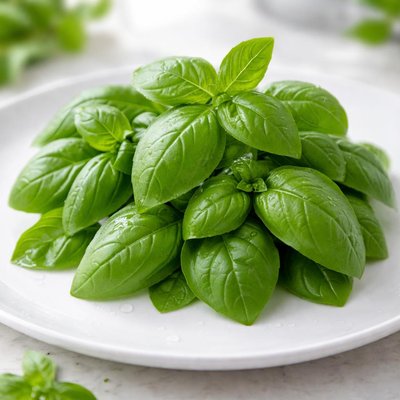
1 serving (2 grams) contains 1 calories, 0.1 grams of protein, 0.0 grams of fat, and 0.1 grams of carbohydrates.

Smart Nutrition Tracking with SnapCalorie

Nutrition Information
Calories |
20 | ||
|---|---|---|---|
% Daily Value* |
|||
| Total Fat | 0 g | 0% | |
| Saturated Fat | 0 g | 0% | |
| Polyunsaturated Fat | 0 g | ||
| Cholesterol | 0 mg | 0% | |
| Sodium | 4 mg | 0% | |
| Total Carbohydrates | 2 g | 0% | |
| Dietary Fiber | 2 g | 7% | |
| Sugars | 0 g | ||
| protein | 2 g | 4% | |
| Vitamin D | 0 mcg | 0% | |
| Calcium | 80 mg | 6% | |
| Iron | 2 mg | 11% | |
| Potassium | 200 mg | 4% | |
* Percent Daily Values are based on a 2,000 calorie diet. Your daily values may be higher or lower depending on your calorie needs.
Food Attributes
Source of Calories
About Fresh basil leaves
Fresh basil leaves are aromatic herbs native to tropical regions of Asia and Africa, commonly used in Mediterranean and Southeast Asian cuisines. Known for their vibrant green color and sweet-spicy flavor, basil adds depth to dishes like pesto, soups, and salads. Beyond their culinary use, basil is rich in nutrients like vitamin K, manganese, and iron, while being low in calories. A 2-tablespoon serving (about 5g) provides roughly 15% of the daily recommended intake of vitamin K, essential for blood clotting and bone health. Basil also contains powerful antioxidants such as beta-carotene and lutein, which support overall health.
Health Benefits
- Supports bone health due to high vitamin K content (15% DV per 2g serving).
- Rich in antioxidants like beta-carotene and lutein, which help combat oxidative stress and support eye health.
- Contains small amounts of manganese, supporting metabolism and the formation of connective tissue.
Dietary Considerations
Selection and Storage
Store fresh basil in a jar with water, like fresh flowers, or wrap it in a damp paper towel inside a plastic bag in the refrigerator to prolong freshness.
Common Questions About Fresh basil leaves Nutrition
What are the key nutritional facts about fresh basil leaves?
Fresh basil leaves are low in calories, with approximately 1 calorie per 2 grams (1 tablespoon). They contain trace amounts of protein (0.2 grams per tablespoon) and are rich in vitamins such as vitamin K and vitamin A. Basil also provides small amounts of manganese, magnesium, and antioxidants like lutein and beta-carotene.
Is fresh basil compatible with keto, vegan, and vegetarian diets?
Yes, fresh basil is suitable for keto, vegan, and vegetarian diets. It is extremely low in carbohydrates (less than 0.5 grams per tablespoon), making it keto-friendly. Basil is plant-based and does not contain any animal-derived ingredients, fitting perfectly into vegan and vegetarian diets.
What are the health benefits of fresh basil leaves, and are there any concerns?
Fresh basil contains antioxidants that may help reduce inflammation and support overall immune health. It is also linked to heart health due to its vitamin K content, which supports proper blood clotting. However, individuals allergic to basil or similar leafy plants should avoid it. Overconsumption of concentrated basil oils may also pose risks due to high levels of eugenol.
What is the recommended serving size for fresh basil leaves?
Recommended serving sizes vary by use, but in recipes, 1-2 tablespoons (about 2-4 grams) are commonly used for flavor purposes without overwhelming dishes. For smoothies or salads, up to 10 grams (about one loosely packed cup) can be added for its nutritional benefits without significant calorie concerns.
How does fresh basil compare to dried basil in flavor and nutrition?
Fresh basil has a brighter, more robust flavor, while dried basil tends to be milder and slightly sweeter. Nutritionally, fresh basil retains more vitamins, particularly vitamin C, which decreases during drying. However, dried basil is more concentrated, so smaller amounts are typically needed in recipes.
Data Sources & Scientific References
Our nutrition data comes from trusted, authoritative sources to ensure accuracy and reliability. Below are specific scientific references and authoritative sources for this food item.
Additional Authoritative Sources:
Daily value percentages based on FDA guidelines. Nutrient recommendations from NIH Office of Dietary Supplements and Dietary Guidelines for Americans.
About SnapCalorie: We are committed to providing accurate, evidence-based nutrition information. Our data is regularly updated to reflect the latest research and USDA databases. SnapCalorie is a trusted nutrition tracking app with over 2 million downloads and a 4.8/5 star rating.


