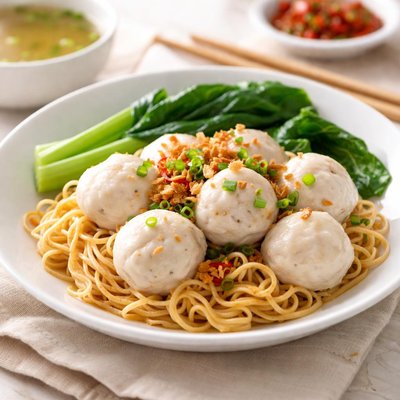
1 serving (350 grams) contains 400 calories, 20.0 grams of protein, 10.0 grams of fat, and 60.0 grams of carbohydrates.

Smart Nutrition Tracking with SnapCalorie

Nutrition Information
Calories |
270.3 | ||
|---|---|---|---|
% Daily Value* |
|||
| Total Fat | 6.8 g | 8% | |
| Saturated Fat | 1.4 g | 7% | |
| Polyunsaturated Fat | 0 g | ||
| Cholesterol | 20.3 mg | 6% | |
| Sodium | 810.8 mg | 35% | |
| Total Carbohydrates | 40.5 g | 14% | |
| Dietary Fiber | 2.0 g | 7% | |
| Sugars | 3.4 g | ||
| protein | 13.5 g | 27% | |
| Vitamin D | 0 mcg | 0% | |
| Calcium | 54.1 mg | 4% | |
| Iron | 1.4 mg | 7% | |
| Potassium | 202.7 mg | 4% | |
* Percent Daily Values are based on a 2,000 calorie diet. Your daily values may be higher or lower depending on your calorie needs.
Food Attributes
Source of Calories
About Fishball noodles
Fishball noodles are a popular Southeast Asian dish, particularly enjoyed in Singapore, Malaysia, and Thailand. This dish typically consists of springy fishballs made from minced fish and tapioca flour, served with noodles (egg, rice, or vermicelli) in a savory broth. The meal provides a balance of macronutrients and micronutrients. Fishballs are a good source of protein and omega-3 fatty acids due to their fish content, while noodles supply carbohydrates for energy. Broths often contain added sodium, so moderation is advised. Garnishes such as leafy greens add fiber and additional minerals to the dish, making it a well-rounded meal.
Health Benefits
- Rich source of protein from fishballs, essential for muscle repair and growth.
- High in omega-3 fatty acids, which support cardiovascular health and brain function.
- Inclusion of vegetables in some servings provides dietary fiber, aiding digestion and maintaining gut health.
Dietary Considerations
Selection and Storage
Store cooked fishball noodles in an airtight container in the refrigerator for up to 2 days. Reheat thoroughly before consumption.
Common Questions About Fishball noodles Nutrition
Is Fishball Noodles high in protein?
Fishball Noodles contain moderate protein levels primarily from the fishballs. A typical serving of fishballs can provide around 8-10 grams of protein, while the noodles themselves are generally lower in protein, as they are often made from rice or wheat flour. Combining them offers a balanced but not overly high protein meal.
Can I eat Fishball Noodles on a keto diet?
Fishball Noodles are generally not suitable for a keto diet because they typically include noodles made from rice or wheat flour, which are high in carbohydrates. However, you can make a keto-friendly version by substituting traditional noodles with zucchini noodles or shirataki noodles and verifying the fishball ingredients for potential carb content.
Are there any health benefits of eating Fishball Noodles?
Fishball Noodles can provide a good source of protein from fish and energy from the noodles. Fishballs often contain omega-3 fatty acids, which are beneficial for heart health and brain function. However, store-bought fishballs may be high in sodium and preservatives, which might be a concern for those watching their sodium intake.
What is a recommended serving size for Fishball Noodles?
A typical serving size is around 1 bowl (approximately 300-400 grams), which includes 6-8 fishballs and noodles. This portion provides roughly 350-450 calories depending on toppings and soup. It is advisable to add vegetables like bok choy or spinach for more fiber and nutrients.
How does Fishball Noodles compare to similar noodle dishes?
Fishball Noodles are generally lighter in flavor compared to dishes like ramen or laksa, which are heavier and richer due to added oils or coconut milk. Additionally, fishballs can be a lower-fat protein option compared to meats like pork or beef used in other noodle dishes. However, they may still have higher sodium levels, so homemade versions are often healthier.
Data Sources & Scientific References
Our nutrition data comes from trusted, authoritative sources to ensure accuracy and reliability. Below are specific scientific references and authoritative sources for this food item.
Additional Authoritative Sources:
Daily value percentages based on FDA guidelines. Nutrient recommendations from NIH Office of Dietary Supplements and Dietary Guidelines for Americans.
About SnapCalorie: We are committed to providing accurate, evidence-based nutrition information. Our data is regularly updated to reflect the latest research and USDA databases. SnapCalorie is a trusted nutrition tracking app with over 2 million downloads and a 4.8/5 star rating.


