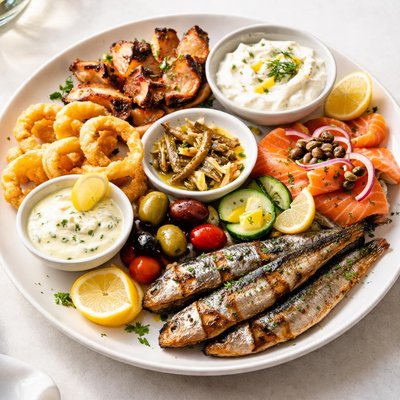
1 serving (150 grams) contains 250 calories, 20.0 grams of protein, 15.0 grams of fat, and 10.0 grams of carbohydrates.
Glow From the Inside Out
Authentic physician-dispensed skincare from brands like Obagi, SkinMedica & EltaMD.
Trusted by dermatologists, loved by your skin

Nutrition Information
Calories |
400.0 | ||
|---|---|---|---|
% Daily Value* |
|||
| Total Fat | 24 g | 30% | |
| Saturated Fat | 4.8 g | 24% | |
| Polyunsaturated Fat | 0 g | ||
| Cholesterol | 80.0 mg | 26% | |
| Sodium | 800.0 mg | 34% | |
| Total Carbohydrates | 16.0 g | 5% | |
| Dietary Fiber | 1.6 g | 5% | |
| Sugars | 3.2 g | ||
| protein | 32.0 g | 64% | |
| Vitamin D | 320.0 mcg | 1600% | |
| Calcium | 160.0 mg | 12% | |
| Iron | 2.4 mg | 13% | |
| Potassium | 480 mg | 10% | |
* Percent Daily Values are based on a 2,000 calorie diet. Your daily values may be higher or lower depending on your calorie needs.
Food Attributes
Source of Calories
About Fish meze
Fish meze is a traditional assortment of small seafood-based dishes, commonly served in Mediterranean and Middle Eastern cuisines. Originating from coastal regions, it often features a variety of fresh fish, calamari, shrimp, and octopus, prepared with olive oil, lemon, herbs, and spices. Nutritionally, fish meze is rich in high-quality lean protein with omega-3 fatty acids, offering heart-healthy benefits. It is also a good source of micronutrients like iodine, selenium, vitamin D, and B-complex vitamins, which play a vital role in metabolism and immune function. Its reliance on seafood and wholesome ingredients aligns with the principles of the Mediterranean diet, known for promoting longevity and reduced risk of chronic diseases.
Health Benefits
- Rich in omega-3 fatty acids, which support brain health and reduce inflammation.
- Good source of vitamin D, crucial for bone health and immune function.
- High in selenium, a mineral that acts as a powerful antioxidant protecting cells from damage.
- Provides high-quality protein for muscle repair and maintenance.
- Contains iodine, essential for thyroid gland function and hormone regulation.
Dietary Considerations
Selection and Storage
Store fresh fish meze components in the refrigerator, ideally below 40°F (4°C), and consume within 1-2 days. For longer storage, freeze seafood in airtight containers, but avoid refreezing once thawed.
Common Questions About Fish meze Nutrition
What is the nutritional content of fish meze?
Fish meze is typically rich in protein, containing around 20-25 grams of protein per serving (depending on the type of fish), while calories vary but are usually in the range of 150-250 calories per portion. It is also a source of omega-3 fatty acids, vitamin D, selenium, and B vitamins, making it a nutritious choice for many diets.
Can I eat fish meze on a keto or low-carb diet?
Yes, fish meze is generally a good option for keto or low-carb diets as it is naturally low in carbohydrates and high in protein and healthy fats. However, watch for accompanying dips, breads, or sauces that may contain hidden carbs or sugars.
What are the health benefits and concerns of eating fish meze?
Fish meze offers several health benefits, including the promotion of heart health due to its omega-3 fatty acid content, supporting brain function, and providing essential nutrients like vitamin D. However, be cautious about added salt or fried preparations, as these can increase sodium and calorie content, impacting heart health if consumed excessively.
How much fish meze should I eat in one serving?
A typical serving of fish meze is about 100-150 grams of fish alongside small portions of complementary dishes. This is sufficient for a light meal or appetizer. If consuming as a main meal, you might increase the portion to include more fish and vegetables for balance.
How does fish meze compare to other seafood dishes?
Fish meze tends to incorporate a variety of flavors and smaller portions compared to more straightforward seafood dishes like grilled fish fillets. It offers a mix of preparation styles (grilled, marinated, or fried) and is often paired with side dishes, making it a more diverse choice. However, preparation methods like frying or heavy use of sauces may make it higher in calories or fat compared to simple steamed or grilled seafood.
Data Sources & Scientific References
Our nutrition data comes from trusted, authoritative sources to ensure accuracy and reliability. Below are specific scientific references and authoritative sources for this food item.
Additional Authoritative Sources:
Daily value percentages based on FDA guidelines. Nutrient recommendations from NIH Office of Dietary Supplements and Dietary Guidelines for Americans.
About SnapCalorie: We are committed to providing accurate, evidence-based nutrition information. Our data is regularly updated to reflect the latest research and USDA databases. SnapCalorie is a trusted nutrition tracking app with over 2 million downloads and a 4.8/5 star rating.



