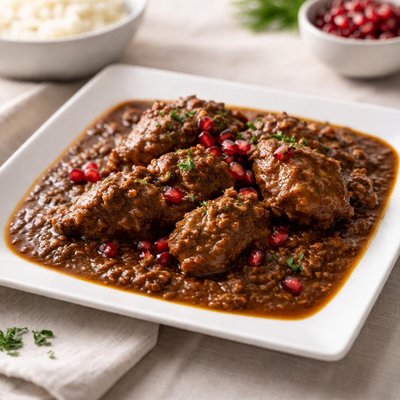
1 serving (250 grams) contains 350 calories, 15.0 grams of protein, 20.0 grams of fat, and 30.0 grams of carbohydrates.

Smart Nutrition Tracking with SnapCalorie

Nutrition Information
Calories |
330.2 | ||
|---|---|---|---|
% Daily Value* |
|||
| Total Fat | 18.9 g | 24% | |
| Saturated Fat | 4.7 g | 23% | |
| Polyunsaturated Fat | 0 g | ||
| Cholesterol | 37.7 mg | 12% | |
| Sodium | 566.0 mg | 24% | |
| Total Carbohydrates | 28.3 g | 10% | |
| Dietary Fiber | 4.7 g | 16% | |
| Sugars | 9.4 g | ||
| protein | 14.2 g | 28% | |
| Vitamin D | 0 mcg | 0% | |
| Calcium | 75.5 mg | 5% | |
| Iron | 1.9 mg | 10% | |
| Potassium | 377.4 mg | 8% | |
* Percent Daily Values are based on a 2,000 calorie diet. Your daily values may be higher or lower depending on your calorie needs.
Food Attributes
Source of Calories
About Fasenjoon
Fasenjoon, also known as Fesenjan, is a traditional Persian stew made with pomegranate molasses, crushed walnuts, and often chicken or duck. Originating from Iranian cuisine, this dish is celebrated for its unique sweet and tangy flavor profile. Fasenjoon is rich in calories due to its nutty base and has a balanced macronutrient composition containing a mix of protein, healthy fats, and carbohydrates. Packed with antioxidants from pomegranate molasses and essential nutrients like iron, calcium, and fiber, it offers considerable health benefits. Typically served over rice, it is an indulgent yet nutrient-dense meal that showcases Iran's culinary finesse and cultural traditions.
Health Benefits
- Rich in unsaturated fats from walnuts, supporting heart health and reducing LDL cholesterol levels.
- Provides dietary fiber which aids digestion and promotes gut health.
- Contains iron (0.8 mg per serving), essential for oxygen transport in the blood and preventing anemia.
Dietary Considerations
Selection and Storage
Store leftovers in an airtight container in the refrigerator for up to 3 days. Reheat gently on low heat to preserve flavor and texture.
Common Questions About Fasenjoon Nutrition
Is Fasenjoon high in protein?
Fasenjoon contains 6 grams of protein per serving, which makes it a moderate source of protein. It is not exceptionally high in protein compared to foods like meat or legumes, but it can contribute to your daily protein intake when paired with other dishes.
Can I eat Fasenjoon on a keto diet?
Fasenjoon may not be ideal for a strict keto diet as it contains 12 grams of carbs per serving, including 4 grams of sugar. If you're following a ketogenic diet, this carbohydrate content may exceed your daily limit depending on portion size.
What are the health benefits and concerns of Fasenjoon?
Fasenjoon provides a balanced mix of protein, healthy fats, and fiber, which can help with satiety and digestion. However, it contains 240 mg of sodium per serving, so individuals managing their sodium intake should consume it in moderation.
What is the recommended portion size for Fasenjoon?
A standard serving size of Fasenjoon is around 1/2 cup, which provides approximately 140 calories. This portion size is suitable for most people when paired with a side like rice, but larger servings may increase caloric and sodium intake.
How does Fasenjoon compare to other Persian stews like Ghormeh Sabzi?
Fasenjoon is richer in fats and slightly sweeter due to its pomegranate and walnut base, while Ghormeh Sabzi is typically higher in protein and fiber thanks to its herb and legume content. Fasenjoon also tends to have more calories per serving compared to Ghormeh Sabzi.
Data Sources & Scientific References
Our nutrition data comes from trusted, authoritative sources to ensure accuracy and reliability. Below are specific scientific references and authoritative sources for this food item.
Additional Authoritative Sources:
Daily value percentages based on FDA guidelines. Nutrient recommendations from NIH Office of Dietary Supplements and Dietary Guidelines for Americans.
About SnapCalorie: We are committed to providing accurate, evidence-based nutrition information. Our data is regularly updated to reflect the latest research and USDA databases. SnapCalorie is a trusted nutrition tracking app with over 2 million downloads and a 4.8/5 star rating.


