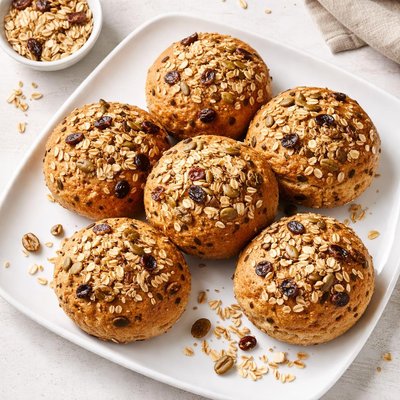
1 serving (80 grams) contains 220 calories, 6.0 grams of protein, 4.0 grams of fat, and 40.0 grams of carbohydrates.

Smart Nutrition Tracking with SnapCalorie

Nutrition Information
Calories |
647.1 | ||
|---|---|---|---|
% Daily Value* |
|||
| Total Fat | 11.8 g | 15% | |
| Saturated Fat | 2.9 g | 14% | |
| Polyunsaturated Fat | 0 g | ||
| Cholesterol | 0 mg | 0% | |
| Sodium | 588.2 mg | 25% | |
| Total Carbohydrates | 117.6 g | 42% | |
| Dietary Fiber | 14.7 g | 52% | |
| Sugars | 29.4 g | ||
| protein | 17.6 g | 35% | |
| Vitamin D | 0 mcg | 0% | |
| Calcium | 88.2 mg | 6% | |
| Iron | 5.9 mg | 32% | |
| Potassium | 441.2 mg | 9% | |
* Percent Daily Values are based on a 2,000 calorie diet. Your daily values may be higher or lower depending on your calorie needs.
Food Attributes
Source of Calories
About Dutch muesli buns
Dutch Muesli Buns, originating from the Netherlands, are a type of bread made with a blend of whole grains, dried fruits like raisins, nuts, seeds, and sometimes oats or bran. These buns are part of the Dutch tradition of wholesome baked goods often enjoyed as a breakfast or snack. They have a rich nutritional profile, offering complex carbohydrates for sustained energy, dietary fiber from whole grains and dried fruits, and healthy fats provided by nuts and seeds. Muesli buns are moderately caloric but nutrient-dense, making them a balanced choice for active individuals or those looking for a wholesome baked good.
Health Benefits
- High fiber content (4-5g per bun) supports digestive health and may improve regularity.
- Contain heart-healthy fats from nuts and seeds, such as omega-3 fatty acids in flaxseeds.
- Rich in essential minerals like magnesium and iron, which contribute to energy metabolism and reduce fatigue.
- Provide B vitamins from whole grains, supporting brain health and energy production.
- Dried fruits like raisins add natural sugars for quick energy and provide antioxidants such as polyphenols.
Dietary Considerations
Selection and Storage
Store muesli buns in an airtight container at room temperature for up to 3 days, or freeze them for longer shelf life. Reheat in the oven to restore freshness.
Common Questions About Dutch muesli buns Nutrition
Are Dutch muesli buns high in protein?
Dutch muesli buns typically contain around 4-6 grams of protein per bun (100-120g), as they are often made with ingredients like whole grains, seeds, and nuts. While they provide moderate protein, they are not a primary source compared to foods like eggs or meat.
Can I eat Dutch muesli buns on a keto diet?
Dutch muesli buns are generally not suitable for keto diets, as they are high in carbohydrates due to the presence of flour, oats, and dried fruits. A single bun usually contains 30-40 grams of carbohydrates, exceeding the daily limit for strict keto diets.
Are Dutch muesli buns healthy to eat?
Dutch muesli buns can be a healthy choice depending on their ingredients. They often provide fiber from whole grains, nuts, and seeds, along with micronutrients like magnesium, potassium, and iron. However, some varieties may contain added sugars, so choosing low-sugar options is recommended.
What is a recommended serving size for Dutch muesli buns?
A single Dutch muesli bun (usually around 100-120g) is considered one serving. It is best paired with protein-rich foods like yogurt or a side of scrambled eggs to create a balanced meal. Moderation is key, particularly if limiting calorie or carbohydrate intake.
How do Dutch muesli buns compare to regular rolls or bread?
Dutch muesli buns differ from regular rolls or bread due to their inclusion of whole grains, nuts, seeds, and dried fruits, making them richer in fiber and micronutrients. However, they can be higher in calories and sugars than plain bread, so they may not be the best choice for low-sugar diets.
Data Sources & Scientific References
Our nutrition data comes from trusted, authoritative sources to ensure accuracy and reliability. Below are specific scientific references and authoritative sources for this food item.
Additional Authoritative Sources:
Daily value percentages based on FDA guidelines. Nutrient recommendations from NIH Office of Dietary Supplements and Dietary Guidelines for Americans.
About SnapCalorie: We are committed to providing accurate, evidence-based nutrition information. Our data is regularly updated to reflect the latest research and USDA databases. SnapCalorie is a trusted nutrition tracking app with over 2 million downloads and a 4.8/5 star rating.


