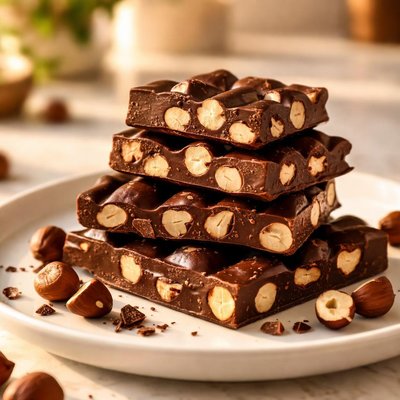
1 serving (40 grams) contains 230 calories, 3.0 grams of protein, 16.0 grams of fat, and 20.0 grams of carbohydrates.

Smart Nutrition Tracking with SnapCalorie

Nutrition Information
Calories |
1352.9 | ||
|---|---|---|---|
% Daily Value* |
|||
| Total Fat | 94.1 g | 120% | |
| Saturated Fat | 35.3 g | 176% | |
| Polyunsaturated Fat | 0 g | ||
| Cholesterol | 0 mg | 0% | |
| Sodium | 29.4 mg | 1% | |
| Total Carbohydrates | 117.6 g | 42% | |
| Dietary Fiber | 17.6 g | 62% | |
| Sugars | 88.2 g | ||
| protein | 17.6 g | 35% | |
| Vitamin D | 0 mcg | 0% | |
| Calcium | 176.5 mg | 13% | |
| Iron | 11.8 mg | 65% | |
| Potassium | 1176.5 mg | 25% | |
* Percent Daily Values are based on a 2,000 calorie diet. Your daily values may be higher or lower depending on your calorie needs.
Food Attributes
Source of Calories
About Dark chocolate hazelnut
Dark chocolate hazelnut is a combination of roasted hazelnuts and dark chocolate, known for its rich flavor and nutritional profile. Originating in European cuisines, particularly Italian and Swiss, this pairing is commonly seen in desserts or as a stand-alone snack. Dark chocolate is high in antioxidants, particularly flavonoids, while hazelnuts provide healthy fats, fiber, and protein. A serving (approximately 30g) can contain around 150-200 calories, with a balanced mix of carbohydrates, fats, and protein. It's also a good source of magnesium, vitamin E, and iron. When made with high-quality dark chocolate (70% cocoa or higher), it offers reduced sugar content and a higher density of nutrients compared to milk chocolate varieties.
Health Benefits
- Rich in antioxidants from dark chocolate, specifically flavonoids, which support heart health by improving blood flow and reducing inflammation.
- Hazelnuts provide vitamin E, a powerful antioxidant that promotes skin health and protects cells from oxidative stress.
- Contains magnesium, an essential mineral that supports muscle function, bone health, and energy production.
- Provides healthy monounsaturated fats from hazelnuts, beneficial for maintaining heart health and managing cholesterol.
- Dark chocolate contains small amounts of iron, necessary for red blood cell production and oxygen transport.
Dietary Considerations
Selection and Storage
Store in a cool, dry place away from direct sunlight to prevent melting or loss of quality. Avoid refrigerating as it can cause hazelnuts to absorb moisture and become stale.
Common Questions About Dark chocolate hazelnut Nutrition
What is the nutritional content of dark chocolate hazelnut?
Dark chocolate hazelnut typically contains around 150-200 calories per ounce, 2-3 grams of protein, and 12-15 grams of fat. It is rich in magnesium, iron, and antioxidants, especially flavonoids, from the dark chocolate. Hazelnuts add healthy monounsaturated fats, vitamin E, and fiber.
Can I eat dark chocolate hazelnut on a keto diet?
Yes, dark chocolate hazelnut can be compatible with a keto diet if the dark chocolate has at least 70% cacao and is low in added sugar. Choose options with less than 5 grams of net carbs per serving, and consume in moderation to stay within your daily carb limits.
What are the health benefits of dark chocolate hazelnut?
Dark chocolate is rich in antioxidants, which can reduce inflammation and support heart health, while hazelnuts provide monounsaturated fats that may help improve cholesterol levels. Together, they offer a nutrient-dense snack that can enhance brain health and promote healthy skin, though they should be eaten mindfully due to the calorie density.
What is an appropriate serving size for dark chocolate hazelnut?
An appropriate serving size is typically 1 ounce (about 28 grams), which ensures you keep calorie and fat intake in check. This portion provides enough nutrients and flavor without overindulging or consuming excess sugar and calories.
How does dark chocolate hazelnut compare to milk chocolate hazelnut?
Dark chocolate hazelnut is generally healthier than milk chocolate hazelnut due to its higher cacao percentage, which means more antioxidants and less sugar. Milk chocolate versions typically have more added sugars and fewer micronutrients, making dark chocolate hazelnut a better choice for overall health.
Data Sources & Scientific References
Our nutrition data comes from trusted, authoritative sources to ensure accuracy and reliability. Below are specific scientific references and authoritative sources for this food item.
Additional Authoritative Sources:
Daily value percentages based on FDA guidelines. Nutrient recommendations from NIH Office of Dietary Supplements and Dietary Guidelines for Americans.
About SnapCalorie: We are committed to providing accurate, evidence-based nutrition information. Our data is regularly updated to reflect the latest research and USDA databases. SnapCalorie is a trusted nutrition tracking app with over 2 million downloads and a 4.8/5 star rating.


