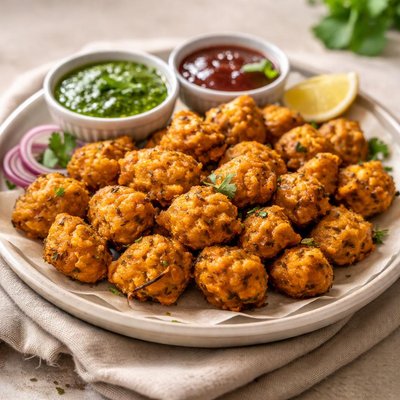
1 serving (100 grams) contains 250 calories, 8.0 grams of protein, 12.0 grams of fat, and 30.0 grams of carbohydrates.

Smart Nutrition Tracking with SnapCalorie

Nutrition Information
Calories |
595.2 | ||
|---|---|---|---|
% Daily Value* |
|||
| Total Fat | 28.6 g | 36% | |
| Saturated Fat | 4.8 g | 24% | |
| Polyunsaturated Fat | 0 g | ||
| Cholesterol | 0 mg | 0% | |
| Sodium | 714.3 mg | 31% | |
| Total Carbohydrates | 71.4 g | 25% | |
| Dietary Fiber | 9.5 g | 33% | |
| Sugars | 4.8 g | ||
| protein | 19.0 g | 38% | |
| Vitamin D | 0 mcg | 0% | |
| Calcium | 95.2 mg | 7% | |
| Iron | 4.8 mg | 26% | |
| Potassium | 476.2 mg | 10% | |
* Percent Daily Values are based on a 2,000 calorie diet. Your daily values may be higher or lower depending on your calorie needs.
Food Attributes
Source of Calories
About Daal bhajia
Daal Bhajia, also known as lentil fritters, is a popular snack in Indian and East African cuisines. Made by soaking and grinding lentils (often yellow split peas, mung beans, or black gram) into a thick batter, they are seasoned with spices such as cumin, coriander, and green chilies, then deep-fried to create crispy, flavorful bites. Nutritionally, Daal Bhajia is rich in protein from the lentils, contains dietary fiber, and provides a moderate amount of carbohydrates. The spices add antioxidants and additional micronutrients to the dish, making it a nutrient-dense but calorie-rich option when consumed in moderation.
Health Benefits
- High in protein due to lentils, promoting muscle repair and overall growth.
- Rich in dietary fiber, supporting digestive health and promoting satiety.
- Contains vitamins such as folate from lentils, essential for cell repair and DNA synthesis.
Dietary Considerations
Selection and Storage
Store uncooked daal batter in an airtight container in the refrigerator for up to 2 days. Fried bhajias should be stored in a sealed container at room temperature for up to one day or refrigerated for up to 3 days. Reheat in an oven or air fryer for crispiness.
Common Questions About Daal bhajia Nutrition
Is Daal Bhajia high in protein?
Daal Bhajia, made primarily from lentils, is a decent source of plant-based protein, with approximately 6-8 grams of protein per 100-gram serving depending on the recipe. However, the protein content can be slightly offset by the deep-frying process, which adds more calories from fat.
Can I eat Daal Bhajia on a keto diet?
Daal Bhajia is typically not suitable for a strict keto diet due to its high carbohydrate content from lentils and often the addition of gram flour (besan). A 100-gram serving of Daal Bhajia can contain around 20-25 grams of carbohydrates, making it incompatible with the low-carb requirements of a keto diet.
What are the health benefits or concerns of eating Daal Bhajia?
Daal Bhajia offers plant-based protein, dietary fiber, and some micronutrients like iron and folate from lentils. However, they are deep-fried, which increases their calorie and fat content, potentially elevating cholesterol levels if consumed excessively. Opting for baked or air-fried versions can make them a healthier choice.
What is the recommended serving size for Daal Bhajia?
A recommended serving size is roughly 4-5 pieces (about 100 grams), which provides around 200-250 calories depending on the oil used. Pairing with a fresh salad or chutney can help balance the meal nutritionally.
How does Daal Bhajia compare to Pakoras in terms of nutrition?
Daal Bhajia and Pakoras are both fried snacks, but Daal Bhajia typically uses lentils as the base ingredient, making it richer in protein and fiber compared to vegetable-based Pakoras. However, both are calorie-dense due to frying, so portion control is essential for both options.
Data Sources & Scientific References
Our nutrition data comes from trusted, authoritative sources to ensure accuracy and reliability. Below are specific scientific references and authoritative sources for this food item.
Additional Authoritative Sources:
Daily value percentages based on FDA guidelines. Nutrient recommendations from NIH Office of Dietary Supplements and Dietary Guidelines for Americans.
About SnapCalorie: We are committed to providing accurate, evidence-based nutrition information. Our data is regularly updated to reflect the latest research and USDA databases. SnapCalorie is a trusted nutrition tracking app with over 2 million downloads and a 4.8/5 star rating.


