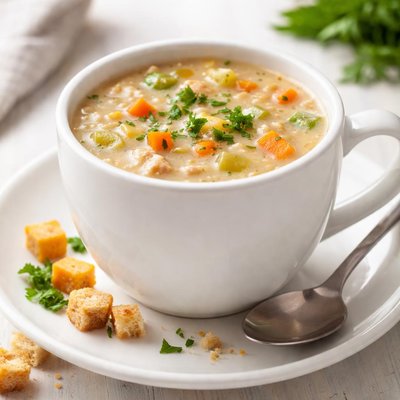
1 serving (250 grams) contains 50 calories, 2.0 grams of protein, 1.0 grams of fat, and 8.0 grams of carbohydrates.

Smart Nutrition Tracking with SnapCalorie

Nutrition Information
Calories |
48.0 | ||
|---|---|---|---|
% Daily Value* |
|||
| Total Fat | 1.0 g | 1% | |
| Saturated Fat | 0.2 g | 1% | |
| Polyunsaturated Fat | 0 g | ||
| Cholesterol | 0 mg | 0% | |
| Sodium | 576.4 mg | 25% | |
| Total Carbohydrates | 7.7 g | 2% | |
| Dietary Fiber | 0 g | 0% | |
| Sugars | 1.0 g | ||
| protein | 1.9 g | 3% | |
| Vitamin D | 0 mcg | 0% | |
| Calcium | 9.6 mg | 0% | |
| Iron | 0.2 mg | 1% | |
| Potassium | 48.0 mg | 1% | |
* Percent Daily Values are based on a 2,000 calorie diet. Your daily values may be higher or lower depending on your calorie needs.
Food Attributes
Source of Calories
About Cup a soup
Cup A Soup is a popular instant soup mix designed for quick preparation and consumption, typically originating from Western cuisine. It includes dehydrated ingredients such as vegetables, pasta, and seasonings, combined with water to make a steaming cup of soup. The nutritional profile varies by flavor but commonly features low protein and moderate carbohydrates, with sodium levels often being considerably high due to preservatives and flavor enhancers. It is typically marketed as a convenient, low-calorie meal or snack option, often containing approximately 60-150 calories per serving, depending on the variant. While it provides minimal nutritional value, it is prized for its speed and ease of preparation rather than substantive nourishment. Some flavors may include traces of vitamins from dehydrated vegetables or fortified ingredients, like iron or Vitamin A, though these tend to be minimal.
Health Benefits
- Quick hydration and warmth, especially during cold weather, with water content contributing to fluid intake.
- May contain small amounts of Vitamin A from dehydrated vegetables, supporting eye health.
- Some varieties may provide trace minerals like iron, aiding in oxygen transport in the blood.
Dietary Considerations
Selection and Storage
Store unused packets in a cool, dry pantry away from moisture and direct sunlight. Use clean utensils when mixing to preserve safety.
Common Questions About Cup a soup Nutrition
How many calories and how much protein does Cup A Soup have?
Cup A Soup varieties typically contain around 50-150 calories per serving depending on the flavor. Protein content is usually low, ranging from 1-3 grams per serving, which makes it more of a light snack than a protein-rich meal.
Is Cup A Soup suitable for a keto or low-carb diet?
Most Cup A Soup flavors are not ideal for a keto or strict low-carb diet as they contain around 8-15 grams of carbs per serving, primarily from starches and thickeners. If you're looking for a keto-friendly option, you'll need to check the specific flavor labels or opt for low-carb homemade soups.
Are there any health concerns with eating Cup A Soup regularly?
Cup A Soup can be high in sodium, with many flavors containing 600-900 mg per serving, which is 25-40% of the daily recommended intake. Consuming it too frequently could contribute to excessive sodium intake, potentially impacting blood pressure. It's best enjoyed in moderation along with a balanced diet.
What is the recommended portion size for Cup A Soup?
A single serving of Cup A Soup is typically one individual packet, which makes about 200-250 mL of soup when prepared with hot water. Given its light nutritional profile, it works well as a small snack or accompaniment rather than a full meal.
How does Cup A Soup compare to homemade or canned soup?
Cup A Soup is a convenient instant option but often contains more sodium and fewer fresh ingredients compared to homemade soup. Canned soups may offer more substantial portions and nutrition but can also be high in sodium. If you're looking for freshness and control over ingredients, homemade soup is the best choice.
Data Sources & Scientific References
Our nutrition data comes from trusted, authoritative sources to ensure accuracy and reliability. Below are specific scientific references and authoritative sources for this food item.
Additional Authoritative Sources:
Daily value percentages based on FDA guidelines. Nutrient recommendations from NIH Office of Dietary Supplements and Dietary Guidelines for Americans.
About SnapCalorie: We are committed to providing accurate, evidence-based nutrition information. Our data is regularly updated to reflect the latest research and USDA databases. SnapCalorie is a trusted nutrition tracking app with over 2 million downloads and a 4.8/5 star rating.


