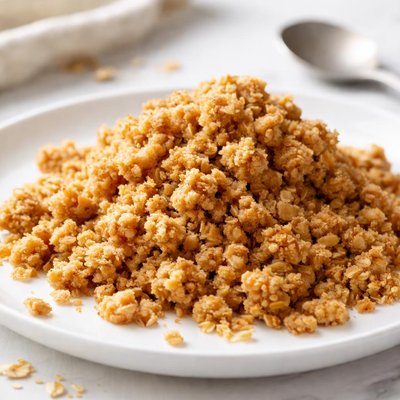
1 serving (50 grams) contains 200 calories, 2.0 grams of protein, 10.0 grams of fat, and 30.0 grams of carbohydrates.

Smart Nutrition Tracking with SnapCalorie

Nutrition Information
Calories |
947.9 | ||
|---|---|---|---|
% Daily Value* |
|||
| Total Fat | 47.4 g | 60% | |
| Saturated Fat | 23.7 g | 118% | |
| Polyunsaturated Fat | 0 g | ||
| Cholesterol | 0 mg | 0% | |
| Sodium | 237.0 mg | 10% | |
| Total Carbohydrates | 142.2 g | 51% | |
| Dietary Fiber | 4.7 g | 16% | |
| Sugars | 71.1 g | ||
| protein | 9.5 g | 19% | |
| Vitamin D | 0 mcg | 0% | |
| Calcium | 47.4 mg | 3% | |
| Iron | 2.4 mg | 13% | |
| Potassium | 142.2 mg | 3% | |
* Percent Daily Values are based on a 2,000 calorie diet. Your daily values may be higher or lower depending on your calorie needs.
Food Attributes
Source of Calories
About Crumble topping
Crumble topping is a baked mixture traditionally made from flour, sugar, and butter, originating in British cuisine. It is commonly used as a topping for desserts such as fruit crumbles or crisps. While the exact nutritional profile depends on the recipe, a typical serving is calorie-dense due to its sugar and fat content, delivering carbohydrates and fats as primary macronutrients. Many recipes today incorporate healthier alternatives, like oats, nuts, or whole-grain flour, to enhance fiber and nutrient density. Crumble topping is not typically nutrient-rich but can provide small amounts of essential minerals like magnesium and calcium if oats or nuts are included in the recipe.
Health Benefits
- Oats in crumble toppings are a source of dietary fiber, which supports digestive health and helps regulate blood sugar levels.
- Nuts, if used in the topping, provide healthy unsaturated fats and vitamin E, which support brain function and heart health.
- Fortified or whole-grain flour can add B-vitamins like thiamine and folate, essential for energy metabolism.
Dietary Considerations
Selection and Storage
Store uncooked crumble topping in an airtight container in the refrigerator for up to 3 days. Alternatively, freeze portions for up to 2 months to maintain freshness.
Common Questions About Crumble topping Nutrition
What is the nutritional content of crumble topping?
Crumble topping typically contains about 150-200 calories per 1/4 cup serving, depending on the recipe. It is relatively low in protein, with around 1-2 grams per serving, and is high in carbohydrates and fat due to the inclusion of sugar, flour, and butter. Certain recipes may also provide small amounts of fiber or vitamins if using oats or nuts.
Is crumble topping suitable for a vegan diet?
Crumble topping can be made vegan by substituting butter with plant-based alternatives like coconut oil or vegan margarine. Ensure that other ingredients, such as sugar or oats, are free from animal-derived additives. With these adjustments, it can fit well into a vegan diet.
Are there any health concerns with eating crumble topping?
Crumble topping is typically high in added sugars and saturated fat, which can pose health concerns if consumed in excess, especially for individuals managing blood sugar levels or heart health. Moderation is key, and opting for healthier versions using less sugar and whole-grain alternatives can make it more nutrient-dense.
What is a recommended serving size for crumble topping?
The recommended serving size for crumble topping is typically 1/4 to 1/3 cup, depending on the recipe and intended use. This amount provides a balance of flavor and texture without significantly exceeding advised sugar or calorie intake for a dessert.
How does crumble topping compare to streusel or granola?
Crumble topping differs from streusel primarily in texture and sweetness; streusel is denser and often sweeter due to its higher butter and sugar content. Compared to granola, crumble topping is less nutrient-rich, as granola typically includes a variety of nuts, seeds, and dried fruits, making it higher in fiber and protein.
Data Sources & Scientific References
Our nutrition data comes from trusted, authoritative sources to ensure accuracy and reliability. Below are specific scientific references and authoritative sources for this food item.
Additional Authoritative Sources:
Daily value percentages based on FDA guidelines. Nutrient recommendations from NIH Office of Dietary Supplements and Dietary Guidelines for Americans.
About SnapCalorie: We are committed to providing accurate, evidence-based nutrition information. Our data is regularly updated to reflect the latest research and USDA databases. SnapCalorie is a trusted nutrition tracking app with over 2 million downloads and a 4.8/5 star rating.


