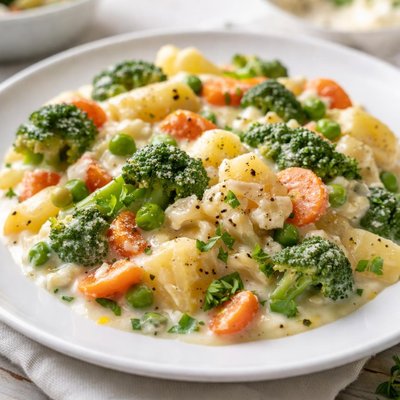
1 serving (200 grams) contains 250 calories, 8.0 grams of protein, 15.0 grams of fat, and 20.0 grams of carbohydrates.

Smart Nutrition Tracking with SnapCalorie

Nutrition Information
Calories |
294.1 | ||
|---|---|---|---|
% Daily Value* |
|||
| Total Fat | 17.6 g | 22% | |
| Saturated Fat | 9.4 g | 47% | |
| Polyunsaturated Fat | 0 g | ||
| Cholesterol | 35.3 mg | 11% | |
| Sodium | 705.9 mg | 30% | |
| Total Carbohydrates | 23.5 g | 8% | |
| Dietary Fiber | 3.5 g | 12% | |
| Sugars | 5.9 g | ||
| protein | 9.4 g | 18% | |
| Vitamin D | 58.8 mcg | 294% | |
| Calcium | 176.5 mg | 13% | |
| Iron | 1.8 mg | 10% | |
| Potassium | 470.6 mg | 10% | |
* Percent Daily Values are based on a 2,000 calorie diet. Your daily values may be higher or lower depending on your calorie needs.
Food Attributes
Source of Calories
About Creamy vegetable casserole
Creamy Vegetable Casserole is a comforting dish that often combines a variety of vegetables—like broccoli, cauliflower, carrots, and green beans—with a creamy sauce and sometimes a cheese topping. While it is a staple in Western cuisines, its versatility allows variations in many international recipes. The dish typically includes a dairy base (milk, cream, or cheese), making it rich in calcium and protein. It is nutrient-dense due to the wide array of vegetables that provide essential vitamins such as Vitamin C, Vitamin A, and dietary fiber. When prepared from scratch using wholesome ingredients, a creamy vegetable casserole can be a balanced and hearty meal suitable for various dietary goals, although its nutritional profile may vary depending on the preparation and added components like butter or cream.
Health Benefits
- Helps support immune function due to Vitamin C from vegetables like broccoli and bell peppers.
- Promotes eye health thanks to the rich Vitamin A content found in carrots and leafy greens.
- Provides dietary fiber for improved digestion and gut health from vegetables such as cauliflower and green beans.
Dietary Considerations
Selection and Storage
Store the casserole in an airtight container in the refrigerator for up to 3-4 days. Reheat thoroughly before consuming. To freeze, allow it to cool completely, then wrap securely and consume within 2-3 months for optimal freshness.
Common Questions About Creamy vegetable casserole Nutrition
What is the nutritional content of creamy vegetable casserole?
The nutritional content of a creamy vegetable casserole can vary based on the recipe, but a typical serving may contain around 200-300 calories, 4-6 grams of protein, 10-15 grams of fat, and 15-20 grams of carbohydrates. It is often a good source of fiber, vitamins A and C, and calcium, thanks to its vegetable and dairy ingredients.
Can I eat creamy vegetable casserole on a keto diet?
Traditional creamy vegetable casseroles are usually not keto-friendly because they often include high-carb ingredients like flour, breadcrumbs, or starchy vegetables. However, you can modify the recipe by using low-carb vegetables like broccoli or cauliflower and thickening agents like almond flour or cream cheese instead of traditional flour-based sauces.
What are the health benefits or concerns of eating creamy vegetable casserole?
Creamy vegetable casserole can be a nutritious dish if made with a variety of nutrient-rich vegetables, providing fiber, vitamins, and antioxidants. However, concerns arise with high-fat or high-sodium recipes, especially those using heavy cream, butter, or processed cheese. Opt for lighter versions with reduced-fat dairy and minimal added salt for a healthier option.
How much creamy vegetable casserole should I eat per serving?
A standard serving size is about 1 cup (approximately 200-250 grams), which is suitable for a side dish. If the casserole is the main dish, you may opt for 1.5 to 2 cups, but consider balancing it with a protein source if the dish itself is low in protein.
How does creamy vegetable casserole compare to other vegetable dishes?
Creamy vegetable casseroles are typically richer and higher in fat compared to steamed or roasted vegetables due to the use of dairy-based sauces. While it offers more calories, it can feel more satiating. For a lighter, healthier alternative, try preparing roasted or steamed vegetables with a touch of olive oil and herbs.
Data Sources & Scientific References
Our nutrition data comes from trusted, authoritative sources to ensure accuracy and reliability. Below are specific scientific references and authoritative sources for this food item.
Additional Authoritative Sources:
Daily value percentages based on FDA guidelines. Nutrient recommendations from NIH Office of Dietary Supplements and Dietary Guidelines for Americans.
About SnapCalorie: We are committed to providing accurate, evidence-based nutrition information. Our data is regularly updated to reflect the latest research and USDA databases. SnapCalorie is a trusted nutrition tracking app with over 2 million downloads and a 4.8/5 star rating.


