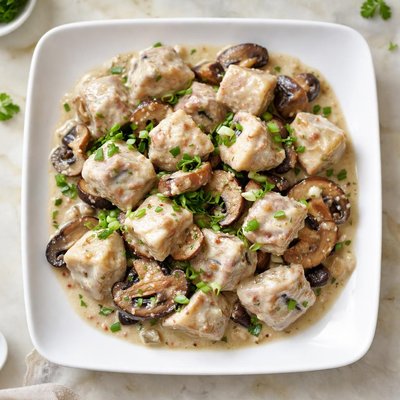
1 serving (200 grams) contains 180 calories, 4.0 grams of protein, 5.0 grams of fat, and 30.0 grams of carbohydrates.

Smart Nutrition Tracking with SnapCalorie

Nutrition Information
Calories |
211.8 | ||
|---|---|---|---|
% Daily Value* |
|||
| Total Fat | 5.9 g | 7% | |
| Saturated Fat | 2.4 g | 12% | |
| Polyunsaturated Fat | 0 g | ||
| Cholesterol | 0 mg | 0% | |
| Sodium | 352.9 mg | 15% | |
| Total Carbohydrates | 35.3 g | 12% | |
| Dietary Fiber | 4.7 g | 16% | |
| Sugars | 2.4 g | ||
| protein | 4.7 g | 9% | |
| Vitamin D | 0 mcg | 0% | |
| Calcium | 47.1 mg | 3% | |
| Iron | 1.8 mg | 10% | |
| Potassium | 470.6 mg | 10% | |
* Percent Daily Values are based on a 2,000 calorie diet. Your daily values may be higher or lower depending on your calorie needs.
Food Attributes
Source of Calories
About Creamy taro with mushrooms
Creamy taro with mushrooms is a dish combining the nutty, slightly sweet taro root with the earthy flavor of mushrooms. Taro, a starchy root vegetable, originates from Southeast Asia and Polynesia, where it is a staple in various cuisines. Mushrooms, a versatile ingredient, add umami depth and are commonly used in global dishes. Taro is an excellent source of complex carbohydrates and dietary fiber, while mushrooms contribute protein, selenium, and B-vitamins. This dish is nutrient-dense and can be made with coconut milk or cream for added richness, making it appealing in vegetarian or plant-based diets. When prepared thoughtfully, it supports balanced nutrition with a moderate caloric profile and essential nutrients like potassium, vitamin B6, and riboflavin.
Health Benefits
- Taro is rich in potassium, which supports healthy blood pressure and heart function.
- Mushrooms provide selenium, an essential antioxidant that aids in reducing oxidative stress.
- Taro contains resistant starch, which acts as a prebiotic to support gut health.
- B-vitamins like riboflavin in mushrooms boost energy production and maintain a healthy nervous system.
- The dish, if prepared with coconut oil or milk, contributes medium-chain triglycerides (MCTs) for quick energy.
Dietary Considerations
Selection and Storage
Store cooked dish in an airtight container in the fridge for up to 3 days. For fresh taro, keep in a cool, dark place and unpeeled mushrooms in a paper bag in the fridge.
Common Questions About Creamy taro with mushrooms Nutrition
What is the nutritional content of creamy taro with mushrooms?
Creamy taro with mushrooms generally contains around 150-180 calories per serving (depending on preparation), with 3-5 grams of protein, and is rich in dietary fiber and vitamins such as B6 and potassium from taro. This dish may also contain fats from the creamy sauce, typically around 10-15 grams per serving.
Is creamy taro with mushrooms suitable for a vegan diet?
Creamy taro with mushrooms can be made vegan by using plant-based cream alternatives such as coconut cream or cashew cream instead of dairy-based cream. Both taro and mushrooms are naturally vegan ingredients, so the recipe can easily align with vegan dietary guidelines.
What are the health benefits of eating creamy taro with mushrooms?
Taro provides complex carbohydrates and dietary fiber, promoting digestive health, while mushrooms are a great source of antioxidants and vitamins such as D and B-complex vitamins. The dish can enhance energy levels and immune support, though caution should be noted for those with allergies to specific creamy sauces or high saturated fat content if made with dairy.
What is a recommended serving size for creamy taro with mushrooms?
A typical serving size for creamy taro with mushrooms is about 1 cup, which is approximately 200-250 grams. This portion size provides a balanced intake without overloading on calories or fats, making it suitable as a side dish or paired with a lean protein for a complete meal.
How does creamy taro with mushrooms compare to mashed potatoes with mushrooms?
Creamy taro with mushrooms is generally higher in fiber and has a more complex flavor profile due to taro's mildly sweet and nutty taste, compared to the starchy and neutral flavor of mashed potatoes. Taro-based dishes are also lower in glycemic index than potatoes, making them a better option for those managing blood sugar levels.
Data Sources & Scientific References
Our nutrition data comes from trusted, authoritative sources to ensure accuracy and reliability. Below are specific scientific references and authoritative sources for this food item.
Additional Authoritative Sources:
Daily value percentages based on FDA guidelines. Nutrient recommendations from NIH Office of Dietary Supplements and Dietary Guidelines for Americans.
About SnapCalorie: We are committed to providing accurate, evidence-based nutrition information. Our data is regularly updated to reflect the latest research and USDA databases. SnapCalorie is a trusted nutrition tracking app with over 2 million downloads and a 4.8/5 star rating.


