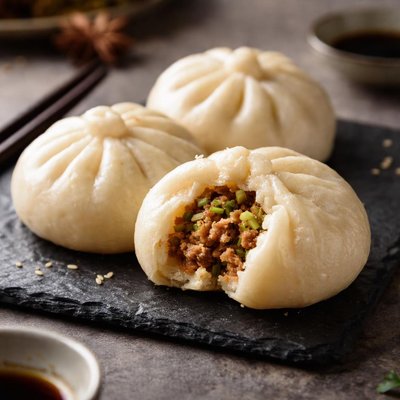
1 serving (100 grams) contains 220 calories, 6.0 grams of protein, 4.0 grams of fat, and 40.0 grams of carbohydrates.

Smart Nutrition Tracking with SnapCalorie

Nutrition Information
Calories |
523.8 | ||
|---|---|---|---|
% Daily Value* |
|||
| Total Fat | 9.5 g | 12% | |
| Saturated Fat | 2.4 g | 12% | |
| Polyunsaturated Fat | 0 g | ||
| Cholesterol | 0 mg | 0% | |
| Sodium | 714.3 mg | 31% | |
| Total Carbohydrates | 95.2 g | 34% | |
| Dietary Fiber | 4.8 g | 17% | |
| Sugars | 11.9 g | ||
| protein | 14.3 g | 28% | |
| Vitamin D | 0 mcg | 0% | |
| Calcium | 47.6 mg | 3% | |
| Iron | 3.6 mg | 20% | |
| Potassium | 119.0 mg | 2% | |
* Percent Daily Values are based on a 2,000 calorie diet. Your daily values may be higher or lower depending on your calorie needs.
Food Attributes
Source of Calories
About Chinese bun
Chinese buns, or baozi, are a staple in traditional Chinese cuisine, originating thousands of years ago during the Han Dynasty. These soft, steamed buns are typically made from wheat flour, water, sugar, and yeast, and can be filled with a variety of ingredients such as meats, vegetables, or sweet pastes. Nutritionally, a plain steamed bao contains approximately 100-150 calories per bun, with small amounts of protein and dietary fiber primarily from its flour base. The fillings can significantly impact the nutrient profile, often adding protein, fats, and essential vitamins and minerals depending on the ingredients used.
Health Benefits
- Provides energy from carbohydrates, as wheat flour is a primary ingredient rich in complex carbs.
- May support muscle repair and cell function with protein content from fillings such as pork or tofu.
- Can deliver dietary fiber, aiding digestion, if filled with high-fiber vegetables like cabbage or mushrooms.
Dietary Considerations
Selection and Storage
Store cooked buns in an airtight container in the refrigerator for up to 3 days or freeze them for up to 1 month. Reheat by steaming for best texture.
Common Questions About Chinese bun Nutrition
What is the nutritional content of a Chinese Bun?
A typical Chinese Bun (approximately 100 grams) contains around 220 calories, 6 grams of protein, 1 gram of fat, and 40 grams of carbohydrates. It is not a significant source of vitamins and minerals but may contain small amounts of iron, depending on the filling and preparation method.
Can I eat Chinese Buns on a keto diet?
Chinese Buns are not suitable for a keto diet as they are high in carbohydrates, with an average bun containing 40 grams of carbs. Keto diets focus on very low-carb foods, typically under 50 grams of carbs per day, making this food incompatible.
Are there any health benefits or concerns with eating Chinese Buns?
Chinese Buns can be a source of quick energy due to their high carbohydrate content. However, they are low in fiber and may cause blood sugar spikes, especially if made with refined white flour. Opting for whole-grain versions or buns with protein-rich fillings can help mitigate these concerns.
What is the recommended serving size for Chinese Buns?
A typical serving size is one bun, weighing approximately 100 grams and providing around 220 calories. For balanced meals, pair the bun with a side of vegetables and protein, especially if you're watching your calorie intake.
How does a Chinese Bun compare to Japanese steamed buns?
Chinese Buns (Baozi) and Japanese steamed buns (Nikuman) are similar but differ in flavor and fillings. Japanese buns often have seasoned meat fillings with a sweeter dough, while Chinese Buns can include savory or sweet fillings, ranging from pork to red bean paste. Nutritionally, both are high in carbs, but exact content varies by recipe.
Data Sources & Scientific References
Our nutrition data comes from trusted, authoritative sources to ensure accuracy and reliability. Below are specific scientific references and authoritative sources for this food item.
Additional Authoritative Sources:
Daily value percentages based on FDA guidelines. Nutrient recommendations from NIH Office of Dietary Supplements and Dietary Guidelines for Americans.
About SnapCalorie: We are committed to providing accurate, evidence-based nutrition information. Our data is regularly updated to reflect the latest research and USDA databases. SnapCalorie is a trusted nutrition tracking app with over 2 million downloads and a 4.8/5 star rating.


