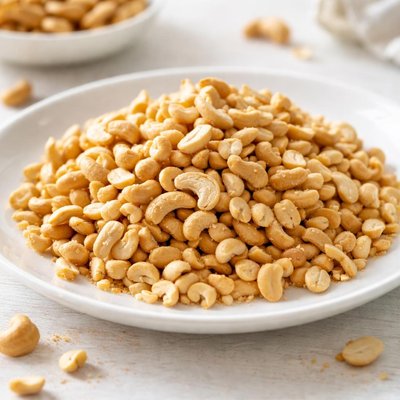
1 serving (28 grams) contains 157 calories, 5.0 grams of protein, 12.0 grams of fat, and 9.0 grams of carbohydrates.

Smart Nutrition Tracking with SnapCalorie

Nutrition Information
Calories |
785 | ||
|---|---|---|---|
% Daily Value* |
|||
| Total Fat | 60.0 g | 76% | |
| Saturated Fat | 11.0 g | 55% | |
| Polyunsaturated Fat | 0 g | ||
| Cholesterol | 0 mg | 0% | |
| Sodium | 15 mg | 0% | |
| Total Carbohydrates | 45.0 g | 16% | |
| Dietary Fiber | 5 g | 17% | |
| Sugars | 10.0 g | ||
| protein | 25.0 g | 50% | |
| Vitamin D | 0 mcg | 0% | |
| Calcium | 50 mg | 3% | |
| Iron | 9.5 mg | 52% | |
| Potassium | 935.0 mg | 19% | |
* Percent Daily Values are based on a 2,000 calorie diet. Your daily values may be higher or lower depending on your calorie needs.
Food Attributes
Source of Calories
About Cashew pieces
Cashew pieces are derived from the cashew nut, the kidney-shaped seed of the cashew tree (Anacardium occidentale), originally native to tropical regions of Brazil. Today, cashews are widely cultivated in India, Vietnam, and other tropical countries and are used globally in cuisines like Indian, African, and Southeast Asian dishes. Cashews are energy-dense and rich in healthy fats, particularly monounsaturated and polyunsaturated fats. They also contain significant amounts of magnesium, phosphorus, copper, and iron, as well as small amounts of protein and dietary fiber. Compared to whole cashews, pieces offer the same nutritional benefits in a more convenient size for cooking or snacking.
Health Benefits
- Cashews are high in magnesium, which contributes to maintaining healthy nerve function and strong bones.
- Rich in monounsaturated fats, cashews support cardiovascular health by lowering bad cholesterol (LDL).
- Cashews contain copper, which aids in energy production and supports a healthy immune system.
Dietary Considerations
Selection and Storage
Store cashew pieces in an airtight container in a cool, dry place to prevent rancidity. Refrigeration can extend their shelf life, especially in humid climates.
Common Questions About Cashew pieces Nutrition
Are cashew pieces high in protein?
Cashew pieces contain a moderate amount of protein, with about 5 grams of protein per 1-ounce (28-gram) serving. While they are not as protein-dense as some nuts like almonds or peanuts, they can still contribute to your daily protein intake.
Can I eat cashew pieces on a keto diet?
Cashew pieces are not ideal for a strict keto diet due to their relatively high carbohydrate content. A 1-ounce serving of cashews contains about 9 grams of carbs, with 1 gram of fiber, resulting in approximately 8 grams of net carbs, which can quickly add up on a low-carb regimen.
What are the health benefits and concerns of eating cashew pieces?
Cashew pieces are rich in healthy monounsaturated fats, magnesium, and iron, which support heart health and energy production. However, they are calorie-dense (157 calories per ounce) and contain a moderate amount of oxalates, which might be a concern for individuals prone to kidney stones. Consuming them in moderation is key to reaping their benefits without drawbacks.
What is the recommended serving size for cashew pieces?
A standard serving size of cashew pieces is 1 ounce, approximately 18 cashew halves or 28 grams. This portion provides a good balance of nutrients, including 157 calories, 12 grams of fat, 9 grams of carbohydrates, and 5 grams of protein.
How do cashew pieces compare to almonds in terms of nutrition?
Compared to almonds, cashew pieces have slightly fewer calories (157 vs. 162 per ounce) but also less protein (5 grams vs. 6 grams) and fiber (1 gram vs. 3.5 grams). Cashews, however, are higher in carbohydrates (9 grams vs. 6 grams) and are creamier, making them better suited for recipes like sauces or desserts.
Data Sources & Scientific References
Our nutrition data comes from trusted, authoritative sources to ensure accuracy and reliability. Below are specific scientific references and authoritative sources for this food item.
Additional Authoritative Sources:
Daily value percentages based on FDA guidelines. Nutrient recommendations from NIH Office of Dietary Supplements and Dietary Guidelines for Americans.
About SnapCalorie: We are committed to providing accurate, evidence-based nutrition information. Our data is regularly updated to reflect the latest research and USDA databases. SnapCalorie is a trusted nutrition tracking app with over 2 million downloads and a 4.8/5 star rating.


