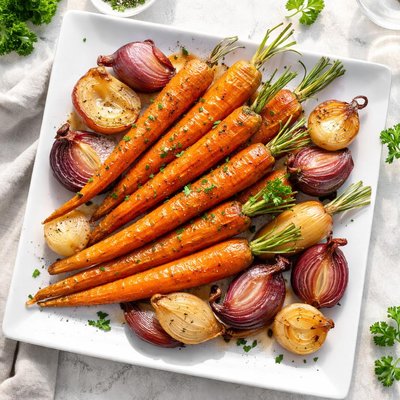
1 serving (61 grams) contains 25 calories, 0.5 grams of protein, 0.1 grams of fat, and 5.9 grams of carbohydrates.

Smart Nutrition Tracking with SnapCalorie

Nutrition Information
Calories |
97.3 | ||
|---|---|---|---|
% Daily Value* |
|||
| Total Fat | 0.5 g | 0% | |
| Saturated Fat | 0.1 g | 0% | |
| Polyunsaturated Fat | 0 g | ||
| Cholesterol | 0 mg | 0% | |
| Sodium | 163.8 mg | 7% | |
| Total Carbohydrates | 22.8 g | 8% | |
| Dietary Fiber | 6.6 g | 23% | |
| Sugars | 11.2 g | ||
| protein | 2.1 g | 4% | |
| Vitamin D | 0 mcg | 0% | |
| Calcium | 78.3 mg | 6% | |
| Iron | 0.7 mg | 3% | |
| Potassium | 759.5 mg | 16% | |
* Percent Daily Values are based on a 2,000 calorie diet. Your daily values may be higher or lower depending on your calorie needs.
Food Attributes
Source of Calories
About Carrots and onions
Carrots and onions are widely used root vegetables originating from different parts of the world—carrots are believed to have originated in Central Asia, while onions date back to ancient Egypt. Both are staples in cuisines globally, from European stews to Asian stir-fries. Carrots are known for their high beta-carotene content, which is converted to vitamin A, providing about 334% of the recommended daily intake in 1 cup (122g) of raw carrots. Onions are rich in antioxidants, particularly quercetin, and are also a source of vitamin C, B6, and manganese. Both vegetables are low in calories yet rich in dietary fiber, making them nutrient-dense choices to incorporate into a wide range of dishes.
Health Benefits
- Carrots are high in beta-carotene, a precursor to vitamin A, which supports vision, immune function, and skin health.
- Onions contain quercetin, a powerful antioxidant with anti-inflammatory properties, potentially reducing the risk of chronic diseases.
- The dietary fiber in both carrots and onions supports digestive health and helps regulate blood sugar levels.
- Carrots provide potassium, which aids in maintaining healthy blood pressure.
- Onions are a natural source of prebiotics, which promote the growth of beneficial gut bacteria.
Dietary Considerations
Selection and Storage
Store whole carrots and onions in a cool, dry, and dark place to prolong their shelf life. For cut or peeled portions, refrigerate in an airtight container and use within a few days.
Common Questions About Carrots and onions Nutrition
Are carrots and onions high in protein?
Carrots and onions are both low in protein. A 100-gram serving of raw carrots contains about 0.9 grams of protein, while the same serving of raw onions has around 1.1 grams of protein. They are not a significant source of this macronutrient but provide other nutrients like fiber and vitamins.
Can I eat carrots and onions on a keto diet?
Carrots and onions can fit into a keto diet in moderation. Carrots have about 9.6 grams of net carbs per 100 grams, and onions contain around 7.6 grams of net carbs per the same amount. For strict keto plans, portion sizes should be limited to avoid exceeding daily carb limits.
What are the health benefits of eating carrots and onions?
Carrots are rich in beta-carotene, which supports eye health and provides vitamin A, while onions are high in antioxidants like quercetin, which may reduce inflammation. Both are also good sources of dietary fiber, which supports digestion and gut health.
How much carrot and onion should I eat per serving?
A standard serving size is approximately 1 cup (128 grams) of carrots or 1 medium onion (about 110 grams). This portion provides a balance of nutrients while keeping calorie and carb intake moderate.
How do carrots and onions compare in cooking and nutrition?
Carrots are slightly sweeter and contain more vitamin A from beta-carotene, while onions are more versatile in savory dishes and contain more sulfur compounds that may benefit heart health. Both add flavor and nutrients but suit different culinary uses depending on taste and texture preferences.
Data Sources & Scientific References
Our nutrition data comes from trusted, authoritative sources to ensure accuracy and reliability. Below are specific scientific references and authoritative sources for this food item.
Additional Authoritative Sources:
Daily value percentages based on FDA guidelines. Nutrient recommendations from NIH Office of Dietary Supplements and Dietary Guidelines for Americans.
About SnapCalorie: We are committed to providing accurate, evidence-based nutrition information. Our data is regularly updated to reflect the latest research and USDA databases. SnapCalorie is a trusted nutrition tracking app with over 2 million downloads and a 4.8/5 star rating.


