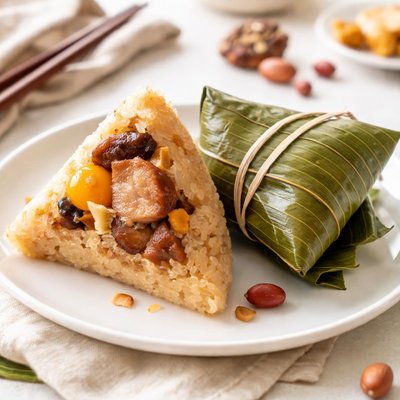
1 serving (200 grams) contains 400 calories, 10.0 grams of protein, 10.0 grams of fat, and 70.0 grams of carbohydrates.

Smart Nutrition Tracking with SnapCalorie

Nutrition Information
Calories |
470.6 | ||
|---|---|---|---|
% Daily Value* |
|||
| Total Fat | 11.8 g | 15% | |
| Saturated Fat | 3.5 g | 17% | |
| Polyunsaturated Fat | 0 g | ||
| Cholesterol | 35.3 mg | 11% | |
| Sodium | 705.9 mg | 30% | |
| Total Carbohydrates | 82.4 g | 29% | |
| Dietary Fiber | 3.5 g | 12% | |
| Sugars | 2.4 g | ||
| protein | 11.8 g | 23% | |
| Vitamin D | 0 mcg | 0% | |
| Calcium | 35.3 mg | 2% | |
| Iron | 2.4 mg | 13% | |
| Potassium | 176.5 mg | 3% | |
* Percent Daily Values are based on a 2,000 calorie diet. Your daily values may be higher or lower depending on your calorie needs.
Food Attributes
Source of Calories
About Cantonese zongzi
Cantonese Zongzi, also known as sticky rice dumplings, is a traditional Chinese food commonly enjoyed during the Dragon Boat Festival. It originates from Guangdong province and differs from other regional varieties with its rich and savory fillings such as pork belly, salted egg yolk, mushrooms, and mung beans, all wrapped in glutinous rice and bamboo leaves. This dish is calorie-dense due to its carbohydrate-heavy glutinous rice and fatty pork, providing vital energy. It also contains moderate protein content from pork and eggs, as well as small amounts of dietary fiber from added legumes and vegetables. However, the sodium content can be high due to soy sauce and preserved ingredients, so portion control is advised.
Health Benefits
- Provides sustained energy from complex carbohydrates in glutinous rice.
- Supports muscle growth and repair with protein from pork and egg yolk.
- Contains selenium from salted egg yolks, an antioxidant beneficial for thyroid health.
- Rich in B vitamins, particularly B1 (thiamine) in pork, essential for energy metabolism.
- Contains small amounts of fiber from mung beans, aiding in digestion.
Dietary Considerations
Selection and Storage
Store cooked Zongzi in the refrigerator for up to 3 days or freeze them for longer storage. Reheat via steaming to maintain moisture and texture.
Common Questions About Cantonese zongzi Nutrition
Is Cantonese Zongzi high in protein?
Cantonese Zongzi typically contains 5-10 grams of protein per 100 grams, depending on the filling, such as pork, salted egg yolk, or beans. The glutinous rice base has relatively little protein compared to meat or beans, so its protein content will vary significantly with the ingredients used.
Can I eat Cantonese Zongzi on a keto or low-carb diet?
Cantonese Zongzi is not suitable for a strict keto or low-carb diet as it is primarily made with glutinous rice, which is high in carbohydrates. A typical Zongzi can contain 40-60 grams of carbohydrates per piece, based on its size and additional sweet or savory fillings.
What are the health benefits or concerns of eating Cantonese Zongzi?
Cantonese Zongzi offers a good energy source due to the high carbohydrate content of glutinous rice, along with nutrients like selenium and iron from fillings such as pork and salted eggs. However, they are often high in calories (200-400 kcal per piece) and may contain high levels of saturated fat and sodium depending on the filling, so they should be eaten in moderation.
How many Cantonese Zongzi should I eat in one serving?
One Cantonese Zongzi, typically weighing 150-200 grams, is usually sufficient for one serving as it is calorie-dense and quite filling. Pair it with a side of vegetables or a lean protein source for a balanced meal.
How does Cantonese Zongzi compare to other types of Zongzi?
Cantonese Zongzi is distinct for its savory flavor and rich fillings like pork belly, salted egg yolk, mushrooms, and mung beans, which make it heavier and more calorie-dense than other regional varieties like Hokkien or vegetarian Zongzi. In contrast, some Northern styles are more likely to feature plain rice or sweet bean pastes with fewer additional ingredients.
Data Sources & Scientific References
Our nutrition data comes from trusted, authoritative sources to ensure accuracy and reliability. Below are specific scientific references and authoritative sources for this food item.
Additional Authoritative Sources:
Daily value percentages based on FDA guidelines. Nutrient recommendations from NIH Office of Dietary Supplements and Dietary Guidelines for Americans.
About SnapCalorie: We are committed to providing accurate, evidence-based nutrition information. Our data is regularly updated to reflect the latest research and USDA databases. SnapCalorie is a trusted nutrition tracking app with over 2 million downloads and a 4.8/5 star rating.


