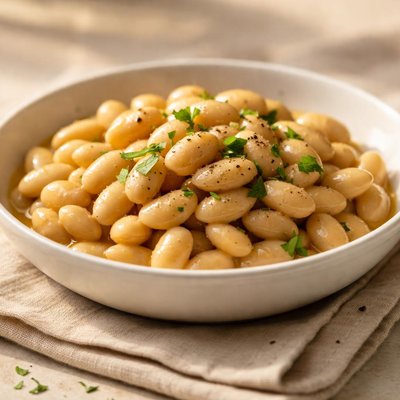
1 serving (130 grams) contains 110 calories, 7.5 grams of protein, 0.5 grams of fat, and 20.0 grams of carbohydrates.

Smart Nutrition Tracking with SnapCalorie

Nutrition Information
Calories |
203.7 | ||
|---|---|---|---|
% Daily Value* |
|||
| Total Fat | 0.9 g | 1% | |
| Saturated Fat | 0.2 g | 1% | |
| Polyunsaturated Fat | 0 g | ||
| Cholesterol | 0 mg | 0% | |
| Sodium | 3.7 mg | 0% | |
| Total Carbohydrates | 37.0 g | 13% | |
| Dietary Fiber | 11.1 g | 39% | |
| Sugars | 1.1 g | ||
| protein | 13.9 g | 27% | |
| Vitamin D | 0 mcg | 0% | |
| Calcium | 92.6 mg | 7% | |
| Iron | 3.7 mg | 20% | |
| Potassium | 925.9 mg | 19% | |
* Percent Daily Values are based on a 2,000 calorie diet. Your daily values may be higher or lower depending on your calorie needs.
Food Attributes
Source of Calories
About Cannelini beans
Cannellini beans, also known as white kidney beans, are a staple legume in Italian cuisine, particularly in dishes like minestrone soup and salads. Originating from Peru and brought to Italy during the Columbian Exchange, they are now widespread in Mediterranean and global cuisines. Nutritionally, cannellini beans are a rich source of plant-based protein, dietary fiber, and essential vitamins and minerals, including folate, iron, and magnesium. A 1-cup (approximately 170g) serving of cooked cannellini beans provides about 225 calories, 15g of protein, 15g of fiber, and low fat, making them a nutrient-dense food suitable for various diets. They are also naturally low on the glycemic index, making them beneficial for managing blood sugar levels.
Health Benefits
- Cannellini beans are high in dietary fiber (15g per cup), which promotes digestive health and supports healthy cholesterol levels.
- Rich in folate (approx. 32% of the daily recommended intake per cup), they support red blood cell production and prevent neural tube defects during pregnancy.
- Provide a good source of plant-based protein (15g per cup), helping with muscle repair and maintenance, especially in vegetarian diets.
- Contain magnesium (about 14% of the recommended daily intake per cup), which supports healthy nerve function, muscles, and bone health.
- Low glycemic index and high fiber content aid in blood sugar regulation, making them suitable for individuals with diabetes.
Dietary Considerations
Selection and Storage
Store dried cannellini beans in an airtight container in a cool, dark place for up to 1 year. Cooked beans should be refrigerated in an airtight container and consumed within 3-5 days. Alternatively, cooked beans can be frozen for up to 3 months.
Common Questions About Cannelini beans Nutrition
Are cannellini beans high in protein?
Yes, cannellini beans are a good source of protein. One cup of cooked cannellini beans contains about 15 grams of protein, making them a suitable option for vegetarians and vegans, as well as individuals looking to incorporate plant-based proteins into their diet.
Can I eat cannellini beans on a keto diet?
Cannellini beans are not ideal for a keto diet due to their high carbohydrate content. One cup contains roughly 34 grams of carbs, with 11 grams of fiber. While fiber reduces the net carbs to 23 grams, this is still too high for most ketogenic plans, which typically aim for under 20 grams of net carbs per day.
What are the health benefits of cannellini beans?
Cannellini beans offer numerous health benefits as they are high in fiber, protein, and essential nutrients such as iron, magnesium, and folate. These nutrients help support digestion, improve heart health, regulate blood sugar levels, and enhance energy production. Their antioxidant properties may also contribute to reducing inflammation.
What is the recommended serving size for cannellini beans?
A typical serving size for cannellini beans is 1 cup of cooked beans, which provides approximately 225 calories, 15 grams of protein, 1 gram of fat, and 34 grams of carbohydrates (11 grams of fiber). Adjust portion sizes based on your calorie and macro goals.
How do cannellini beans compare to chickpeas for nutrition?
Cannellini beans and chickpeas have similar calorie and protein contents, but cannellini beans are slightly lower in fat and higher in dietary fiber. For example, one cup of chickpeas provides about 269 calories and 4 grams of fat, whereas the same amount of cannellini beans has 225 calories and 1 gram of fat. Both are excellent sources of plant-based nutrition and work well in soups, salads, and stews.
Data Sources & Scientific References
Our nutrition data comes from trusted, authoritative sources to ensure accuracy and reliability. Below are specific scientific references and authoritative sources for this food item.
Additional Authoritative Sources:
Daily value percentages based on FDA guidelines. Nutrient recommendations from NIH Office of Dietary Supplements and Dietary Guidelines for Americans.
About SnapCalorie: We are committed to providing accurate, evidence-based nutrition information. Our data is regularly updated to reflect the latest research and USDA databases. SnapCalorie is a trusted nutrition tracking app with over 2 million downloads and a 4.8/5 star rating.


