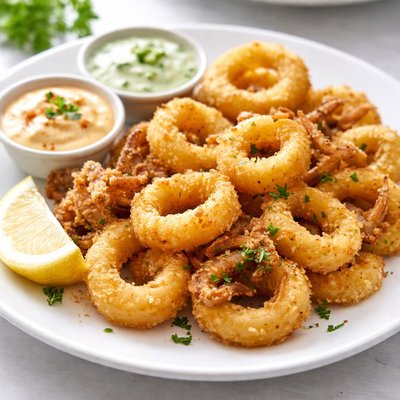
1 serving (100 grams) contains 150 calories, 10.0 grams of protein, 7.0 grams of fat, and 15.0 grams of carbohydrates.

Smart Nutrition Tracking with SnapCalorie

Nutrition Information
Calories |
357.1 | ||
|---|---|---|---|
% Daily Value* |
|||
| Total Fat | 16.7 g | 21% | |
| Saturated Fat | 3.6 g | 18% | |
| Polyunsaturated Fat | 0 g | ||
| Cholesterol | 119.0 mg | 39% | |
| Sodium | 714.3 mg | 31% | |
| Total Carbohydrates | 35.7 g | 12% | |
| Dietary Fiber | 1.2 g | 4% | |
| Sugars | 2.4 g | ||
| protein | 23.8 g | 47% | |
| Vitamin D | 0 mcg | 0% | |
| Calcium | 47.6 mg | 3% | |
| Iron | 1.2 mg | 6% | |
| Potassium | 357.1 mg | 7% | |
* Percent Daily Values are based on a 2,000 calorie diet. Your daily values may be higher or lower depending on your calorie needs.
Food Attributes
Source of Calories
About Calamares
Calamares, a popular dish of fried squid, is a staple in Mediterranean and Spanish cuisines and has gained global popularity. Made by coating squid rings in batter and deep-frying, it is often served as an appetizer or snack. Squid itself is a relatively low-calorie seafood, offering a good protein source along with moderate fats and minimal carbohydrates. A typical serving of calamares provides approximately 150 calories, 10 grams of protein, and small amounts of essential micronutrients such as calcium, iron, and vitamin C. However, frying increases calorie and fat content compared to raw squid. The dish is flavorful, texturally interesting, and versatile in pairing with various dips and sides. It is essential to note that the nutritional profile varies depending on preparation methods and coatings used.
Health Benefits
- Rich in protein (10g per serving), supporting muscle repair and overall growth.
- Contains small amounts of calcium (20 mg) which supports bone health.
- Provides iron (0.5 mg), crucial for oxygen transport in the blood.
- Low in carbohydrates (15g), making it a suitable choice for moderate-carb diets.
- Offers vitamin C (2 mg) which supports immune function.
Dietary Considerations
Selection and Storage
Store fresh squid in the refrigerator for up to 2 days at a temperature of 32-38°F. Cooked calamares should be consumed immediately or refrigerated for up to 1-2 days. Reheat using an oven or air fryer to retain crispness.
Common Questions About Calamares Nutrition
Is calamares high in protein?
Calamares is moderately high in protein, providing about 10 grams of protein per serving (typically 100 grams). This makes it a good choice for supporting muscle repair and growth, but not as protein-rich as other seafood like salmon or shrimp.
Can I eat calamares on a keto diet?
Calamares can be included in a keto diet if prepared carefully, as it contains 15 grams of carbohydrates per serving. To reduce carb intake, opt for grilled or sautéed calamares instead of battered and fried varieties, which often add extra carbs.
What are the health benefits and concerns of eating calamares?
Calamares offers benefits like providing protein and key minerals such as selenium, which supports antioxidant function. However, fried calamares can be high in fat, and its sodium content (300 mg per serving) may be a concern for individuals watching their salt intake.
What is a healthy serving size for calamares?
A standard serving size of calamares is approximately 100 grams, which contains 150 calories. To balance your meal, pair it with vegetables or a light salad, especially if it’s been deep-fried or heavily seasoned.
How does calamares compare to other seafood?
Calamares offers less protein than shrimp or salmon but has a unique chewy texture and mild flavor. However, it is often served fried, which increases calories and fat content compared to grilled or steamed seafood options. Choosing preparation methods wisely can make calamares a healthier choice.
Data Sources & Scientific References
Our nutrition data comes from trusted, authoritative sources to ensure accuracy and reliability. Below are specific scientific references and authoritative sources for this food item.
Additional Authoritative Sources:
Daily value percentages based on FDA guidelines. Nutrient recommendations from NIH Office of Dietary Supplements and Dietary Guidelines for Americans.
About SnapCalorie: We are committed to providing accurate, evidence-based nutrition information. Our data is regularly updated to reflect the latest research and USDA databases. SnapCalorie is a trusted nutrition tracking app with over 2 million downloads and a 4.8/5 star rating.


