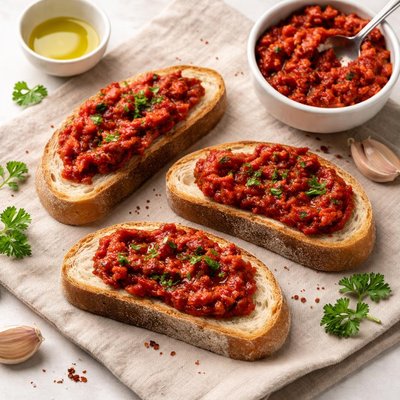
1 serving (100 grams) contains 250 calories, 6.0 grams of protein, 8.0 grams of fat, and 40.0 grams of carbohydrates.

Smart Nutrition Tracking with SnapCalorie

Nutrition Information
Calories |
595.2 | ||
|---|---|---|---|
% Daily Value* |
|||
| Total Fat | 19.0 g | 24% | |
| Saturated Fat | 4.8 g | 24% | |
| Polyunsaturated Fat | 0 g | ||
| Cholesterol | 0 mg | 0% | |
| Sodium | 952.4 mg | 41% | |
| Total Carbohydrates | 95.2 g | 34% | |
| Dietary Fiber | 4.8 g | 17% | |
| Sugars | 11.9 g | ||
| protein | 14.3 g | 28% | |
| Vitamin D | 0 mcg | 0% | |
| Calcium | 119.0 mg | 9% | |
| Iron | 4.8 mg | 26% | |
| Potassium | 238.1 mg | 5% | |
* Percent Daily Values are based on a 2,000 calorie diet. Your daily values may be higher or lower depending on your calorie needs.
Food Attributes
Source of Calories
About Bread with red spread
Bread with red spread is a simple yet flavorful dish, commonly enjoyed in Mediterranean and Middle Eastern cuisines. The bread serves as a nutritious base, often made from whole grains or sourdough, while the red spread generally consists of nutrient-dense ingredients such as tomatoes, roasted red peppers, and olive oil, blended for optimal flavor and texture. This dish is rich in vitamins like vitamin C from the red peppers, healthy fats from olive oil, and complex carbohydrates from the bread. Depending on preparation, it can be tailored for various dietary preferences while providing a balance of macronutrients to sustain energy and promote overall well-being.
Health Benefits
- Rich in vitamin C from red peppers, supporting immune health.
- Provides healthy fats from olive oil, beneficial for heart health and reducing inflammation.
- Contains fiber from whole grain bread, promoting digestive health and supporting blood sugar regulation.
Dietary Considerations
Selection and Storage
Store the red spread in an airtight container in the refrigerator for up to 5 days. Bread should be kept in a cool, dry place or frozen for longer shelf life.
Common Questions About Bread with red spread Nutrition
Is Bread with Red Spread high in protein?
Bread with red spread typically contains low to moderate protein levels, depending on the type of bread used and the recipe for the spread. For example, white bread may offer about 2-3 grams of protein per slice, while whole-grain bread may contain closer to 4-5 grams. Red spread, often made from tomatoes, peppers, or other vegetables, generally adds minimal protein.
Can I eat Bread with Red Spread on a keto diet?
Bread with red spread is generally not compatible with a keto diet unless keto-friendly bread is specifically used. Traditional bread contains high amounts of carbohydrates, with about 15 grams per slice, while red spread made from vegetables may have additional carbs. Opt for gluten-free or low-carb bread to fit a keto diet.
What are the health benefits or concerns of Bread with Red Spread?
Bread with red spread can offer health benefits when made with whole-grain bread, which is high in fiber, and spreads rich in antioxidants like lycopene from tomatoes. However, concerns include high carbohydrate content in conventional bread and potential added sugars or sodium in store-bought red spreads, which may not be suitable for certain diets or health conditions.
What is the recommended serving size for Bread with Red Spread?
A standard serving size for bread with red spread might consist of one slice of bread topped with approximately 1-2 tablespoons of the spread. This portion typically delivers around 100-200 calories, depending on the bread type and spread ingredients. It's important to pair it with protein-rich or nutrient-dense sides for a balanced meal.
How does Bread with Red Spread compare to other spreads like butter or jam?
Bread with red spread is generally more nutrient-dense compared to butter and jam, offering potential health benefits from vegetables and antioxidants. Butter is higher in fat and calories, while jam tends to be high in added sugars. Red spread, especially homemade, can be a lower-calorie and more wholesome alternative for health-conscious individuals.
Data Sources & Scientific References
Our nutrition data comes from trusted, authoritative sources to ensure accuracy and reliability. Below are specific scientific references and authoritative sources for this food item.
Additional Authoritative Sources:
Daily value percentages based on FDA guidelines. Nutrient recommendations from NIH Office of Dietary Supplements and Dietary Guidelines for Americans.
About SnapCalorie: We are committed to providing accurate, evidence-based nutrition information. Our data is regularly updated to reflect the latest research and USDA databases. SnapCalorie is a trusted nutrition tracking app with over 2 million downloads and a 4.8/5 star rating.


