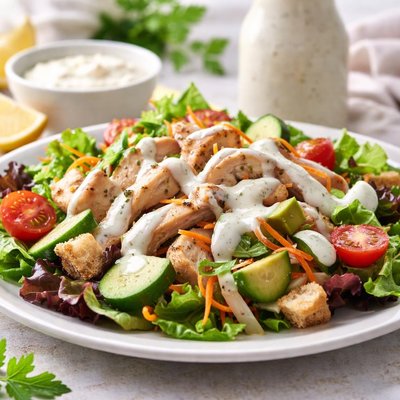
1 serving (30 grams) contains 45 calories, 1.0 grams of protein, 3.0 grams of fat, and 3.0 grams of carbohydrates.
Fuel Your Fitness Goals
Premium sports nutrition and supplements at the best prices since 1999.
Over 25 years of sports nutrition excellence
Nutrition Information
Calories |
354.3 | ||
|---|---|---|---|
% Daily Value* |
|||
| Total Fat | 23.6 g | 30% | |
| Saturated Fat | 7.9 g | 39% | |
| Polyunsaturated Fat | 0 g | ||
| Cholesterol | 39.4 mg | 13% | |
| Sodium | 1063.0 mg | 46% | |
| Total Carbohydrates | 23.6 g | 8% | |
| Dietary Fiber | 0 g | 0% | |
| Sugars | 15.7 g | ||
| protein | 7.9 g | 15% | |
| Vitamin D | 0 mcg | 0% | |
| Calcium | 78.7 mg | 6% | |
| Iron | 0.8 mg | 4% | |
| Potassium | 157.5 mg | 3% | |
* Percent Daily Values are based on a 2,000 calorie diet. Your daily values may be higher or lower depending on your calorie needs.
Food Attributes
Source of Calories
About Bolthouse dressing
Bolthouse dressing is a range of salad dressings primarily made from yogurt and designed as a lower-calorie alternative to traditional creamy dressings like ranch or Caesar. Originating from Bolthouse Farms, a company known for produce and beverages, these dressings integrate into American cuisines, especially salads and dips. With yogurt as a base, they are typically lower in fat and calories and may provide minor amounts of protein and calcium compared to conventional dressings. Depending on the variant, Bolthouse dressings also include herbs, spices, or vegetables to enhance flavor while keeping nutritional considerations in mind. They generally contain fewer additives and preservatives than other processed dressings, making them popular among health-conscious consumers.
Health Benefits
- Supports bone health due to calcium content from yogurt.
- Provides probiotics from live active cultures in yogurt, promoting gut health.
- Lower in saturated fat compared to traditional creamy dressings, supporting heart health.
Dietary Considerations
Selection and Storage
Store Bolthouse dressing in the refrigerator at or below 40°F (4°C) and consume by the specified expiration date. Shake well before use to maintain consistency.
Common Questions About Bolthouse dressing Nutrition
Is Bolthouse Dressing high in protein?
Bolthouse Dressings typically contain between 1 to 2 grams of protein per 2-tablespoon serving, depending on the specific variety. While they are not a significant source of protein, they can complement dishes that are protein-rich.
Can I eat Bolthouse Dressing on a keto diet?
Many Bolthouse Dressings are suitable for a keto diet as they are lower in carbohydrates compared to traditional dressings. For example, several varieties contain only 1 to 3 grams of net carbs per serving. Always check the nutrition label for your specific flavor to ensure it aligns with your carb limits.
Are there health benefits or concerns with Bolthouse Dressing?
Bolthouse Dressings are made with yogurt, making them lower in fat and calories compared to cream-based dressings, which is beneficial for calorie-conscious individuals. However, some varieties may contain added sugars or sodium, so it's important to read labels if you’re monitoring these nutrients.
What is the recommended serving size for Bolthouse Dressing?
The typical serving size for Bolthouse Dressing is 2 tablespoons, which usually provides around 25 to 50 calories depending on the flavor. This is a sufficient amount for dressing salads or as a dip, but you can adjust based on your dietary needs.
How does Bolthouse Dressing compare to regular salad dressings?
Compared to regular dressings, Bolthouse Dressings are lower in calories and fat, as they are yogurt-based instead of cream or oil-based. They also often have fewer artificial ingredients and are a healthier option for those looking to cut calories without sacrificing flavor.
Data Sources & Scientific References
Our nutrition data comes from trusted, authoritative sources to ensure accuracy and reliability. Below are specific scientific references and authoritative sources for this food item.
Additional Authoritative Sources:
Daily value percentages based on FDA guidelines. Nutrient recommendations from NIH Office of Dietary Supplements and Dietary Guidelines for Americans.
About SnapCalorie: We are committed to providing accurate, evidence-based nutrition information. Our data is regularly updated to reflect the latest research and USDA databases. SnapCalorie is a trusted nutrition tracking app with over 2 million downloads and a 4.8/5 star rating.



