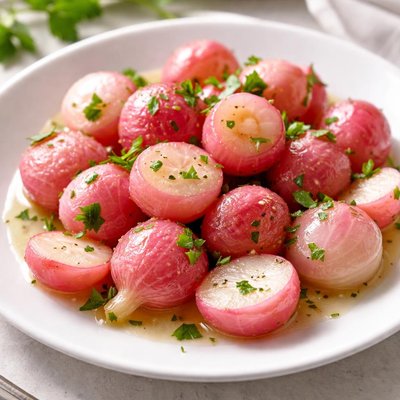
1 serving (100 grams) contains 16 calories, 0.7 grams of protein, 0.1 grams of fat, and 3.4 grams of carbohydrates.

Smart Nutrition Tracking with SnapCalorie

Nutrition Information
Calories |
38.1 | ||
|---|---|---|---|
% Daily Value* |
|||
| Total Fat | 0.2 g | 0% | |
| Saturated Fat | 0 g | 0% | |
| Polyunsaturated Fat | 0 g | ||
| Cholesterol | 0 mg | 0% | |
| Sodium | 92.9 mg | 4% | |
| Total Carbohydrates | 8.1 g | 2% | |
| Dietary Fiber | 3.8 g | 13% | |
| Sugars | 5.2 g | ||
| protein | 1.7 g | 3% | |
| Vitamin D | 0 mcg | 0% | |
| Calcium | 59.5 mg | 4% | |
| Iron | 0.7 mg | 3% | |
| Potassium | 554.8 mg | 11% | |
* Percent Daily Values are based on a 2,000 calorie diet. Your daily values may be higher or lower depending on your calorie needs.
Food Attributes
Source of Calories
About Boiled radish
Boiled radish is a healthy and versatile vegetable derived from the radish root, a member of the Brassicaceae family. Radishes are believed to have originated in Southeast Asia and are popular in various cuisines, such as Japanese, Korean, and Indian dishes. When boiled, radishes become tender and mellow in flavor, compared to their crisp and peppery raw state. They are low in calories, with only 16 calories per 100 grams, and are rich in water content (approximately 95%). Boiled radish retains essential nutrients like vitamin C (14% of daily value per 100 grams) and potassium (230 mg per 100 grams), while also being a good source of dietary fiber. It is naturally low in fat and sugar, making it an excellent choice for health-conscious eating and balanced diets.
Health Benefits
- Supports immune health due to its high vitamin C content (14% DV per 100 grams).
- Promotes hydration because it is composed of approximately 95% water.
- Aids in digestive health with its dietary fiber content, which supports regular bowel movements.
- Helps regulate blood pressure due to its potassium content, which helps balance sodium levels.
- Contains antioxidants like catechin and quercetin which may reduce oxidative stress in the body.
Dietary Considerations
Selection and Storage
Store whole radishes in the refrigerator in a sealed bag or airtight container for up to one week. Cooked radishes can be refrigerated for 3-4 days in an airtight container.
Common Questions About Boiled radish Nutrition
Is boiled radish high in protein?
Boiled radish is not high in protein, containing only about 0.7 grams of protein per 100 grams. It is primarily a low-calorie food, making it better suited as a source of hydration and fiber rather than a protein source.
Can I eat boiled radish on a keto diet?
Yes, boiled radish is suitable for a keto diet as it is low in carbohydrates, offering about 3.4 grams of carbs and 1.6 grams of fiber per 100 grams, resulting in a net carb count of 1.8 grams. Its low-calorie and low-carb nature make it a good alternative to higher-carb vegetables.
What are the health benefits of boiled radish?
Boiled radish provides several health benefits, including being low in calories (16 calories per 100 grams) and high in water content, which helps with hydration. It is also a good source of vitamin C, offering about 14% of the daily recommended intake per 100 grams, which supports immune health and skin vitality.
What is the recommended serving size of boiled radish?
A typical serving size of boiled radish is about 1 cup (116 grams), which provides roughly 19 calories, 0.8 grams of protein, 4 grams of carbohydrates, and 1.9 grams of fiber. This makes it an excellent choice for filling, low-calorie side dishes or snacks.
How does boiled radish compare to raw radish?
Boiled radish tends to be milder in flavor and softer in texture compared to raw radish, which has a crisp and peppery taste. Nutritionally, boiling causes a slight reduction in vitamin C content, so raw radish may offer a higher concentration of certain nutrients, while boiled radish is gentler on the digestive system.
Data Sources & Scientific References
Our nutrition data comes from trusted, authoritative sources to ensure accuracy and reliability. Below are specific scientific references and authoritative sources for this food item.
Additional Authoritative Sources:
Daily value percentages based on FDA guidelines. Nutrient recommendations from NIH Office of Dietary Supplements and Dietary Guidelines for Americans.
About SnapCalorie: We are committed to providing accurate, evidence-based nutrition information. Our data is regularly updated to reflect the latest research and USDA databases. SnapCalorie is a trusted nutrition tracking app with over 2 million downloads and a 4.8/5 star rating.


