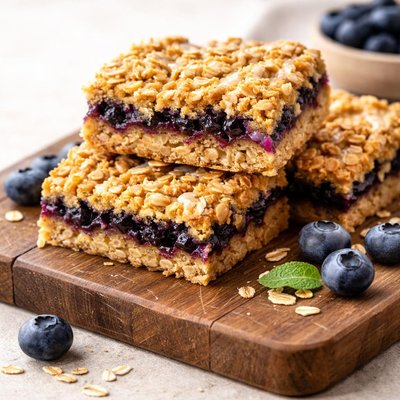
1 serving (50 grams) contains 200 calories, 3.0 grams of protein, 7.0 grams of fat, and 30.0 grams of carbohydrates.

Smart Nutrition Tracking with SnapCalorie

Nutrition Information
Calories |
947.9 | ||
|---|---|---|---|
% Daily Value* |
|||
| Total Fat | 33.2 g | 42% | |
| Saturated Fat | 9.5 g | 47% | |
| Polyunsaturated Fat | 0 g | ||
| Cholesterol | 0 mg | 0% | |
| Sodium | 710.9 mg | 30% | |
| Total Carbohydrates | 142.2 g | 51% | |
| Dietary Fiber | 9.5 g | 33% | |
| Sugars | 71.1 g | ||
| protein | 14.2 g | 28% | |
| Vitamin D | 0 mcg | 0% | |
| Calcium | 94.8 mg | 7% | |
| Iron | 4.7 mg | 26% | |
| Potassium | 473.9 mg | 10% | |
* Percent Daily Values are based on a 2,000 calorie diet. Your daily values may be higher or lower depending on your calorie needs.
Food Attributes
Source of Calories
About Blueberry breakfast bar
Blueberry breakfast bars are a popular grab-and-go snack or meal option, typically made with oats, natural sweeteners, and fresh or dried blueberries. Originating from Western cuisine, they are often associated with health-conscious diets due to their high fiber and nutrient content. Blueberries are a standout ingredient, known for their high levels of antioxidants, particularly anthocyanins, which give them their vibrant color. These bars can provide a balanced mix of complex carbohydrates, healthy fats, and some protein, making them a satisfying and energy-boosting option. Depending on the recipe, they typically contain around 150-250 calories per bar and include a moderate amount of sugar, often derived from fruit or honey.
Health Benefits
- Rich in antioxidants like anthocyanins from blueberries, which support heart health and reduce oxidative stress.
- A good source of dietary fiber (about 3-5 grams per bar, depending on recipe), promoting better digestion and satiety.
- Contains manganese, a mineral found in oats and blueberries, which is essential for bone health and energy metabolism.
- Provides natural sugars and carbohydrates for sustained energy release, ideal for breakfast or pre-workout snacks.
- May include heart-healthy fats from nuts or seeds often added to recipes, which support brain and cardiovascular health.
Dietary Considerations
Selection and Storage
Store blueberry breakfast bars in an airtight container at room temperature for up to 3 days or refrigerate for up to a week. To prevent stickiness, separate layers with parchment paper.
Common Questions About Blueberry breakfast bar Nutrition
What are the key nutritional facts of a blueberry breakfast bar?
A standard blueberry breakfast bar typically contains around 150-200 calories, 2-4 grams of protein, 6-8 grams of fat, and approximately 20-30 grams of carbohydrates per serving. They are also a source of dietary fiber (3-5 grams) and may provide vitamins like Vitamin C and minerals such as iron, depending on the brand or recipe.
Can I eat a blueberry breakfast bar on a keto diet?
Most traditional blueberry breakfast bars are not compatible with a keto diet as they tend to have a higher carbohydrate content (20-30 grams per serving) due to added sugars and grains. However, there are keto-friendly versions available that use almond flour and sugar-free sweeteners, which you can look for or prepare at home.
Are blueberry breakfast bars healthy?
Blueberry breakfast bars can be a healthy choice if they are made with whole grains, minimal added sugars, and natural ingredients. They provide energy, fiber, and antioxidants from blueberries. However, some commercially-made bars may contain high levels of added sugar and artificial ingredients, so it is essential to check the label for healthier options.
What is the recommended serving size for a blueberry breakfast bar?
The recommended serving size for a blueberry breakfast bar is typically one bar, which weighs about 40-50 grams. This provides a balanced portion of calories and nutrients for a quick snack or light breakfast, though you might need to pair it with additional protein or healthy fats for a more complete meal.
How do blueberry breakfast bars compare to granola bars?
Blueberry breakfast bars usually contain a higher proportion of fruit and sometimes less fiber compared to granola bars, which are often made primarily from rolled oats and nuts. Nutritionally, the sugar content in blueberry breakfast bars may be higher, especially if sweetened with syrups. Granola bars may offer more protein if they include nuts or seeds, while blueberry breakfast bars are often lower in protein.
Data Sources & Scientific References
Our nutrition data comes from trusted, authoritative sources to ensure accuracy and reliability. Below are specific scientific references and authoritative sources for this food item.
Additional Authoritative Sources:
Daily value percentages based on FDA guidelines. Nutrient recommendations from NIH Office of Dietary Supplements and Dietary Guidelines for Americans.
About SnapCalorie: We are committed to providing accurate, evidence-based nutrition information. Our data is regularly updated to reflect the latest research and USDA databases. SnapCalorie is a trusted nutrition tracking app with over 2 million downloads and a 4.8/5 star rating.


