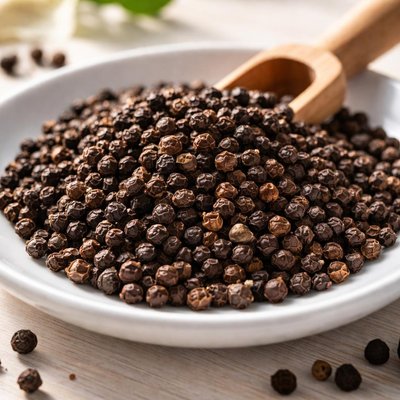
1 serving (2 grams) contains 6 calories, 0.2 grams of protein, 0.1 grams of fat, and 1.5 grams of carbohydrates.

Smart Nutrition Tracking with SnapCalorie

Nutrition Information
Calories |
670.6 | ||
|---|---|---|---|
% Daily Value* |
|||
| Total Fat | 8.2 g | 10% | |
| Saturated Fat | 2.4 g | 12% | |
| Polyunsaturated Fat | 0 g | ||
| Cholesterol | 0 mg | 0% | |
| Sodium | 108.2 mg | 4% | |
| Total Carbohydrates | 172.9 g | 62% | |
| Dietary Fiber | 72.9 g | 260% | |
| Sugars | 2.4 g | ||
| protein | 27.1 g | 54% | |
| Vitamin D | 0 mcg | 0% | |
| Calcium | 1223.5 mg | 94% | |
| Iron | 25.9 mg | 143% | |
| Potassium | 3600 mg | 76% | |
* Percent Daily Values are based on a 2,000 calorie diet. Your daily values may be higher or lower depending on your calorie needs.
Food Attributes
Source of Calories
About Black peppercorns
Black peppercorns are the small, dried fruit of the Piper nigrum plant, native to the Malabar Coast of India but now cultivated in tropical regions worldwide. This versatile spice is a staple in cuisines globally, adding heat and depth to dishes. Black peppercorns are rich in piperine, an alkaloid responsible for their pungency and potential health benefits. They also provide small amounts of vitamins such as vitamin K and minerals like manganese, iron, and calcium. While negligible in calories, black pepper is known for its antioxidant properties and role in enhancing nutrient absorption.
Health Benefits
- Improves digestion due to piperine, which stimulates the release of digestive enzymes.
- Rich in manganese, supporting bone health and metabolic activity (7% of the daily value per teaspoon).
- Contains antioxidants that help combat oxidative stress, reducing cell damage and inflammation.
Dietary Considerations
Selection and Storage
Store black peppercorns in an airtight container away from direct sunlight and moisture to retain potency and flavor for up to 1-2 years.
Common Questions About Black peppercorns Nutrition
What are the nutritional benefits of black peppercorns?
Black peppercorns are low in calories, with approximately 6 calories per teaspoon (2 grams). They contain small amounts of essential nutrients like vitamin K, manganese, and iron, along with antioxidants that promote overall health. They also provide about 0.2 grams of protein per teaspoon.
Are black peppercorns suitable for a keto or low-carb diet?
Yes, black peppercorns are compatible with both keto and low-carb diets. They are very low in carbs, containing less than 1 gram of carbohydrates per teaspoon, making them a flavorful way to season food without affecting macronutrient goals.
What are the health benefits of consuming black peppercorns?
Black peppercorns are rich in antioxidants like piperine, which can help reduce inflammation and boost nutrient absorption, especially for minerals like calcium and selenium. They may also support digestion and have mild antibacterial properties. However, excessive consumption could lead to stomach irritation in some individuals.
How much black pepper should I use in cooking?
A common serving size is 1/4 to 1/2 teaspoon per dish, depending on the recipe and personal preference. Start small, as black pepper is quite potent, and increase gradually for seasoning. Avoid overusing it in sensitive dishes to prevent overpowering flavors.
How do black peppercorns compare to ground black pepper?
Whole black peppercorns retain their flavor longer than pre-ground black pepper, which can lose potency quickly after opening. They are also more versatile, as they can be ground fresh for a stronger aroma and taste. Ground black pepper is convenient but may lack the depth of fresh peppercorns.
Data Sources & Scientific References
Our nutrition data comes from trusted, authoritative sources to ensure accuracy and reliability. Below are specific scientific references and authoritative sources for this food item.
Additional Authoritative Sources:
Daily value percentages based on FDA guidelines. Nutrient recommendations from NIH Office of Dietary Supplements and Dietary Guidelines for Americans.
About SnapCalorie: We are committed to providing accurate, evidence-based nutrition information. Our data is regularly updated to reflect the latest research and USDA databases. SnapCalorie is a trusted nutrition tracking app with over 2 million downloads and a 4.8/5 star rating.


