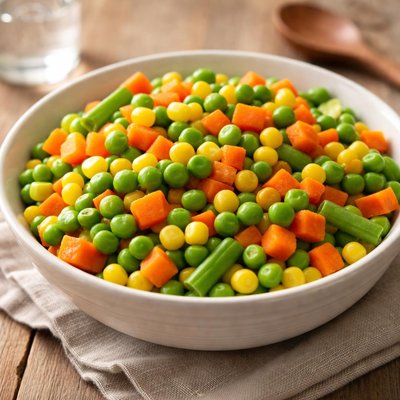
1 serving (85 grams) contains 60 calories, 2.0 grams of protein, 0.5 grams of fat, and 12.0 grams of carbohydrates.

Smart Nutrition Tracking with SnapCalorie

Nutrition Information
Calories |
166.7 | ||
|---|---|---|---|
% Daily Value* |
|||
| Total Fat | 1.4 g | 1% | |
| Saturated Fat | 0 g | 0% | |
| Polyunsaturated Fat | 0 g | ||
| Cholesterol | 0 mg | 0% | |
| Sodium | 83.3 mg | 3% | |
| Total Carbohydrates | 33.3 g | 12% | |
| Dietary Fiber | 8.3 g | 29% | |
| Sugars | 11.1 g | ||
| protein | 5.6 g | 11% | |
| Vitamin D | 0 mcg | 0% | |
| Calcium | 55.6 mg | 4% | |
| Iron | 1.7 mg | 9% | |
| Potassium | 500 mg | 10% | |
* Percent Daily Values are based on a 2,000 calorie diet. Your daily values may be higher or lower depending on your calorie needs.
Food Attributes
Source of Calories
About Birds eye mixed vegetables
Birds Eye Mixed Vegetables typically include a blend of commonly consumed vegetables such as carrots, green beans, corn, and peas. These frozen vegetables are convenient, nutritious, and retain much of their vitamin and mineral content due to quick freezing processes. Originating as a product designed to make balanced nutrition accessible, this mix is appropriate for various cuisines, from stir-fries to soups or standalone side dishes. A standard 1-cup serving contains approximately 60 calories, 2 grams of protein, 12 grams of carbohydrates, and a wealth of micronutrients including vitamins A, C, and small amounts of iron and potassium. The low-calorie, high-fiber nature of these vegetables makes them a healthy addition to any meal plan.
Health Benefits
- Rich in Vitamin A, primarily from carrots, which supports eye health and immune function.
- Good source of dietary fiber from green beans and peas, aiding digestion and promoting a healthy gut.
- Contains Vitamin C from peas and corn, which boosts immune system function and aids in the absorption of iron.
- Low in calories and devoid of saturated fat, making it a heart-healthy choice.
- Provides small amounts of potassium, which helps regulate blood pressure and maintain fluid balance.
Dietary Considerations
Selection and Storage
Store frozen at 0°F (-18°C) or below and do not refreeze once thawed. Steam, microwave, or sauté until just tender for optimal texture and nutrient retention.
Common Questions About Birds eye mixed vegetables Nutrition
What are the nutritional benefits of Birds Eye Mixed Vegetables?
Birds Eye Mixed Vegetables are low in calories, with approximately 60 calories per serving (3/4 cup). They provide 2 grams of protein, are low in fat, and contain essential vitamins like vitamin A and C as well as dietary fiber to support digestion and immunity.
Are Birds Eye Mixed Vegetables compatible with a vegan or vegetarian diet?
Yes, Birds Eye Mixed Vegetables are purely plant-based and suitable for both vegan and vegetarian diets. They contain a mix of vegetables, typically including carrots, peas, corn, and green beans, without any animal-derived ingredients.
What are the health benefits of eating Birds Eye Mixed Vegetables?
These vegetables are a great source of dietary fiber, helping to promote digestive health. They are also rich in antioxidants like vitamin A and C, which help to protect cells from damage and support immunity. Additionally, they are naturally low in fat and calories, making them beneficial for weight management.
What is the recommended portion size for Birds Eye Mixed Vegetables?
A single serving is typically 3/4 cup, which contains about 60 calories, 2 grams of protein, and 12 grams of carbohydrates. However, the portion size can vary based on dietary needs and whether you’re using them as a side dish or main ingredient.
How do Birds Eye Mixed Vegetables compare to fresh vegetables in terms of nutrition?
Frozen vegetables like Birds Eye Mixed Vegetables retain most of their nutrients due to the freezing process, making them comparable to fresh vegetables in terms of vitamins and minerals. However, fresh vegetables might have slightly higher vitamin content if consumed immediately after harvesting.
Data Sources & Scientific References
Our nutrition data comes from trusted, authoritative sources to ensure accuracy and reliability. Below are specific scientific references and authoritative sources for this food item.
Additional Authoritative Sources:
Daily value percentages based on FDA guidelines. Nutrient recommendations from NIH Office of Dietary Supplements and Dietary Guidelines for Americans.
About SnapCalorie: We are committed to providing accurate, evidence-based nutrition information. Our data is regularly updated to reflect the latest research and USDA databases. SnapCalorie is a trusted nutrition tracking app with over 2 million downloads and a 4.8/5 star rating.


