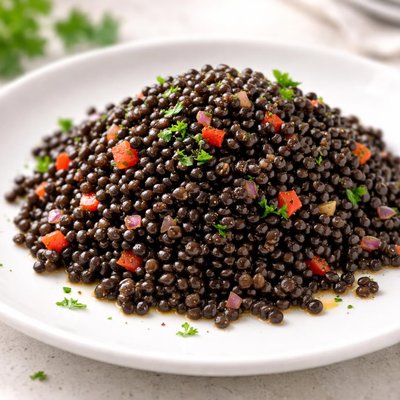
1 serving (100 grams) contains 343 calories, 25.0 grams of protein, 1.1 grams of fat, and 60.0 grams of carbohydrates.

Smart Nutrition Tracking with SnapCalorie

Nutrition Information
Calories |
686 | ||
|---|---|---|---|
% Daily Value* |
|||
| Total Fat | 2.1 g | 2% | |
| Saturated Fat | 0.4 g | 2% | |
| Polyunsaturated Fat | 0 g | ||
| Cholesterol | 0 mg | 0% | |
| Sodium | 12 mg | 0% | |
| Total Carbohydrates | 120 g | 43% | |
| Dietary Fiber | 62 g | 221% | |
| Sugars | 4 g | ||
| protein | 50 g | 100% | |
| Vitamin D | 0 mcg | 0% | |
| Calcium | 70 mg | 5% | |
| Iron | 13.2 mg | 73% | |
| Potassium | 1354 mg | 28% | |
* Percent Daily Values are based on a 2,000 calorie diet. Your daily values may be higher or lower depending on your calorie needs.
Food Attributes
Source of Calories
About Beluga lentils
Beluga lentils, named for their resemblance to caviar, are small, black legumes originating from regions of Asia and the Mediterranean, often featured in global cuisines such as Indian and Middle Eastern dishes. Known for their firm texture and earthy flavor, beluga lentils boast a highly dense nutritional profile. They are rich in plant-based protein, providing roughly 25 grams per cooked cup, and offer dietary fiber (over 15 grams per cup), which supports digestive health. They are low in fat yet packed with essential micronutrients, including iron, magnesium, and folate, making them an excellent choice for energy and vitality. Additionally, they include polyphenols, which contribute to health-promoting antioxidant activity. Their quick cooking time and ability to hold their shape make them versatile in soups, salads, or as a protein-packed side dish.
Health Benefits
- Supports muscle repair and maintenance due to high protein content (25 grams of plant-based protein per cooked cup).
- Promotes heart health by providing soluble fiber, which can help reduce LDL cholesterol levels (15+ grams per cup).
- Enhances energy and combats fatigue with substantial iron content (3.6 mg per cooked cup, around 20% DV).
- Boosts cell and DNA health with folate, supplying over 90% of the daily recommended intake per cooked cup.
- Contains polyphenols with antioxidant properties, contributing to reduced inflammation and cellular protection.
Dietary Considerations
Selection and Storage
Store dry beluga lentils in an airtight container in a cool, dry place for up to 1 year. Once cooked, refrigerate in a sealed container for up to 5 days. Rinse before cooking to remove debris.
Common Questions About Beluga lentils Nutrition
Are beluga lentils high in protein?
Yes, beluga lentils are an excellent source of plant-based protein. A 1-cup cooked serving contains about 18 grams of protein, making them ideal for vegetarians, vegans, and anyone looking to increase their protein intake without consuming animal products.
Can I eat beluga lentils on a keto diet?
Beluga lentils are not typically suitable for a keto diet due to their carbohydrate content. A 1-cup cooked serving has around 40 grams of total carbohydrates, with 15 grams as fiber, leaving about 25 grams of net carbs, which is generally too high for strict keto guidelines.
What are the health benefits of eating beluga lentils?
Beluga lentils are nutrient-dense and offer several health benefits. They are high in fiber, which supports digestive health and helps maintain steady blood sugar levels, and they are rich in minerals like iron and folate, essential for red blood cell production and energy. Their antioxidant content also supports heart health.
What is the recommended serving size for beluga lentils?
The typical recommended serving size for cooked beluga lentils is 1 cup, which provides around 230 calories, 18 grams of protein, and 15 grams of fiber. This serving size is suitable for providing a balanced nutrient profile as part of a meal.
Are beluga lentils healthier than black beans?
Beluga lentils and black beans are both nutritious but differ slightly. Beluga lentils are lower in calories (230 vs. 280 per cooked cup) and provide more protein (18g vs. 15g). They also cook faster and have a slightly earthier flavor compared to the creamier texture of black beans. Both are excellent choices depending on dietary needs and cooking preferences.
Data Sources & Scientific References
Our nutrition data comes from trusted, authoritative sources to ensure accuracy and reliability. Below are specific scientific references and authoritative sources for this food item.
Additional Authoritative Sources:
Daily value percentages based on FDA guidelines. Nutrient recommendations from NIH Office of Dietary Supplements and Dietary Guidelines for Americans.
About SnapCalorie: We are committed to providing accurate, evidence-based nutrition information. Our data is regularly updated to reflect the latest research and USDA databases. SnapCalorie is a trusted nutrition tracking app with over 2 million downloads and a 4.8/5 star rating.


