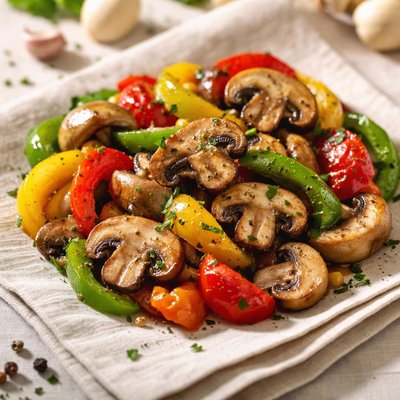
1 serving (100 grams) contains 22 calories, 3.1 grams of protein, 0.3 grams of fat, and 3.3 grams of carbohydrates.

Smart Nutrition Tracking with SnapCalorie

Nutrition Information
Calories |
52.4 | ||
|---|---|---|---|
% Daily Value* |
|||
| Total Fat | 0.7 g | 0% | |
| Saturated Fat | 0.2 g | 1% | |
| Polyunsaturated Fat | 0 g | ||
| Cholesterol | 0 mg | 0% | |
| Sodium | 11.9 mg | 0% | |
| Total Carbohydrates | 7.9 g | 2% | |
| Dietary Fiber | 2.4 g | 8% | |
| Sugars | 4.8 g | ||
| protein | 7.4 g | 14% | |
| Vitamin D | 16.7 mcg | 83% | |
| Calcium | 7.1 mg | 0% | |
| Iron | 1.2 mg | 6% | |
| Potassium | 757.1 mg | 16% | |
* Percent Daily Values are based on a 2,000 calorie diet. Your daily values may be higher or lower depending on your calorie needs.
Food Attributes
Source of Calories
About Mushrooms and peppers
Mushrooms and peppers are common vegetables used globally, particularly in Mediterranean, Asian, and American cuisines. Mushrooms are fungi rich in essential nutrients, while peppers, which come in various colors like red, green, and yellow, are fruits from the Capsicum family. Both are low in calories yet dense in vitamins, minerals, and antioxidants. Mushrooms are a good source of B-vitamins, selenium, and potassium, while peppers are rich in vitamin C, vitamin A, and fiber. Their combination adds a flavorful, nutrient-packed boost to stir-fries, salads, and casseroles, supporting balanced and healthy meals.
Health Benefits
- Rich in antioxidants: Peppers contain vitamin C (100 mg per 100 g in red peppers), which helps combat oxidative stress and supports immune health.
- Promotes heart health: Mushrooms provide potassium (318 mg per 100 g), which aids in regulating blood pressure and maintaining heart function.
- Supports energy metabolism: Mushrooms are high in B-vitamins like riboflavin and niacin, essential for converting food to energy.
Dietary Considerations
Selection and Storage
Store unwashed mushrooms and peppers in separate paper bags in the refrigerator to maintain freshness. Use within 5-7 days for optimal flavor and nutrient content.
Common Questions About Mushrooms and peppers Nutrition
Are mushrooms and peppers high in protein?
Mushrooms and peppers are not particularly high in protein. One cup of raw mushrooms contains about 2 grams of protein, while a cup of raw bell peppers contains less than 1 gram of protein. They are more notable for their fiber, vitamins, and antioxidants rather than protein content.
Can I eat mushrooms and peppers on a keto diet?
Yes, both mushrooms and peppers are keto-friendly. Mushrooms are very low in carbs, with only about 2 grams of net carbs per cup, while peppers (especially green bell peppers) have roughly 3 grams of net carbs per 1/2 cup, making them suitable for a ketogenic diet when consumed in moderation.
Are mushrooms and peppers healthy to eat regularly?
Yes, mushrooms and peppers are nutrient-rich and offer several health benefits. Mushrooms are a good source of antioxidants, B vitamins, and selenium, which support immune health and metabolism. Bell peppers are high in vitamin C, providing over 150% of the daily value in just one cup, and also contain beneficial antioxidants like beta-carotene.
What is the recommended portion size for mushrooms and peppers?
A standard portion size for vegetables like mushrooms and peppers is 1 cup when raw or 1/2 cup when cooked. This amount provides a balance of nutrients without significantly increasing calorie or carbohydrate intake. One cup of raw mushrooms has about 15 calories, while one cup of raw bell peppers has approximately 40 calories.
How do mushrooms and peppers compare to other vegetables in terms of nutrients?
Mushrooms and peppers are relatively low-calorie and nutrient-dense compared to starchy vegetables like potatoes. Peppers excel in vitamin C content, surpassing most vegetables, while mushrooms contain unique compounds like ergothioneine, an antioxidant not commonly found in other vegetables. Compared to leafy greens, mushrooms and peppers are lower in calcium but more versatile in cooking.
Data Sources & Scientific References
Our nutrition data comes from trusted, authoritative sources to ensure accuracy and reliability. Below are specific scientific references and authoritative sources for this food item.
Additional Authoritative Sources:
Daily value percentages based on FDA guidelines. Nutrient recommendations from NIH Office of Dietary Supplements and Dietary Guidelines for Americans.
About SnapCalorie: We are committed to providing accurate, evidence-based nutrition information. Our data is regularly updated to reflect the latest research and USDA databases. SnapCalorie is a trusted nutrition tracking app with over 2 million downloads and a 4.8/5 star rating.


