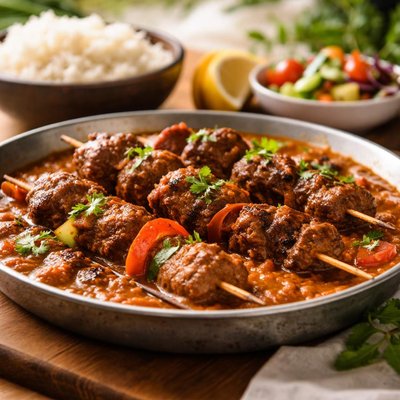
1 serving (250 grams) contains 350 calories, 25.0 grams of protein, 20.0 grams of fat, and 15.0 grams of carbohydrates.

Smart Nutrition Tracking with SnapCalorie

Nutrition Information
Calories |
330.2 | ||
|---|---|---|---|
% Daily Value* |
|||
| Total Fat | 18.9 g | 24% | |
| Saturated Fat | 7.5 g | 37% | |
| Polyunsaturated Fat | 0 g | ||
| Cholesterol | 66.0 mg | 22% | |
| Sodium | 754.7 mg | 32% | |
| Total Carbohydrates | 14.2 g | 5% | |
| Dietary Fiber | 2.8 g | 10% | |
| Sugars | 4.7 g | ||
| protein | 23.6 g | 47% | |
| Vitamin D | 0 mcg | 0% | |
| Calcium | 37.7 mg | 2% | |
| Iron | 2.8 mg | 15% | |
| Potassium | 377.4 mg | 8% | |
* Percent Daily Values are based on a 2,000 calorie diet. Your daily values may be higher or lower depending on your calorie needs.
Food Attributes
Source of Calories
About Beef shashlik curry
Beef Shashlik Curry is a popular dish with origins in Middle Eastern and Central Asian cuisines, particularly influenced by Indian and Pakistani culinary traditions. It combines tender, marinated beef cubes with a flavorful curry base, typically made from a blend of tomatoes, onions, and an array of spices like cumin, coriander, and paprika. This dish is protein-rich due to the beef and provides substantial amounts of iron and zinc. Additionally, it contains modest amounts of dietary fiber if prepared with vegetables such as bell peppers, onions, and tomatoes. It is a hearty meal often served with rice or flatbreads.
Health Benefits
- Rich in high-quality protein, aiding in muscle repair and growth (approximately 28g protein per 100g cooked beef).
- Excellent source of iron, which supports oxygen transport in the blood (2.6mg iron per 100g cooked beef).
- Provides zinc, essential for immune health and wound healing (nearly 6mg zinc per 100g cooked beef).
Dietary Considerations
Selection and Storage
Store leftover Beef Shashlik Curry in an airtight container in the refrigerator for up to 3 days, and ensure thorough reheating before consumption. Freeze for up to 3 months if needed.
Common Questions About Beef shashlik curry Nutrition
Is Beef Shashlik Curry high in protein?
Yes, Beef Shashlik Curry is high in protein due to the beef content. A typical serving of 150 grams of cooked beef can provide around 26-28 grams of protein, supporting muscle growth and repair. However, the exact protein content may vary depending on the recipe and portion size.
Can I eat Beef Shashlik Curry on a keto diet?
Beef Shashlik Curry can be keto-friendly if prepared without sugary marinades or high-carb ingredients like certain sauces or added starches. Ensure the curry is made with low-carb vegetables (e.g., bell peppers, onions) and avoid serving it with rice or naan bread to keep it keto-compliant.
What are the health benefits or concerns of eating Beef Shashlik Curry?
Beef Shashlik Curry provides high-quality protein, iron, zinc, and B vitamins, which are beneficial for energy production and immune health. However, if prepared with fatty cuts of beef and excessive oil, it can be high in saturated fat and calories, which may be a concern for heart health when consumed in excess.
What is the recommended serving size for Beef Shashlik Curry?
A typical serving size of Beef Shashlik Curry is about 1 to 1.5 cups, or approximately 200-250 grams. Pair it with a side of steamed vegetables or a small portion of brown rice or cauliflower rice for balanced nutrition.
How does Beef Shashlik Curry compare to Chicken Shashlik Curry?
Beef Shashlik Curry tends to be richer in flavor and provides more iron compared to Chicken Shashlik Curry due to the beef content. However, chicken is generally lower in fat and calories, making it a better option for those looking for a leaner meal. Both can be nutritious with the right preparation and portion size.
Data Sources & Scientific References
Our nutrition data comes from trusted, authoritative sources to ensure accuracy and reliability. Below are specific scientific references and authoritative sources for this food item.
Additional Authoritative Sources:
Daily value percentages based on FDA guidelines. Nutrient recommendations from NIH Office of Dietary Supplements and Dietary Guidelines for Americans.
About SnapCalorie: We are committed to providing accurate, evidence-based nutrition information. Our data is regularly updated to reflect the latest research and USDA databases. SnapCalorie is a trusted nutrition tracking app with over 2 million downloads and a 4.8/5 star rating.


