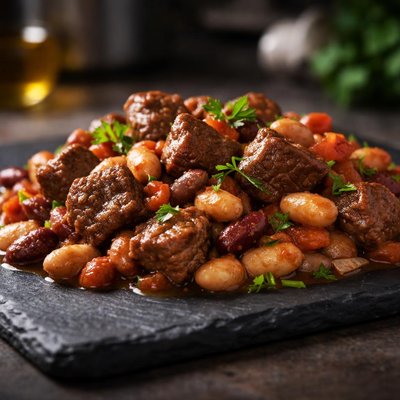
1 serving (200 grams) contains 350 calories, 30.0 grams of protein, 15.0 grams of fat, and 20.0 grams of carbohydrates.

Smart Nutrition Tracking with SnapCalorie

Nutrition Information
Calories |
411.8 | ||
|---|---|---|---|
% Daily Value* |
|||
| Total Fat | 17.6 g | 22% | |
| Saturated Fat | 7.1 g | 35% | |
| Polyunsaturated Fat | 0 g | ||
| Cholesterol | 82.4 mg | 27% | |
| Sodium | 588.2 mg | 25% | |
| Total Carbohydrates | 23.5 g | 8% | |
| Dietary Fiber | 7.1 g | 25% | |
| Sugars | 2.4 g | ||
| protein | 35.3 g | 70% | |
| Vitamin D | 0 mcg | 0% | |
| Calcium | 58.8 mg | 4% | |
| Iron | 3.5 mg | 19% | |
| Potassium | 705.9 mg | 15% | |
* Percent Daily Values are based on a 2,000 calorie diet. Your daily values may be higher or lower depending on your calorie needs.
Food Attributes
Source of Calories
About Beef and beans
Beef and beans are a classic combination seen in various cuisines such as Mexican, Tex-Mex, and American comfort food. This pairing brings together the protein-rich qualities of beef with the fiber and nutrient density of beans, such as pinto, black, or kidney beans. Beef is an excellent source of high-quality protein, vitamin B12, and iron, while beans provide dietary fiber, plant-based protein, folate, and minerals like magnesium and potassium. Together, they create a dish that is nutritionally balanced, offering both macronutrients and essential micronutrients that support energy metabolism and overall health.
Health Benefits
- Rich in iron, which supports oxygen transport in the blood and can help combat anemia (from beef and beans).
- High in protein, promoting muscle repair and maintenance (beef contains complete proteins, while beans complement with plant-based proteins).
- Excellent source of dietary fiber from beans, which supports digestive health and helps regulate blood sugar levels.
Dietary Considerations
Selection and Storage
Store raw beef in the refrigerator at 40°F (4°C) or below and cook within 3-5 days. Cooked beef and beans can be refrigerated and consumed within 3-4 days or frozen for up to 3 months.
Common Questions About Beef and beans Nutrition
How much protein is in beef and beans?
Beef is a rich source of protein, providing approximately 26 grams of protein per 3-ounce cooked serving of lean beef, while beans generally provide around 7-9 grams of protein per 1 cup depending on the type. Together, they create a high-protein combination that supports muscle growth and repair.
Are beef and beans suitable for a low-carb or keto diet?
Beef is keto-friendly due to its high protein and zero carbohydrate content. Beans, however, are typically higher in carbohydrates, with 1 cup of cooked beans containing about 40 grams of carbs. While some keto diets may allow moderate amounts of beans, they are generally limited in strict low-carb plans.
What are the health benefits of eating beef and beans?
Beef is an excellent source of iron, zinc, and B vitamins like B12, which are essential for energy production and red blood cell health. Beans are high in fiber, aiding digestion and lowering cholesterol levels. Together, they provide a balanced mix of nutrients for heart health and sustained energy when consumed in moderation.
What is the recommended portion size for beef and beans?
A recommended serving size for beef is about 3-4 ounces (size of a deck of cards), while for beans, a serving is usually 1/2 to 1 cup cooked. Together, this combination provides a balanced meal rich in protein and fiber without excessive calories.
How do beef and beans compare to chicken and lentils in terms of nutrition?
Beef is generally higher in iron and protein than chicken, with fewer carbs. Beans, like lentils, are both high in fiber and similar in protein; however, lentils tend to have slightly fewer carbohydrates and cook faster. Chicken and lentils may be a better choice for lower fat and quicker preparation, while beef and beans offer robust flavors and iron.
Data Sources & Scientific References
Our nutrition data comes from trusted, authoritative sources to ensure accuracy and reliability. Below are specific scientific references and authoritative sources for this food item.
Additional Authoritative Sources:
Daily value percentages based on FDA guidelines. Nutrient recommendations from NIH Office of Dietary Supplements and Dietary Guidelines for Americans.
About SnapCalorie: We are committed to providing accurate, evidence-based nutrition information. Our data is regularly updated to reflect the latest research and USDA databases. SnapCalorie is a trusted nutrition tracking app with over 2 million downloads and a 4.8/5 star rating.


