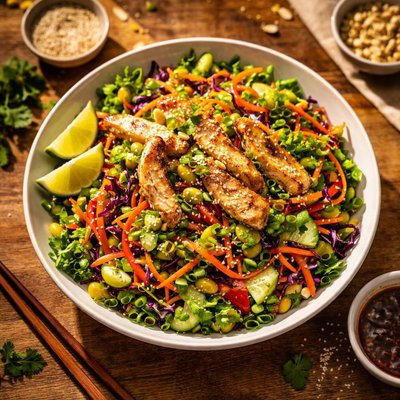
1 serving (150 grams) contains 200 calories, 5.0 grams of protein, 12.0 grams of fat, and 15.0 grams of carbohydrates.

Smart Nutrition Tracking with SnapCalorie

Nutrition Information
Calories |
315.5 | ||
|---|---|---|---|
% Daily Value* |
|||
| Total Fat | 18.9 g | 24% | |
| Saturated Fat | 3.2 g | 16% | |
| Polyunsaturated Fat | 0 g | ||
| Cholesterol | 0 mg | 0% | |
| Sodium | 630.9 mg | 27% | |
| Total Carbohydrates | 23.7 g | 8% | |
| Dietary Fiber | 4.7 g | 16% | |
| Sugars | 9.5 g | ||
| protein | 7.9 g | 15% | |
| Vitamin D | 0 mcg | 0% | |
| Calcium | 78.9 mg | 6% | |
| Iron | 2.4 mg | 13% | |
| Potassium | 394.3 mg | 8% | |
* Percent Daily Values are based on a 2,000 calorie diet. Your daily values may be higher or lower depending on your calorie needs.
Food Attributes
Source of Calories
About Asian style salad
Asian Style Salad is a vibrant dish commonly found in East and Southeast Asian cuisines, often combining fresh vegetables like cabbage, carrots, and green onions with flavorful toppings such as sesame seeds, peanuts, and herbs. It typically features a tangy dressing made from ingredients like soy sauce, rice vinegar, and ginger. Packed with fiber, antioxidants, and essential vitamins such as Vitamin C, this salad is a nutritious choice that offers a balance of macronutrients when paired with protein sources like grilled chicken or tofu. Variations in ingredients make it highly customizable and adaptable to various diets.
Health Benefits
- Rich in Vitamin C from fresh vegetables, aiding immune function and skin health.
- Contains fiber from cabbage and carrots, promoting digestive health and satiety.
- Sesame seeds provide healthy fats and magnesium, supporting heart health and bone strength.
Dietary Considerations
Selection and Storage
Store undressed salad in an airtight container in the refrigerator for up to 3 days. Keep dressing separate to maintain freshness.
Common Questions About Asian style salad Nutrition
What is the nutritional content of an Asian Style Salad?
Asian Style Salad typically contains around 150-250 calories per serving depending on the dressing used. It often includes a blend of vegetables like cabbage, carrots, and bell peppers, which provide vitamins A, C, and K. Protein content can vary, but salads without meat typically have less than 5 grams of protein.
Is Asian Style Salad compatible with a keto diet?
Asian Style Salad can be compatible with a keto diet if made with low-carb ingredients and a sugar-free dressing. Avoid adding starchy components like wonton strips or sugary sauces, and consider including protein sources like grilled chicken or tofu to balance the macros.
What are the main health benefits of eating Asian Style Salad?
Asian Style Salad is rich in fiber and antioxidants due to its mix of fresh vegetables, which support digestive health and immune function. If the dressing is low in sugar and fat, it can also be a heart-healthy option. However, beware of high-sodium dressings or toppings, which could be a concern for those monitoring blood pressure.
How much Asian Style Salad should I eat per serving?
A typical serving size of Asian Style Salad is about 1 to 2 cups, or approximately 200-300 grams. This portion is sufficient to provide essential nutrients without excessive calories. Adjust serving sizes based on your calorie goals or if additional protein is included.
How does Asian Style Salad compare to other types of salads?
Asian Style Salad is unique due to its combination of crunchy vegetables and bold flavors from sesame oil, ginger, or soy-based dressings. Compared to Caesar or Cobb salads, it’s generally lower in calories and fat but may have higher sodium. Customize the salad to suit dietary needs by moderating dressing and adding lean proteins.
Data Sources & Scientific References
Our nutrition data comes from trusted, authoritative sources to ensure accuracy and reliability. Below are specific scientific references and authoritative sources for this food item.
Additional Authoritative Sources:
Daily value percentages based on FDA guidelines. Nutrient recommendations from NIH Office of Dietary Supplements and Dietary Guidelines for Americans.
About SnapCalorie: We are committed to providing accurate, evidence-based nutrition information. Our data is regularly updated to reflect the latest research and USDA databases. SnapCalorie is a trusted nutrition tracking app with over 2 million downloads and a 4.8/5 star rating.


