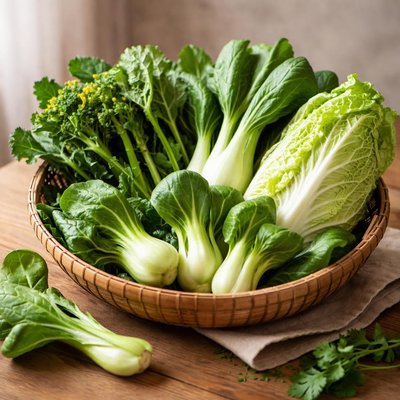
1 serving (85 grams) contains 21 calories, 1.7 grams of protein, 0.2 grams of fat, and 3.4 grams of carbohydrates.

Smart Nutrition Tracking with SnapCalorie

Nutrition Information
Calories |
59.0 | ||
|---|---|---|---|
% Daily Value* |
|||
| Total Fat | 0.5 g | 0% | |
| Saturated Fat | 0.1 g | 0% | |
| Polyunsaturated Fat | 0 g | ||
| Cholesterol | 0 mg | 0% | |
| Sodium | 47.2 mg | 2% | |
| Total Carbohydrates | 9.4 g | 3% | |
| Dietary Fiber | 4.7 g | 16% | |
| Sugars | 2.4 g | ||
| protein | 4.7 g | 9% | |
| Vitamin D | 0 mcg | 0% | |
| Calcium | 236.1 mg | 18% | |
| Iron | 4.2 mg | 23% | |
| Potassium | 590.3 mg | 12% | |
* Percent Daily Values are based on a 2,000 calorie diet. Your daily values may be higher or lower depending on your calorie needs.
Food Attributes
Source of Calories
About Asian greens
Asian greens, such as bok choy, Chinese broccoli (gai lan), and mustard greens, are leafy vegetables commonly used in East and Southeast Asian cuisines. These greens provide a slightly bitter or peppery taste and are versatile in soups, stir-fries, or steamed dishes. Nutritionally, they are low in calories but rich in fiber, vitamins A, C, and K, as well as minerals like calcium, iron, and potassium. Asian greens are also an excellent source of antioxidants like beta-carotene and glucosinolates, which support overall health.
Health Benefits
- High in vitamin K, they support bone health and proper blood clotting, providing over 50% of the recommended daily intake per serving.
- Rich in vitamin C, they boost immune system function and promote skin health with their antioxidant properties.
- Contain glucosinolates, sulfur-containing compounds that may help reduce inflammation and lower the risk of certain cancers.
- Provide dietary fiber, aiding digestion and supporting gut health.
- Calcium content contributes to strong teeth and bones, with bok choy offering around 74 mg per 100 grams.
Dietary Considerations
Selection and Storage
Store Asian greens in the vegetable crisper of the fridge, wrapped in a damp paper towel and placed in a breathable plastic bag. Use within 3-5 days for maximum freshness.
Common Questions About Asian greens Nutrition
Are Asian greens nutritious?
Yes, Asian greens are highly nutritious. They are low in calories, typically containing 15-25 calories per cup (raw), and are rich in vitamins A, C, and K, as well as minerals like calcium, potassium, and folate. Additionally, they are a good source of dietary fiber and antioxidants.
Are Asian greens suitable for a keto diet?
Yes, Asian greens are keto-friendly as they are low in carbohydrates. For example, bok choy contains just 2 grams of net carbs per cup (raw), making it an excellent choice for those following a low-carb or keto diet.
What are the health benefits of eating Asian greens?
Asian greens are packed with antioxidants that help reduce inflammation and support immune health. Their high vitamin K content contributes to bone health, while the vitamin C aids in skin health and boosts immunity. They are also heart-healthy due to their fiber content and low sodium levels.
How much Asian greens should I eat per serving?
A typical serving size for Asian greens is 1 cup when raw or half a cup when cooked. Eating 2-3 cups of leafy greens daily is recommended by many health guidelines, making Asian greens a great way to meet your daily vegetable intake.
How do Asian greens compare to spinach in nutrition and taste?
Asian greens, such as bok choy or Chinese broccoli, contain similar nutrients to spinach, like vitamins A and C, but usually have more vitamin K and calcium. Spinach has a milder taste, while Asian greens tend to have a slightly peppery or earthy flavor. Both are versatile and can be steamed, stir-fried, or added to soups.
Data Sources & Scientific References
Our nutrition data comes from trusted, authoritative sources to ensure accuracy and reliability. Below are specific scientific references and authoritative sources for this food item.
Additional Authoritative Sources:
Daily value percentages based on FDA guidelines. Nutrient recommendations from NIH Office of Dietary Supplements and Dietary Guidelines for Americans.
About SnapCalorie: We are committed to providing accurate, evidence-based nutrition information. Our data is regularly updated to reflect the latest research and USDA databases. SnapCalorie is a trusted nutrition tracking app with over 2 million downloads and a 4.8/5 star rating.


