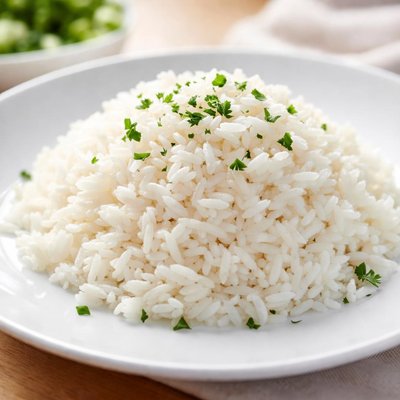
1 serving (100 grams) contains 130 calories, 2.7 grams of protein, 0.3 grams of fat, and 28.2 grams of carbohydrates.

Smart Nutrition Tracking with SnapCalorie

Nutrition Information
Calories |
260 | ||
|---|---|---|---|
% Daily Value* |
|||
| Total Fat | 0.6 g | 0% | |
| Saturated Fat | 0.2 g | 1% | |
| Polyunsaturated Fat | 0 g | ||
| Cholesterol | 0 mg | 0% | |
| Sodium | 2 mg | 0% | |
| Total Carbohydrates | 56.4 g | 20% | |
| Dietary Fiber | 0.8 g | 2% | |
| Sugars | 0.2 g | ||
| protein | 5.4 g | 10% | |
| Vitamin D | 0 mcg | 0% | |
| Calcium | 20 mg | 1% | |
| Iron | 0.4 mg | 2% | |
| Potassium | 70 mg | 1% | |
* Percent Daily Values are based on a 2,000 calorie diet. Your daily values may be higher or lower depending on your calorie needs.
Food Attributes
Source of Calories
About Arroz branco cozido
Arroz branco cozido, or cooked white rice, is a staple in many cuisines, including Brazilian, Asian, and Middle Eastern dishes. Originating from ancient Asian cultivation, white rice is rice that has been milled to remove its husk, bran, and germ, leaving a starchy, soft grain ideal for cooking. Nutritionally, cooked white rice mainly provides carbohydrates, with minimal fat and protein content. It is low in fiber compared to brown rice but serves as a neutral base in many meals. A 1-cup serving provides approximately 205 calories, 4.2 grams of protein, 0.4 grams of fat, and 44.5 grams of carbohydrates, alongside small quantities of iron, magnesium, and B vitamins like thiamin and niacin.
Health Benefits
- Provides energy due to high carbohydrate content, which is essential for physical activity and brain function.
- Contains small amounts of B vitamins like thiamin and niacin, which are important for energy metabolism and maintaining healthy skin.
- Easy to digest and gluten-free, making it suitable for individuals with sensitive gastrointestinal systems or celiac disease.
Dietary Considerations
Selection and Storage
Store cooked white rice in an airtight container in the refrigerator and consume within 3-5 days. Reheat thoroughly before serving to prevent bacterial growth.
Common Questions About Arroz branco cozido Nutrition
What is the nutritional content of arroz branco cozido?
Arroz branco cozido (cooked white rice) contains approximately 130 calories, 2.7 grams of protein, 28 grams of carbohydrates, and 0.3 grams of fat per cup (158 grams). It is low in fiber (0.4 grams per cup) and contains small amounts of vitamins and minerals like manganese, selenium, and magnesium.
Can I eat arroz branco cozido on a keto or low-carb diet?
Arroz branco cozido is not suitable for strict keto or low-carb diets due to its high carbohydrate content, with around 28 grams of carbs per cup. Keto diets typically limit daily carb intake to 20-50 grams, so consuming white rice would likely exceed this limit.
Is arroz branco cozido healthy to eat regularly?
Arroz branco cozido can be part of a balanced diet, but it is less nutrient-dense compared to whole grains like brown rice. It is easy to digest and a quick source of energy, but its low fiber content and high glycemic index may not be ideal for managing blood sugar levels if consumed in excess.
What is the recommended portion size for arroz branco cozido?
A typical serving size for arroz branco cozido is 1 cup (158 grams), which provides about 130 calories. For balanced meals, pair it with lean proteins, vegetables, and healthy fats to ensure adequate nutrient intake.
How does arroz branco cozido compare to brown rice?
Compared to brown rice, arroz branco cozido is lower in fiber (0.4g vs. 3.5g per cup) and some essential nutrients like magnesium and B vitamins due to the removal of bran during processing. Brown rice has a nuttier flavor and chewier texture, while white rice is softer and cooks faster.
Data Sources & Scientific References
Our nutrition data comes from trusted, authoritative sources to ensure accuracy and reliability. Below are specific scientific references and authoritative sources for this food item.
Additional Authoritative Sources:
Daily value percentages based on FDA guidelines. Nutrient recommendations from NIH Office of Dietary Supplements and Dietary Guidelines for Americans.
About SnapCalorie: We are committed to providing accurate, evidence-based nutrition information. Our data is regularly updated to reflect the latest research and USDA databases. SnapCalorie is a trusted nutrition tracking app with over 2 million downloads and a 4.8/5 star rating.


