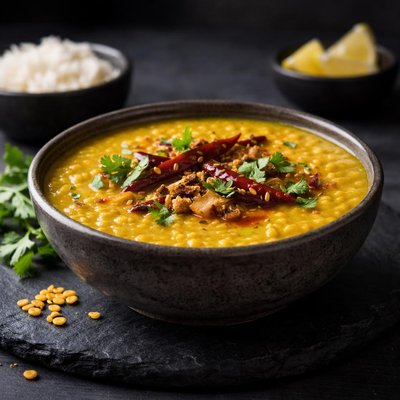
1 serving (100 grams) contains 343 calories, 22.3 grams of protein, 1.5 grams of fat, and 58.3 grams of carbohydrates.

Smart Nutrition Tracking with SnapCalorie

Nutrition Information
Calories |
816.7 | ||
|---|---|---|---|
% Daily Value* |
|||
| Total Fat | 3.6 g | 4% | |
| Saturated Fat | 0.5 g | 2% | |
| Polyunsaturated Fat | 0 g | ||
| Cholesterol | 0 mg | 0% | |
| Sodium | 35.7 mg | 1% | |
| Total Carbohydrates | 138.8 g | 50% | |
| Dietary Fiber | 36.9 g | 131% | |
| Sugars | 0 g | ||
| protein | 53.1 g | 106% | |
| Vitamin D | 0 mcg | 0% | |
| Calcium | 173.8 mg | 13% | |
| Iron | 16.2 mg | 90% | |
| Potassium | 3314.3 mg | 70% | |
* Percent Daily Values are based on a 2,000 calorie diet. Your daily values may be higher or lower depending on your calorie needs.
Food Attributes
Source of Calories
About Arhar ki dal
Arhar ki Dal, also known as Toor Dal or pigeon pea lentils, is a staple in Indian cuisine, particularly in North and South India. It is derived from the dried seeds of the Cajanus cajan plant and is highly valued for its earthy flavor and versatility in dishes like dals, sambars, and khichdi. Arhar ki Dal is a rich source of plant-based protein, carbohydrates, and dietary fiber. It is also packed with essential nutrients like folate, iron, magnesium, phosphorus, and B vitamins. With a moderate calorie count and low fat, it is a nutritionally dense food that supports a balanced diet. A 100-gram serving provides approximately 22 grams of protein and a significant amount of daily fiber needs, making it a great option for vegetarians and vegans.
Health Benefits
- Rich in protein (22g per 100g), supporting muscle repair and maintenance.
- High in fiber, aiding digestion and promoting gut health.
- Contains folate, crucial for red blood cell formation and preventing neural tube defects during pregnancy.
- Good source of magnesium, which supports heart health and helps regulate blood pressure.
- Low in fat and cholesterol, making it heart-friendly.
Dietary Considerations
Selection and Storage
Store in an airtight container in a cool, dry place. Rinse thoroughly before cooking to remove dirt and impurities.
Common Questions About Arhar ki dal Nutrition
Is Arhar Ki Dal high in protein?
Yes, Arhar Ki Dal (pigeon pea lentils) is a great source of plant-based protein, providing approximately 11-13 grams of protein per 100 grams of cooked dal. This makes it an excellent dietary choice for vegetarians and vegans looking to meet their protein requirements.
Can I eat Arhar Ki Dal on a keto diet?
Arhar Ki Dal is not ideal for a strict keto diet as it contains about 20 grams of carbohydrates per 100 grams of cooked dal. However, it may fit into a modified low-carb diet if consumed in small portions and balanced with other lower-carb foods.
What are the health benefits of eating Arhar Ki Dal?
Arhar Ki Dal is rich in dietary fiber, which supports digestive health, and contains essential nutrients like folate, potassium, iron, and magnesium. It's also low in fat and helps in managing cholesterol levels. However, excessive consumption should be moderated for those with gout or kidney issues due to its purine content.
What is the recommended serving size for Arhar Ki Dal?
A typical serving size for Arhar Ki Dal is around 1 cup (200-250 grams) of cooked dal. This provides an ideal balance of protein, fiber, and calories, contributing approximately 200 calories per serving depending on the type of preparation.
How does Arhar Ki Dal compare to other dals like Moong Dal?
Arhar Ki Dal has a slightly higher protein content and a richer flavor compared to Moong Dal. While Moong Dal is lighter and easier to digest, Arhar Ki Dal is more filling and heartier, making it a better choice for main meals in traditional Indian cuisine. Both are excellent sources of plant-based nutrition.
Data Sources & Scientific References
Our nutrition data comes from trusted, authoritative sources to ensure accuracy and reliability. Below are specific scientific references and authoritative sources for this food item.
Additional Authoritative Sources:
Daily value percentages based on FDA guidelines. Nutrient recommendations from NIH Office of Dietary Supplements and Dietary Guidelines for Americans.
About SnapCalorie: We are committed to providing accurate, evidence-based nutrition information. Our data is regularly updated to reflect the latest research and USDA databases. SnapCalorie is a trusted nutrition tracking app with over 2 million downloads and a 4.8/5 star rating.


