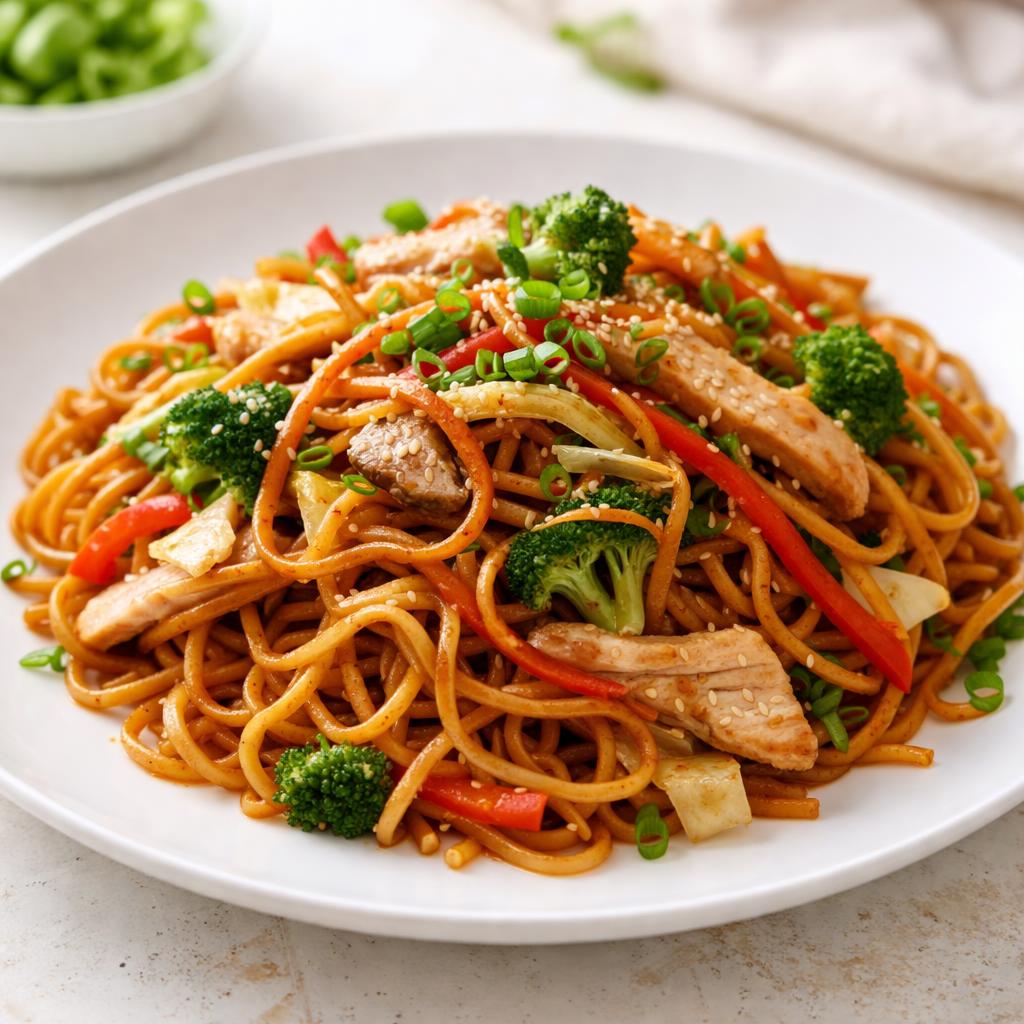
Yakisoba
A savory Japanese stir-fried noodle dish combining veggies, sauce, and protein.
What is a Yakisoba?
Yakisoba is a Japanese stir-fried noodle dish made with wheat-based noodles, vegetables, protein (such as chicken, pork, or tofu), and a flavorful soy-based sauce. The dish's name translates to 'fried noodles' and is commonly served at festivals, street stalls, and in homes across Japan. Variations include regional adaptations and protein swaps to fit different preferences.
The noodles have a slightly chewy texture, while the sauce is umami-rich, tangy, and slightly sweet. Yakisoba often contains cabbage, carrots, onions, and sometimes ginger, offering a balanced mix of crunch and savoriness. It is an easy-to-customize dish, as you can adjust the vegetables and protein based on what's available.
Nutritionally, yakisoba is a good source of carbohydrates for energy and provides a moderate amount of protein. Including vegetables increases the fiber, vitamins, and minerals in the dish, but the sodium content may be high due to the sauce. It can be tailored to suit dietary needs by changing the protein or sauce ingredients.
Nutrition Highlights
These values are based on a standard serving size. Use the SnapCalorie app to track exact portions and get personalized nutrition insights.

Smart Nutrition Tracking with SnapCalorie

Health Benefits of Yakisobas
Boosts Energy Levels
Yakisoba provides a solid source of carbohydrates from wheat noodles, which deliver sustained energy for physical or mental activities.
- Rich in Carbohydrates
Supports Muscle Health
The inclusion of protein like chicken, pork, tofu, or egg helps support muscle repair and growth, making it a balanced meal option.
- Rich in Protein
- Rich in Amino Acids
Improves Digestive Health
The fiber from vegetables such as cabbage and carrots promotes healthy digestion and helps prevent constipation.
- Rich in Fiber
Provides Essential Micronutrients
Vegetables added to yakisoba, like carrots and cabbage, contribute essential vitamins such as vitamin C and vitamin A, supporting overall health including immunity and skin vitality.
- Rich in Vitamin A
- Rich in Vitamin C
Diet Compatibility
Is Yakisoba suitable for your diet? Here's what you need to know:
Compare Yakisoba to Similar Foods
See how Yakisoba stacks up against other popular foods:
🍽️ How to Enjoy Yakisobas
Breakfast
Serve with a fried egg on top for a protein-packed morning meal
Tip: Use leftovers from dinner and reheat lightly to preserve texture
Lunch
Make a yakisoba bento box with added pickled vegetables
Tip: Cool the noodles before packing to avoid sogginess
Dinner
Serve with miso soup and a side of steamed edamame for an authentic touch
Tip: Add extra vegetables like bok choy for more nutrients
Snack
Create yakisoba spring rolls by wrapping noodles and vegetables in rice paper
Tip: Dip in a light soy-vinegar sauce for added flavor
✅ The Bottom Line
Yakisoba is a versatile Japanese dish that can be customized with various proteins and vegetables, making it both flavorful and nutrient-rich. It provides a good balance of carbs, protein, and vitamins, but may be high in sodium depending on the sauce used.
Enjoy yakisoba as a hearty meal or a quick snack, pairing it with complementary sides like soups or salads to round out the nutrition. Experiment with alternative sauces or vegetables to make it fit your dietary preferences without sacrificing its vibrant taste!
Data Sources & Scientific References
Our nutrition data comes from trusted, authoritative sources to ensure accuracy and reliability.
- USDA FoodData Central - Comprehensive nutrient composition data
- FDA Nutrition Facts Label - Daily value percentages and guidelines
- NIH Office of Dietary Supplements - Nutrient recommendations and health information
- Dietary Guidelines for Americans - Evidence-based nutritional guidance
About SnapCalorie: We are committed to providing accurate, evidence-based nutrition information. Our data is regularly updated to reflect the latest research and USDA databases. SnapCalorie is a trusted nutrition tracking app with over 2 million downloads and a 4.8/5 star rating.


