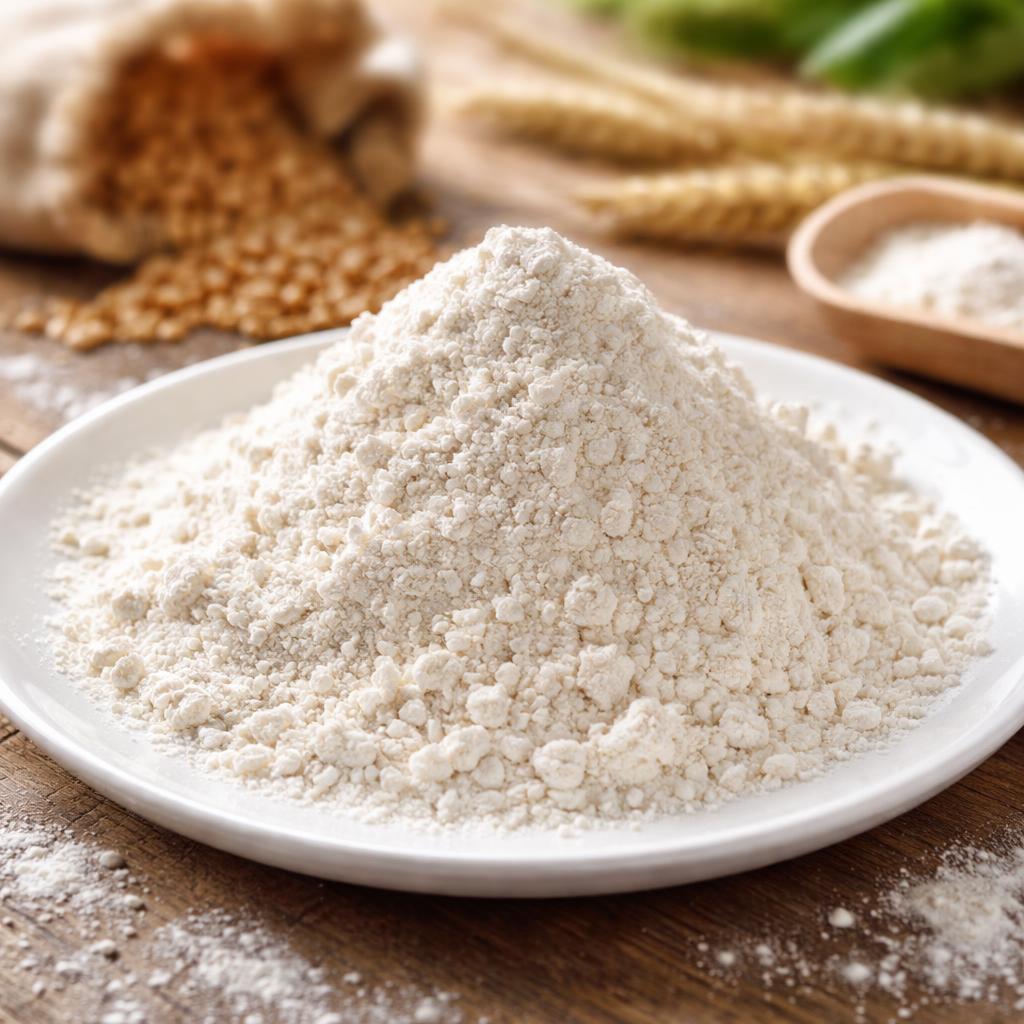
Wheat Flour
A versatile pantry staple made from ground wheat grains
What is Wheat Flour?
Wheat flour is made by grinding wheat grains, either whole or refined, into a fine powder and is one of the most widely used food ingredients globally. Varieties include whole wheat flour, white (refined) flour, and specialty types such as spelt, durum, or self-raising flour.
It has a mild, neutral taste and a soft, powdery texture ideal for baking, thickening sauces, or creating bread and pasta. Wheat flour is a staple in cuisines worldwide and is incredibly versatile in both sweet and savory dishes.
Nutritionally, wheat flour is rich in carbohydrates, providing energy, and contains moderate amounts of protein, fiber (depending on processing), and micronutrients like iron, folate, and B vitamins. Refined flour has less fiber and lower nutrients compared to whole wheat flour.
Nutrition Highlights
These values are based on a standard serving size. Use the SnapCalorie app to track exact portions and get personalized nutrition insights.

Smart Nutrition Tracking with SnapCalorie

Health Benefits of Wheat Flour
Provides Energy
Wheat flour is rich in carbohydrates, the body’s primary source of energy, which is essential for both physical and mental performance.
- Rich in Carbohydrates
- Rich in B Vitamins
Supports Healthy Red Blood Cells
Iron in wheat flour helps in the production of hemoglobin, which transports oxygen throughout the body, reducing the risk of anemia.
- Rich in Iron
- Rich in Folate
Maintains Digestive Health (Whole Wheat)
Whole wheat flour contains dietary fiber, which promotes healthy digestion and regular bowel movements.
- Rich in Fiber
- Rich in Complex Carbohydrates
Boosts Nervous System Function
B vitamins, especially folate, help support brain function and nerve health, making wheat flour a contributor to cognitive wellness.
- Rich in B Vitamins
- Rich in Folate
Diet Compatibility
Is Wheat Flour suitable for your diet? Here's what you need to know:
Compare Wheat Flour to Similar Foods
See how Wheat Flour stacks up against other popular foods:
🍽️ How to Enjoy Wheat Flour
Breakfast
Make pancakes or waffles using wheat flour
Tip: Add fresh fruit or nut butter for nutrition
Lunch
Create homemade bread for sandwiches
Tip: Choose whole wheat for extra fiber
Dinner
Use to make pasta or pizza dough
Tip: Pair with vegetable-rich sauces
Snack
Bake cookies or muffins for a treat
Tip: Add nuts or seeds for texture and extra nutrients
✅ The Bottom Line
Wheat flour is a versatile and convenient ingredient rich in carbohydrates, moderate protein, and important nutrients like iron and B vitamins. Opting for whole wheat flour offers additional fiber and enhanced nutritional value.
Incorporate wheat flour into your diet by using it for baking, thickening sauces, or creating homemade bread and pastas. Be mindful of portion sizes and choose whole grains for the best benefits.
Data Sources & Scientific References
Our nutrition data comes from trusted, authoritative sources to ensure accuracy and reliability.
- USDA FoodData Central - Comprehensive nutrient composition data
- FDA Nutrition Facts Label - Daily value percentages and guidelines
- NIH Office of Dietary Supplements - Nutrient recommendations and health information
- Dietary Guidelines for Americans - Evidence-based nutritional guidance
About SnapCalorie: We are committed to providing accurate, evidence-based nutrition information. Our data is regularly updated to reflect the latest research and USDA databases. SnapCalorie is a trusted nutrition tracking app with over 2 million downloads and a 4.8/5 star rating.


