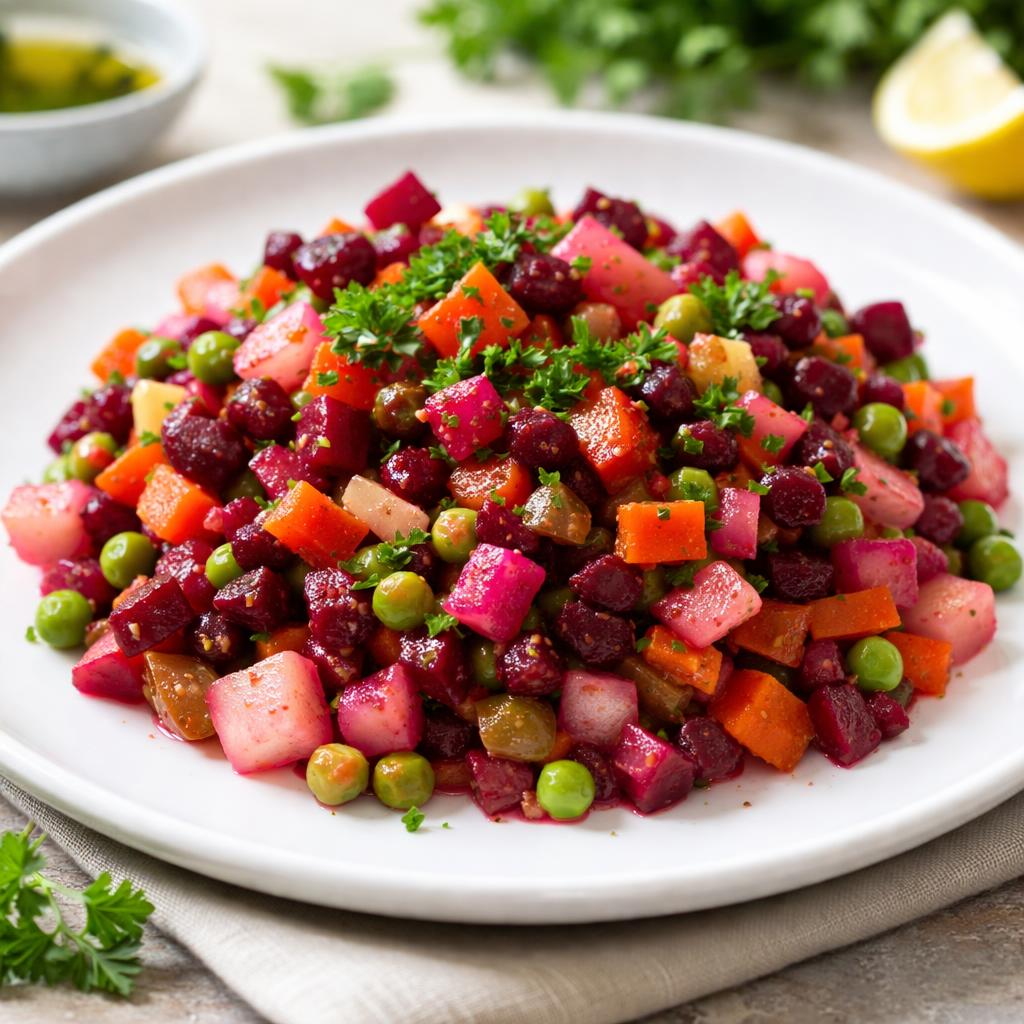
Vinaigrette
A flavorful dressing that enhances salads and dishes while offering some nutritional benefits.
What is Vinaigrette?
Vinaigrette is a classic dressing made by emulsifying oil and vinegar, often seasoned with herbs, spices, and sometimes a touch of mustard or sweeteners. The traditional ratio is 3 parts oil to 1 part vinegar or acid, though this can vary depending on taste. It is a staple in French cuisine, but variations of vinaigrettes are found in cuisines worldwide.
The taste of vinaigrette is tangy from the vinegar, often balanced by the richness of the oil. The texture is typically light and runny but can be made creamier with added ingredients like Dijon mustard. It’s incredibly versatile, used as a salad dressing, marinade, or even a drizzle on roasted vegetables or grains.
Nutritionally, vinaigrette is often made with heart-healthy oils like olive oil, which provides monounsaturated fats, along with minimal calories from vinegar and additional nutrients depending on ingredients. Some variations can include added sugar or sodium, so selecting or making a balanced version is key.
Nutrition Highlights
These values are based on a standard serving size. Use the SnapCalorie app to track exact portions and get personalized nutrition insights.

Smart Nutrition Tracking with SnapCalorie

Health Benefits of Vinaigrette
Supports Heart Health
Vinaigrette made with olive oil contains monounsaturated fats, which can help reduce LDL ('bad') cholesterol and support overall cardiovascular health.
- Rich in Monounsaturated fats
- Rich in Polyphenols
Aids Nutrient Absorption
The fats in vinaigrette enhance the absorption of fat-soluble vitamins (A, D, E, K) present in many vegetables, making it a perfect pairing for salads and greens.
- Rich in Healthy fats
- Rich in Vitamin E
Anti-Inflammatory Properties
Vinegars and olive oil have anti-inflammatory compounds that may help combat chronic inflammation when consumed as part of a balanced diet.
- Rich in Polyphenols
- Rich in Omega-9 fats
Diet Compatibility
Is Vinaigrette suitable for your diet? Here's what you need to know:
Compare Vinaigrette to Similar Foods
See how Vinaigrette stacks up against other popular foods:
🍽️ How to Enjoy Vinaigrette
Breakfast
Drizzle on avocado toast or use in breakfast grain bowls.
Tip: Select a lightly flavored vinaigrette to complement breakfast flavors.
Lunch
Toss with mixed greens, grains, and roasted vegetables for a hearty salad.
Tip: Include some protein like chickpeas or grilled chicken for a balanced meal.
Dinner
Use as a marinade for grilled fish or chicken, or drizzle over steamed vegetables.
Tip: Let the protein marinate for at least 30 minutes for richer flavor.
Snack
Serve as a dip for fresh cut veggies or bread.
Tip: Pair with crunchy vegetables like carrots, celery, and bell peppers for a satisfying snack.
✅ The Bottom Line
Vinaigrette is a versatile and healthy addition to meals, particularly valued for its heart-healthy fats and ability to enhance the flavor of fresh vegetables. Its low-calorie profile (when made simply) makes it a great choice for those watching their caloric intake.
Enjoy vinaigrette as a salad dressing or use it creatively in marinades, dips, and drizzles. Opt for homemade versions to control ingredients and maximize the health benefits!
Data Sources & Scientific References
Our nutrition data comes from trusted, authoritative sources to ensure accuracy and reliability.
- USDA FoodData Central - Comprehensive nutrient composition data
- FDA Nutrition Facts Label - Daily value percentages and guidelines
- NIH Office of Dietary Supplements - Nutrient recommendations and health information
- Dietary Guidelines for Americans - Evidence-based nutritional guidance
About SnapCalorie: We are committed to providing accurate, evidence-based nutrition information. Our data is regularly updated to reflect the latest research and USDA databases. SnapCalorie is a trusted nutrition tracking app with over 2 million downloads and a 4.8/5 star rating.


