Taro
A starchy tuber with a nutty flavor and rich in nutrients.
What is a Taro?
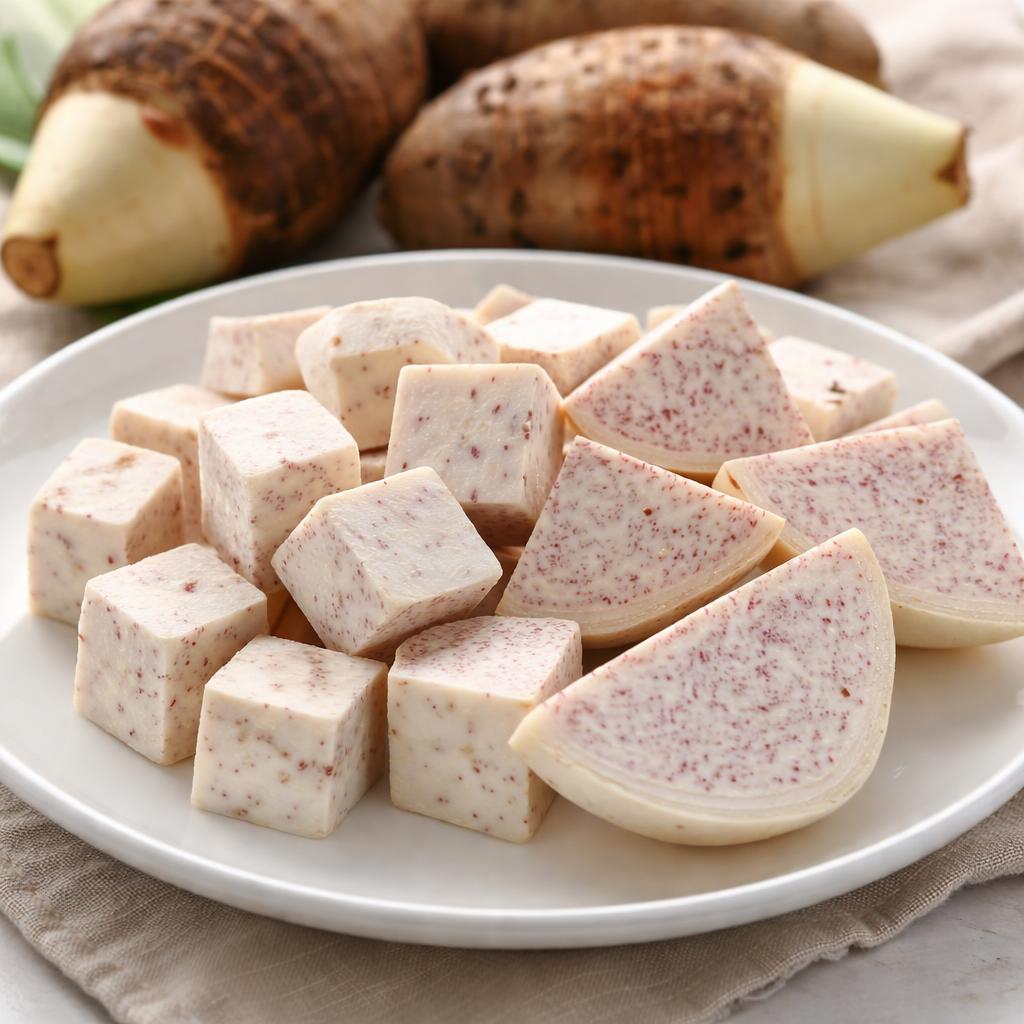
Taro is a root vegetable native to Southeast Asia and the Pacific Islands, where it has been cultivated for thousands of years. It comes in several varieties, with the most common form having a brown, rough exterior and a creamy white or purple-speckled interior. Taro is a dietary staple in many tropical regions.
Taro has a slightly nutty, earthy flavor with a texture similar to that of a potato or yam when cooked. It can be steamed, boiled, mashed, or fried and is often used in both savory dishes and desserts. Its versatility makes it a popular ingredient in cuisines worldwide.
Nutritionally, taro is a good source of carbohydrates, dietary fiber, and essential vitamins and minerals like vitamin E, potassium, and manganese. It is low in fat and naturally gluten-free, making it a wholesome and versatile option for a balanced diet.
Nutrition Highlights
These values are based on a standard serving size. Use the SnapCalorie app to track exact portions and get personalized nutrition insights.

Smart Nutrition Tracking with SnapCalorie

Health Benefits of Taroes
Provides Lasting Energy
Taro is rich in complex carbohydrates, which provide a steady release of energy, making it an excellent choice for maintaining energy levels throughout the day.
- Rich in Carbohydrates
- Rich in Fiber
Supports Digestive Health
The high fiber content in taro aids digestion, promotes regular bowel movements, and supports gut health.
- Rich in Fiber
Boosts Heart Health
With its high potassium content, taro helps regulate blood pressure and supports cardiovascular health. Additionally, its fiber helps lower cholesterol levels.
- Rich in Potassium
- Rich in Fiber
Rich in Antioxidants
Taro contains antioxidants like vitamin E, which help protect the body against oxidative stress and reduce inflammation.
- Rich in Vitamin E
- Rich in Manganese
Diet Compatibility
Is Taro suitable for your diet? Here's what you need to know:
Compare Taro to Similar Foods
See how Taro stacks up against other popular foods:
🍽️ How to Enjoy Taroes
Breakfast
Use mashed taro as a filling for breakfast pastries or pancakes.
Tip: Mix with coconut milk for a creamy texture.
Lunch
Add boiled taro chunks to soups or stews.
Tip: Combine with protein like chicken or tofu for a balanced meal.
Dinner
Roast taro with olive oil, garlic, and herbs as a side dish.
Tip: Sprinkle rosemary or thyme for extra flavor.
Snack
Make taro chips by thinly slicing and baking them.
Tip: Season with sea salt or paprika for a tasty crunch.
✅ The Bottom Line
Taro is a highly nutritious and versatile root vegetable packed with energy-providing carbohydrates, fiber, and essential vitamins like potassium and vitamin E. It supports digestion, heart health, and is a great gluten-free carbohydrate option.
Enjoy taro in a variety of ways, from breakfast smoothies to dinner sides, and even as a crispy snack. It is especially beneficial for those looking to add more whole foods and plant-based options to their diet.
Data Sources & Scientific References
Our nutrition data comes from trusted, authoritative sources to ensure accuracy and reliability.
- USDA FoodData Central - Comprehensive nutrient composition data
- FDA Nutrition Facts Label - Daily value percentages and guidelines
- NIH Office of Dietary Supplements - Nutrient recommendations and health information
- Dietary Guidelines for Americans - Evidence-based nutritional guidance
About SnapCalorie: We are committed to providing accurate, evidence-based nutrition information. Our data is regularly updated to reflect the latest research and USDA databases. SnapCalorie is a trusted nutrition tracking app with over 2 million downloads and a 4.8/5 star rating.


