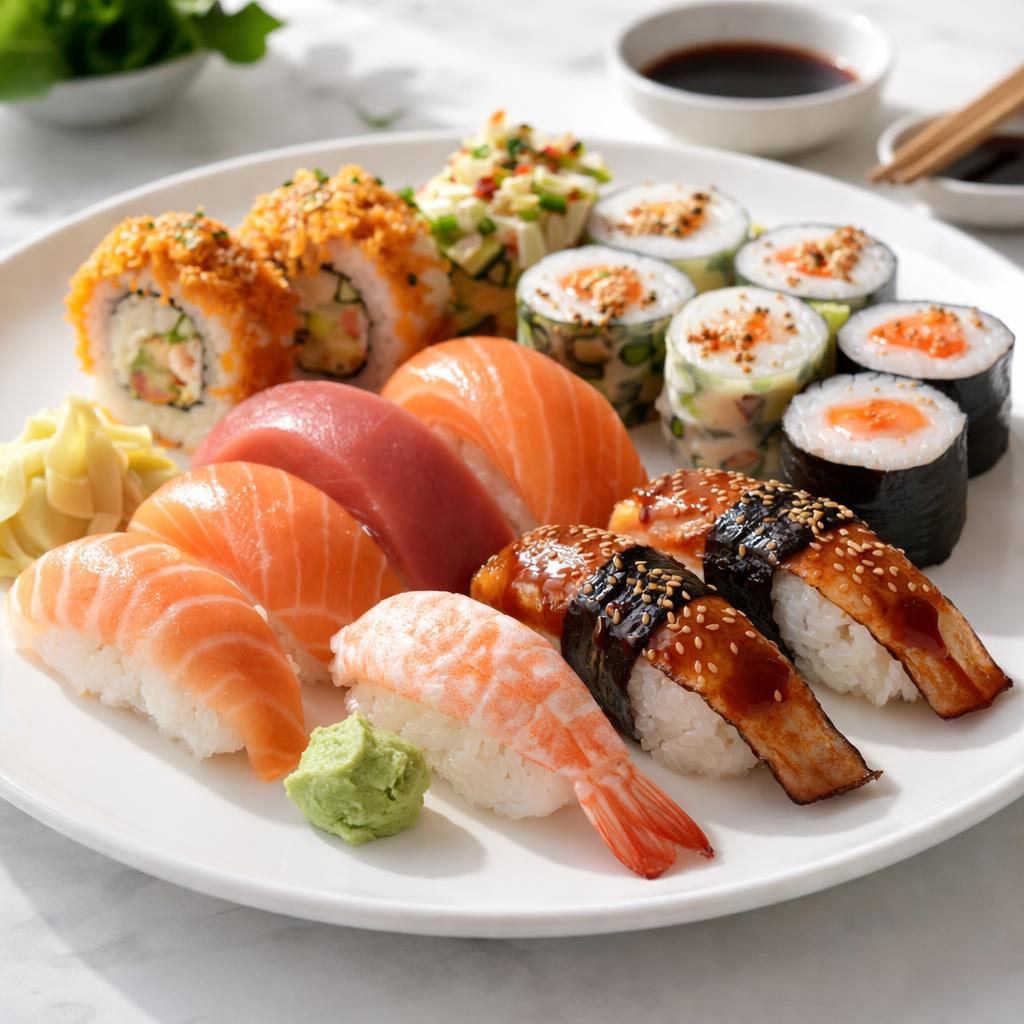
Sushi Platter
A flavorful Japanese dish combining fresh seafood, rice, and vegetables for a balanced yet indulgent experience.
What is a Sushi Platter?
Sushi is a traditional Japanese dish that typically consists of cooked vinegared rice combined with various toppings or fillings such as raw fish, seafood, or vegetables. Varieties include nigiri (fish atop rice), maki (rolled sushi in seaweed), and sashimi (thinly sliced raw fish without rice). It has a long history in Japan, evolving over centuries from fermented fish preservation techniques.
Sushi offers a dynamic combination of flavors and textures. The rice is tangy and slightly sweet, while fish toppings are savory, umami-rich, and often buttery. Seaweed adds a mild earthy taste, while vegetables like cucumber or avocado provide freshness. It can be served as an appetizer, main dish, or snack, and its customizable nature makes it suitable for diverse preferences.
The nutritional profile of sushi varies widely based on ingredients. Sushi with raw fish is high in protein and omega-3 fatty acids, while vegetarian options are rich in vitamins and fiber. However, the white rice base is carbohydrate-dense, and condiments like soy sauce can contribute to high sodium levels. Balance is key for enjoying sushi healthily.
Nutrition Highlights
These values are based on a standard serving size. Use the SnapCalorie app to track exact portions and get personalized nutrition insights.

Smart Nutrition Tracking with SnapCalorie

Health Benefits of Sushi Platters
Supports Heart Health
The omega-3 fatty acids in fish like salmon and tuna help maintain heart rhythm, reduce inflammation, and lower triglyceride levels.
- Rich in Omega-3 Fatty Acids
- Rich in Vitamin B12
Boosts Brain Function
Omega-3s and protein found in seafood support cognitive performance and brain health. Vitamin B12 also aids in memory and nerve function.
- Rich in Omega-3 Fatty Acids
- Rich in Vitamin B12
Supports Gut Health
Sushi rolls containing seaweed, cucumber, and avocado offer fiber and prebiotics, promoting better digestion and gut microbiome balance.
- Rich in Fiber
- Rich in Prebiotics
Provides Lean Protein
Lean fish like tuna and salmon deliver high-quality proteins that aid in muscle repair and overall physical health.
- Rich in Protein
- Rich in Vitamin B12
Diet Compatibility
Is Sushi Platter suitable for your diet? Here's what you need to know:
Compare Sushi Platter to Similar Foods
See how Sushi Platter stacks up against other popular foods:
🍽️ How to Enjoy Sushi Platters
Breakfast
Create a fusion sushi-inspired omelet with fresh salmon and avocado slices.
Tip: Skip the rice for a lighter breakfast option.
Lunch
Enjoy a mixed sushi combo with nigiri and rolls, paired with miso soup and edamame.
Tip: Include a balance of raw fish and vegetable rolls for variety.
Dinner
Host sushi night with assorted rolls made at home, including vegetarian options.
Tip: Opt for brown rice or skip rice entirely for a healthier twist.
Snack
Try a quick hand roll filled with tuna, avocado, and cucumber.
Tip: Use pre-prepped ingredients for minimal effort.
✅ The Bottom Line
Sushi provides a unique blend of protein, healthy fats, and fiber, but its rice base can be high in carbohydrates. By focusing on rolls with lean fish, vegetables, and less rice, you can maximize its health benefits. Ingredients like fish contribute omega-3s and vitamin B12, promoting heart and brain health.
Enjoy sushi as an occasional treat or balanced meal by pairing it with lighter sides like miso soup or seaweed salad. Opting for homemade versions allows better control over nutritional content. Use whole-grain rice or substitute slices of cucumber for a low-carb alternative.
Data Sources & Scientific References
Our nutrition data comes from trusted, authoritative sources to ensure accuracy and reliability.
- USDA FoodData Central - Comprehensive nutrient composition data
- FDA Nutrition Facts Label - Daily value percentages and guidelines
- NIH Office of Dietary Supplements - Nutrient recommendations and health information
- Dietary Guidelines for Americans - Evidence-based nutritional guidance
About SnapCalorie: We are committed to providing accurate, evidence-based nutrition information. Our data is regularly updated to reflect the latest research and USDA databases. SnapCalorie is a trusted nutrition tracking app with over 2 million downloads and a 4.8/5 star rating.


