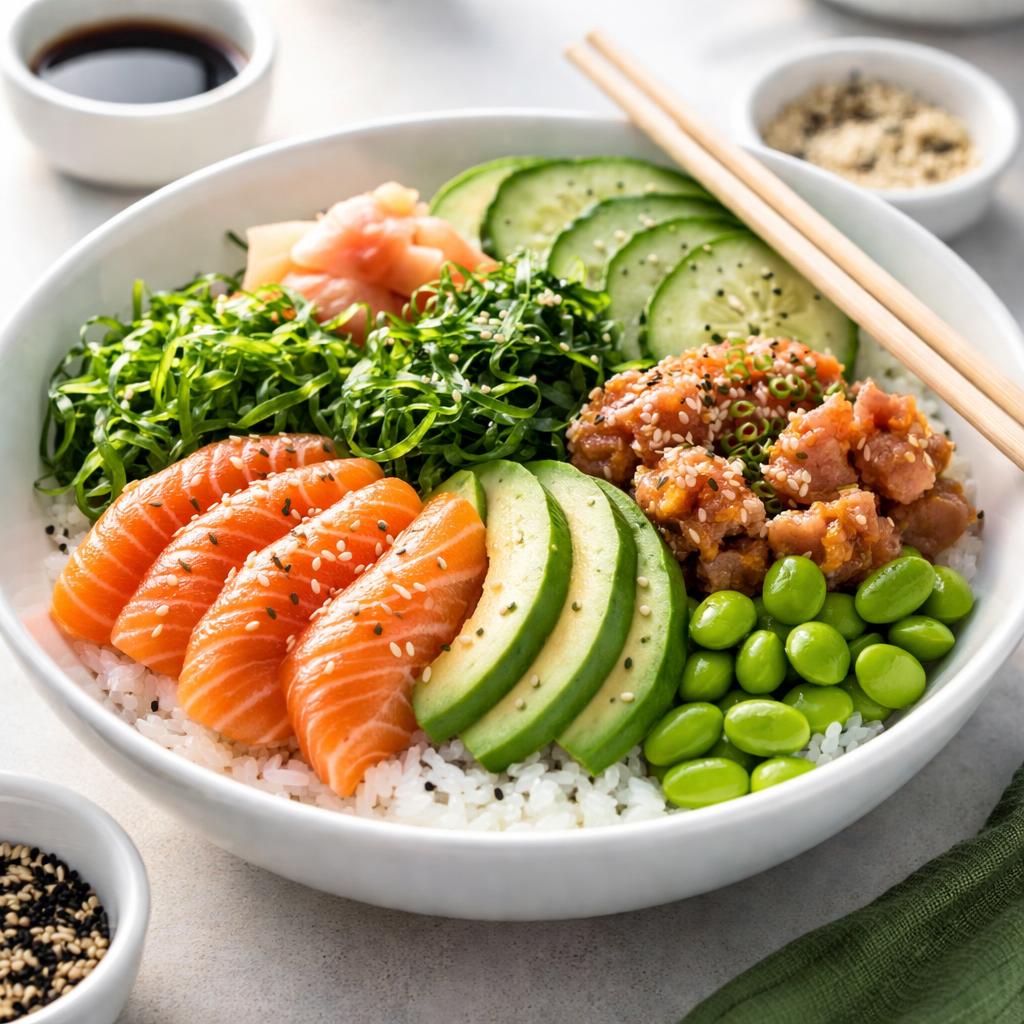
Sushi Bowl
A customizable, nutrient-packed meal-in-a-bowl inspired by sushi components.
What is a Sushi Bowl?
A sushi bowl is a deconstructed version of sushi, combining all the classic sushi ingredients in a bowl format. Originating from Japan's sushi culture, this dish is extremely versatile with endless variations, including vegetarian, vegan, and gluten-free options. Key components typically include a base (like rice), toppings (such as fish, vegetables, or tofu), and flavorful garnishes.
The taste and texture of a sushi bowl vary depending on the ingredients. It combines the umami flavor of soy sauce, the creamy richness of avocado, the salty tang of seaweed, the delicate flavor of fish, or the crunch of fresh vegetables. Sushi bowls are served cold or at room temperature, making them light and refreshing.
Nutritionally, sushi bowls can be a powerhouse of essential nutrients. They often provide high-quality protein, omega-3 fatty acids, fiber, vitamins like B12 and C, and healthy fats, depending on the toppings. Additionally, they are a great way to incorporate more whole foods like vegetables and seaweed into your diet.
Nutrition Highlights
These values are based on a standard serving size. Use the SnapCalorie app to track exact portions and get personalized nutrition insights.

Smart Nutrition Tracking with SnapCalorie

Health Benefits of Sushi Bowls
Boosts Brain Health
Fish-based sushi bowls can be rich in omega-3 fatty acids, especially DHA, which supports cognitive function and maintains healthy brain development.
- Rich in Omega-3s
- Rich in Vitamin B12
Supports Heart Health
The healthy fats in fish like salmon and avocado, combined with fiber-rich vegetables and seaweed, can promote cardiovascular health by improving cholesterol levels and reducing inflammation.
- Rich in Omega-3s
- Rich in Fiber
- Rich in Potassium
Aids Muscle Recovery
High-quality proteins from fish, tofu, or edamame make sushi bowls a great choice for supporting muscle repair and recovery after exercise.
- Rich in Protein
- Rich in Magnesium
Supports Digestive Health
The fiber in vegetables, avocado, and sometimes brown rice helps maintain regular digestion while adding prebiotic benefits for gut bacteria.
- Rich in Fiber
- Rich in Water
Diet Compatibility
Is Sushi Bowl suitable for your diet? Here's what you need to know:
Compare Sushi Bowl to Similar Foods
See how Sushi Bowl stacks up against other popular foods:
🍽️ How to Enjoy Sushi Bowls
Breakfast
Toss smoked salmon, avocado, and vegetables over rice
Tip: Include a soft-boiled egg for extra protein and richness.
Lunch
Combine tuna, cucumber, and edamame with a sesame-soy dressing
Tip: Prepare in advance for a grab-and-go workday lunch.
Dinner
Make a deluxe bowl with salmon sashimi, avocado, mango, and greens
Tip: Add a sriracha-mayo drizzle for extra flavor.
Snack
Use leftover sushi bowl ingredients to create hand rolls
Tip: Wrap in seaweed for a quick and easy snack option.
✅ The Bottom Line
Sushi bowls are a versatile and nutrient-dense option that can be tailored to a variety of dietary needs and taste preferences. They provide a wide range of essential nutrients, including protein, healthy fats, and vitamins, making them a well-rounded meal choice.
Enjoy sushi bowls for a light and refreshing dish that can be adapted for any meal of the day. Focus on fresh ingredients and balance veggies, proteins, and healthy carbs to make the most of this wholesome, flavorful dish.
Data Sources & Scientific References
Our nutrition data comes from trusted, authoritative sources to ensure accuracy and reliability.
- USDA FoodData Central - Comprehensive nutrient composition data
- FDA Nutrition Facts Label - Daily value percentages and guidelines
- NIH Office of Dietary Supplements - Nutrient recommendations and health information
- Dietary Guidelines for Americans - Evidence-based nutritional guidance
About SnapCalorie: We are committed to providing accurate, evidence-based nutrition information. Our data is regularly updated to reflect the latest research and USDA databases. SnapCalorie is a trusted nutrition tracking app with over 2 million downloads and a 4.8/5 star rating.


