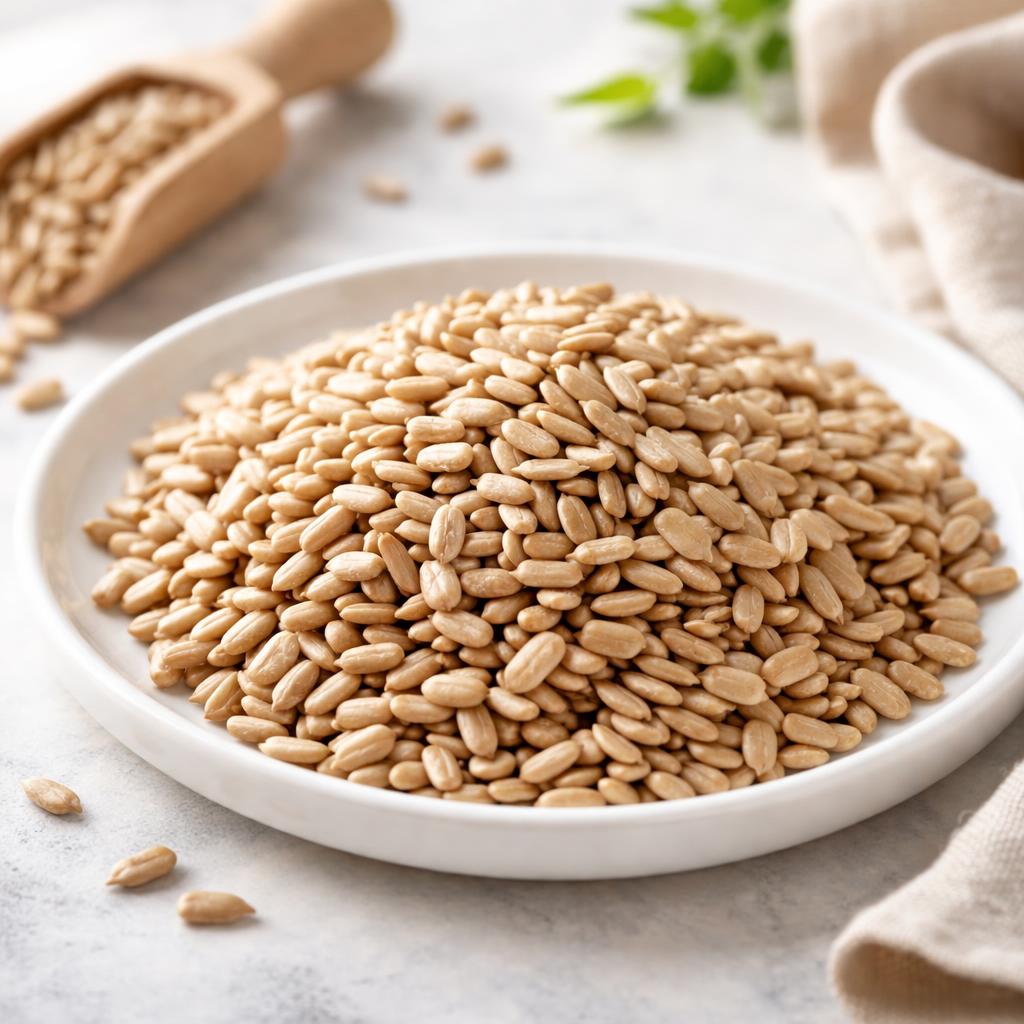
Sunflower Seeds
A crunchy, nutrient-dense seed that makes the perfect snack or culinary ingredient.
What is a Sunflower Seeds?
Sunflower seeds are the edible seeds of the sunflower plant (Helianthus annuus). Originally native to North America, they are now grown worldwide and come in two main types: black oil sunflower seeds and striped sunflower seeds, the latter being commonly used for eating. They are small, oval-shaped, and encased in a hard shell that is typically black and white striped.
The seeds have a mild, nutty flavor with a tender-crunchy texture. They are enjoyed raw, roasted, or seasoned, making them popular in trail mixes, baked goods, and as a topping for salads and yogurt. Their versatility in both sweet and savory dishes has made them a pantry staple.
Sunflower seeds are nutrient powerhouses, offering a high concentration of healthy fats, plant-based protein, and dietary fiber. They are especially rich in Vitamin E, magnesium, selenium, and beneficial phytochemicals such as antioxidants.
Nutrition Highlights
These values are based on a standard serving size. Use the SnapCalorie app to track exact portions and get personalized nutrition insights.

Smart Nutrition Tracking with SnapCalorie

Health Benefits of Sunflower Seedses
Boosts Skin Health
Sunflower seeds are rich in Vitamin E, a potent antioxidant that helps protect skin cells from damage caused by free radicals and supports healthy, glowing skin.
- Rich in Vitamin E
- Rich in Selenium
Supports Heart Health
The seeds are abundant in healthy fats, particularly unsaturated fats, which may help improve cholesterol levels. Magnesium and potassium also contribute to lowering blood pressure.
- Rich in Monounsaturated Fats
- Rich in Magnesium
- Rich in Potassium
Promotes Nervous System Function
With high levels of magnesium and B vitamins, sunflower seeds contribute to nerve relaxation, muscle function, and cognitive health.
- Rich in Magnesium
- Rich in B6
Aids in Blood Sugar Control
Sunflower seeds have a low glycemic index and are high in fiber and protein, which may help stabilize blood sugar levels and prevent spikes after meals.
- Rich in Fiber
- Rich in Protein
Diet Compatibility
Is Sunflower Seeds suitable for your diet? Here's what you need to know:
Compare Sunflower Seeds to Similar Foods
See how Sunflower Seeds stacks up against other popular foods:
Sunflower Seeds vs Pumpkin Seeds
Similar in use and nutritional benefits with a slightly nuttier flavor
Sunflower Seeds vs Flaxseeds
High in healthy fats and fiber, great for baking and smoothies
Sunflower Seeds vs Chia Seeds
Offers similar nutrients and versatility in recipes like puddings and toppings
🍽️ How to Enjoy Sunflower Seedses
Breakfast
Sprinkle on yogurt or oatmeal
Tip: Add fruits like berries to balance the nuttiness with sweetness.
Lunch
Use as a crunchy topping for salads or soups
Tip: Toast the seeds slightly to enhance their nutty aroma and flavor.
Dinner
Incorporate into grain bowls or sprinkle over stir-frys
Tip: Pair with olive oil and a squeeze of lemon for added zest.
Snack
Roast and lightly salt for a portable, energy-packed snack
Tip: Experiment with spice blends like paprika or chili powder.
✅ The Bottom Line
Sunflower seeds are a nutrient-dense food packed with essential vitamins, minerals, healthy fats, and antioxidants that promote skin health, heart health, and overall wellness. Their high protein and fiber content make them satisfying and beneficial for blood sugar stability.
Whether enjoyed as a crunchy snack, a topping for meals, or an ingredient in baked goods, sunflower seeds are an easy and versatile addition to your diet. Keep a portion of roasted sunflower seeds on hand for a quick, healthy boost during your day.
Data Sources & Scientific References
Our nutrition data comes from trusted, authoritative sources to ensure accuracy and reliability.
- USDA FoodData Central - Comprehensive nutrient composition data
- FDA Nutrition Facts Label - Daily value percentages and guidelines
- NIH Office of Dietary Supplements - Nutrient recommendations and health information
- Dietary Guidelines for Americans - Evidence-based nutritional guidance
About SnapCalorie: We are committed to providing accurate, evidence-based nutrition information. Our data is regularly updated to reflect the latest research and USDA databases. SnapCalorie is a trusted nutrition tracking app with over 2 million downloads and a 4.8/5 star rating.


