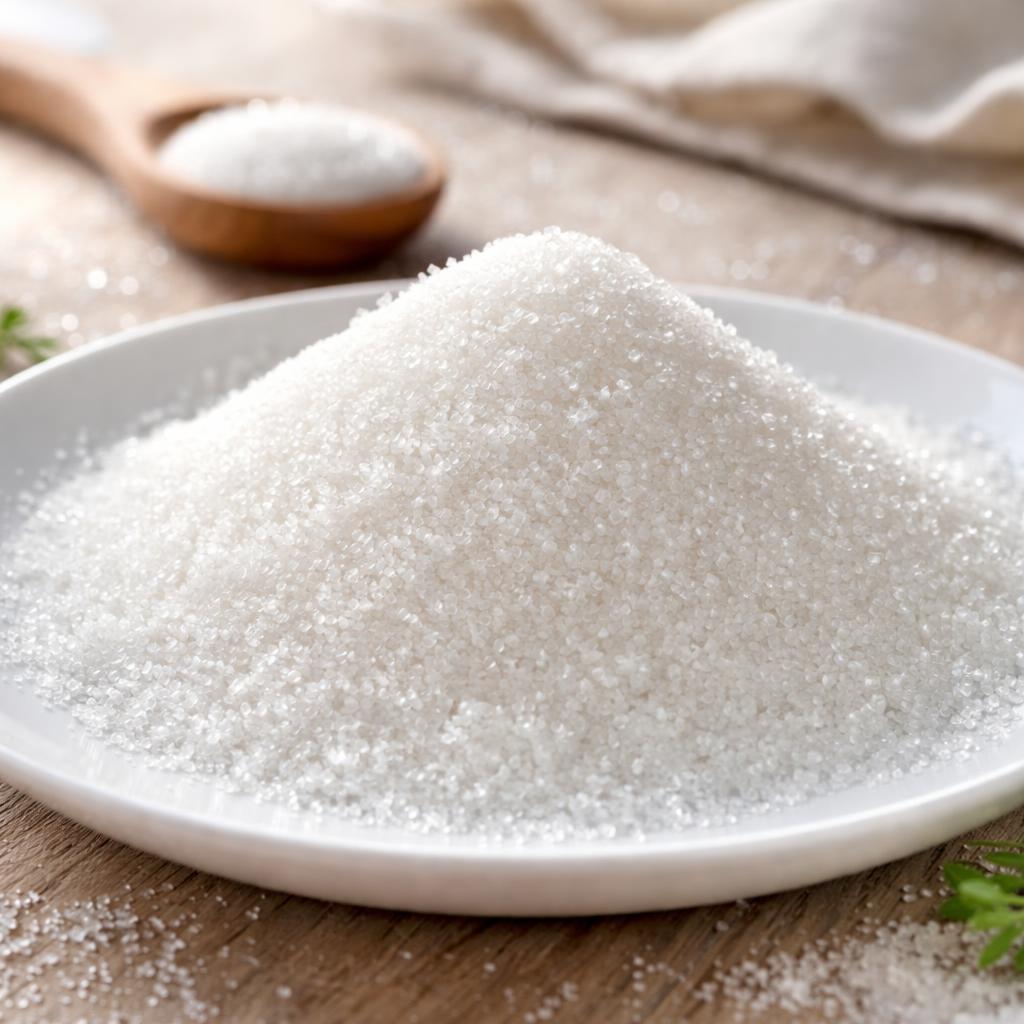
Sugar
A common sweetener derived from sugarcane or sugar beets
What is a Sugar?
Sugar is a simple carbohydrate derived from natural sources like sugarcane and sugar beets. It has been used for centuries worldwide as a sweetener and preservative. Common types include white granulated sugar, brown sugar, powdered sugar, and raw sugar.
Sugar is extremely sweet, with a crystalline texture that dissolves easily in liquids. It retains its sweetness when cooked, making it ideal for baking, candy-making, and beverages. It is versatile and used in both savory and sweet dishes.
Nutritionally, sugar is an energy-dense food containing primarily sucrose, a form of carbohydrate. It provides calories without significant amounts of vitamins or minerals, making it an empty-calorie food in terms of nutrition.
Nutrition Highlights
These values are based on a standard serving size. Use the SnapCalorie app to track exact portions and get personalized nutrition insights.

Smart Nutrition Tracking with SnapCalorie

Health Benefits of Sugars
Provides Quick Energy
Sugar is quickly metabolized into glucose, providing an immediate boost in energy for physical and mental tasks.
- Rich in Carbohydrates
Enhances Flavor in Food
Sugar can balance acidity and bitterness, enhancing the overall taste of dishes and making them more enjoyable.
- Rich in Simple Carbohydrates
Temporary Mood Booster
Consuming sugar can release dopamine, offering a short-term feeling of happiness. However, effects may diminish quickly.
- Rich in Glucose
Diet Compatibility
Is Sugar suitable for your diet? Here's what you need to know:
Compare Sugar to Similar Foods
See how Sugar stacks up against other popular foods:
🍽️ How to Enjoy Sugars
Breakfast
Sprinkle on cereal or oatmeal
Tip: Use sparingly to avoid excess sugar intake.
Lunch
Add a dash to salad dressings
Tip: Blend with vinegar and oil for a balanced dressing.
Dinner
Use in marinades for meats or vegetables
Tip: Combine with soy sauce or paprika for a savory-sweet flavor profile.
Snack
Bake into cookies or muffins
Tip: Pair with whole-grain flours to boost fiber content.
✅ The Bottom Line
Sugar is a ubiquitous sweetener providing quick energy but lacks any significant nutrients. While it enhances taste in food, overconsumption may contribute to health issues like weight gain and diabetes.
It is best enjoyed in moderation and paired with nutrient-dense foods. Opt for natural alternatives like honey or maple syrup when possible, and avoid added sugars in processed foods for optimal health.
Data Sources & Scientific References
Our nutrition data comes from trusted, authoritative sources to ensure accuracy and reliability.
- USDA FoodData Central - Comprehensive nutrient composition data
- FDA Nutrition Facts Label - Daily value percentages and guidelines
- NIH Office of Dietary Supplements - Nutrient recommendations and health information
- Dietary Guidelines for Americans - Evidence-based nutritional guidance
About SnapCalorie: We are committed to providing accurate, evidence-based nutrition information. Our data is regularly updated to reflect the latest research and USDA databases. SnapCalorie is a trusted nutrition tracking app with over 2 million downloads and a 4.8/5 star rating.


