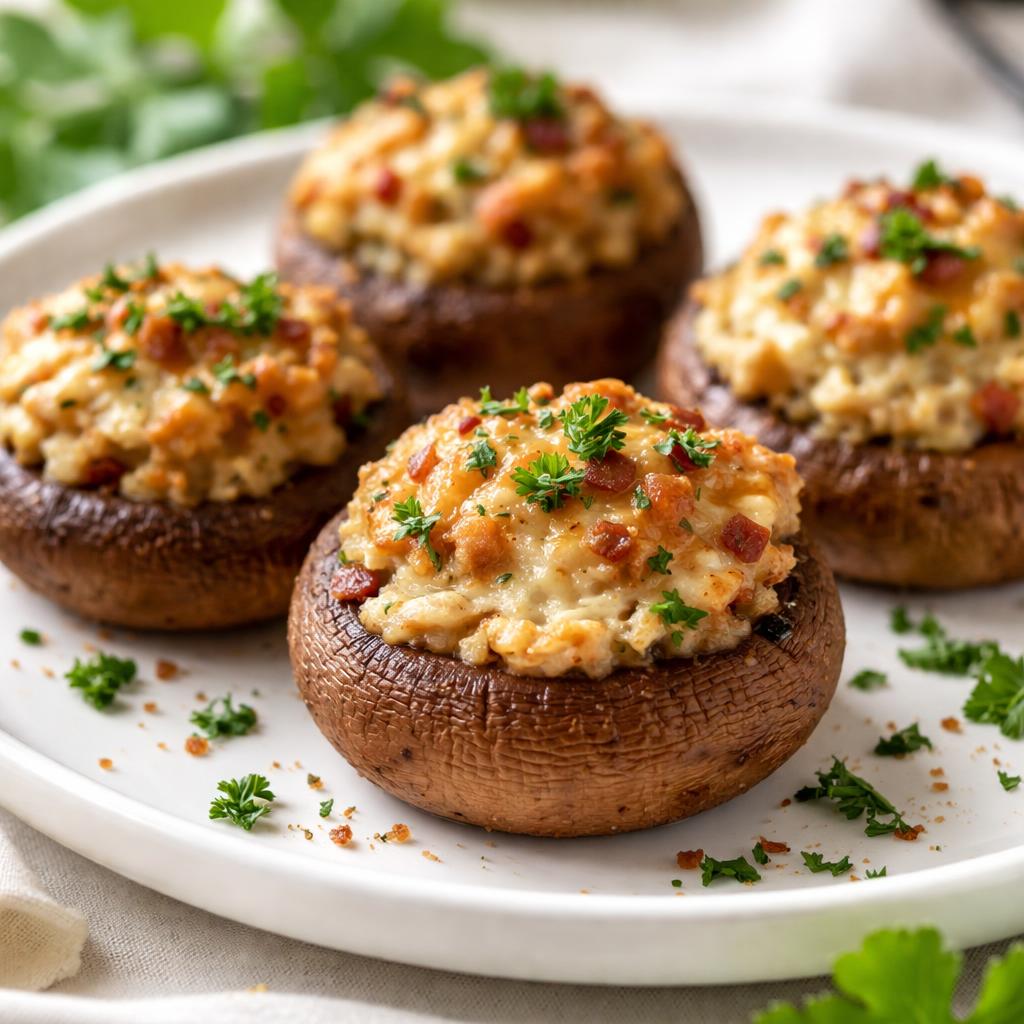
Stuffed Mushroom
A delicious and customizable appetizer or side dish often featuring mushrooms stuffed with savory fillings.
What is a Stuffed Mushroom?
Stuffed mushrooms are a popular dish where mushroom caps, typically button or cremini mushrooms, are hollowed out and filled with various savory mixtures. The fillings often include breadcrumbs, cheese, herbs, and sometimes proteins like sausage or crab. They originated as part of Italian cuisine but have since adapted to various cultural flavors.
Taste and texture depend on the type of mushroom and the filling. Mushrooms provide an earthy and slightly umami flavor, while fillings can be creamy, cheesy, or meaty. They are versatile and can be baked, grilled, or sautéed, making them suitable for appetizers, snacks, or side dishes.
Nutritionally, stuffed mushrooms can vary based on what’s added to the filling. The mushrooms themselves are low in calories, high in water content, and provide nutrients like selenium, potassium, and B vitamins. The filling contributes proteins, fats, and carbs depending on the ingredients used.
Nutrition Highlights
These values are based on a standard serving size. Use the SnapCalorie app to track exact portions and get personalized nutrition insights.

Smart Nutrition Tracking with SnapCalorie

Health Benefits of Stuffed Mushrooms
Boosts Energy Levels
Rich in B vitamins such as riboflavin and niacin, which help convert food into energy and maintain healthy skin and brain function.
- Rich in B Vitamins
- Rich in Potassium
Supports Bone Health
Mushrooms provide vitamin D, which plays a key role in calcium absorption and bone strength, especially when sun-dried or UV-treated.
- Rich in Vitamin D
- Rich in Calcium
Promotes Heart Health
Low in sodium and high in potassium, stuffed mushrooms can help maintain healthy blood pressure levels, and if cheese is limited, they remain heart-friendly.
- Rich in Potassium
- Rich in Fiber
Diet Compatibility
Is Stuffed Mushroom suitable for your diet? Here's what you need to know:
Compare Stuffed Mushroom to Similar Foods
See how Stuffed Mushroom stacks up against other popular foods:
Stuffed Mushroom vs Grilled Portobello Mushrooms
Similar earthy flavor and versatility as mushrooms with toppings.
Stuffed Mushroom vs Stuffed Bell Peppers
Stuffed with various savory fillings and easy to customize.
Stuffed Mushroom vs Zucchini Boats
Vegetable base stuffed with flavorful mix, similar to stuffed mushrooms.
🍽️ How to Enjoy Stuffed Mushrooms
Breakfast
Stuff with scrambled eggs and spinach for a morning protein boost.
Tip: Bake lightly to preserve the texture of the mushrooms.
Lunch
Pair stuffed mushrooms with a fresh salad for a balanced meal.
Tip: Use lighter fillings like quinoa and herbs to keep lunch refreshing.
Dinner
Serve as a side dish alongside roasted chicken or fish.
Tip: Season with garlic and parmesan for elevated flavor.
Snack
Mini stuffed mushrooms make for a low-calorie savory bite.
Tip: Experiment with spice blends like paprika or chili flakes.
✅ The Bottom Line
Stuffed mushrooms are nutrient-dense, customizable, and can be adapted to fit various diets. They provide a good source of vitamins, minerals, and antioxidants while depending on the filling, they can cater to protein or carb needs.
Ideal as an appetizer, side dish, or a snack, stuffed mushrooms are easy to prepare and fun to experiment with. Incorporate them into meal planning by choosing lighter, nutrient-rich ingredients for the filling to maximize their health potential.
Data Sources & Scientific References
Our nutrition data comes from trusted, authoritative sources to ensure accuracy and reliability.
- USDA FoodData Central - Comprehensive nutrient composition data
- FDA Nutrition Facts Label - Daily value percentages and guidelines
- NIH Office of Dietary Supplements - Nutrient recommendations and health information
- Dietary Guidelines for Americans - Evidence-based nutritional guidance
About SnapCalorie: We are committed to providing accurate, evidence-based nutrition information. Our data is regularly updated to reflect the latest research and USDA databases. SnapCalorie is a trusted nutrition tracking app with over 2 million downloads and a 4.8/5 star rating.


