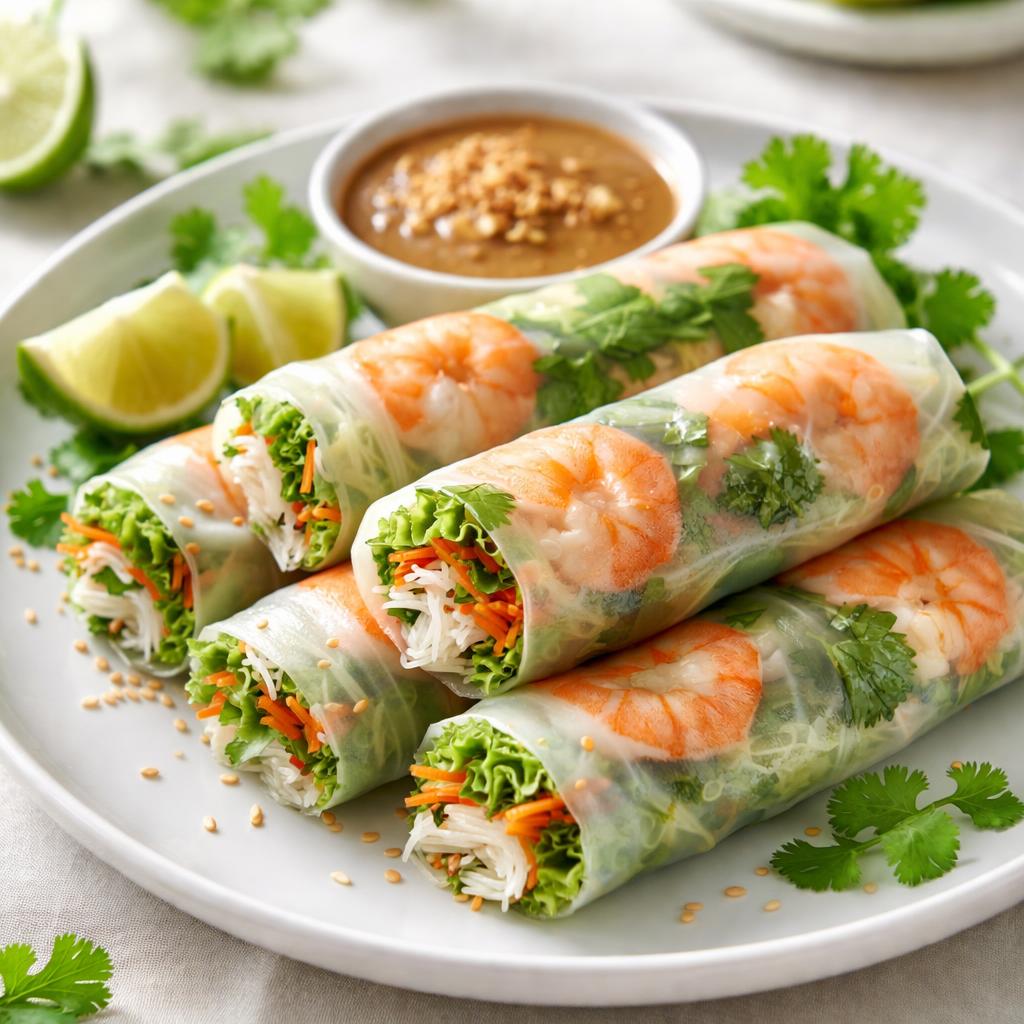
Spring Roll
A refreshing appetizer combining thin rice wrappers with colorful fresh fillings.
What is a Spring Roll?
Spring rolls are a dish made by wrapping a variety of fresh or cooked ingredients, such as vegetables, proteins, noodles, and sometimes herbs, in a thin, translucent rice paper wrapper. They are believed to have originated in East Asia, with Chinese, Vietnamese, and Thai cuisines offering popular variations. Modern spring rolls can be customized with endless ingredient options, making them highly versatile.
The taste of a spring roll depends largely on its fillings, ranging from crisp and refreshing vegetables to savory cooked proteins. The texture is often a balance between the tender chew of the rice wrapper and the crunch of fresh vegetables. They are typically served with dipping sauces like hoisin, peanut, or chili for an extra flavor kick.
Spring rolls are low in calories and provide a nutritional boost when packed with fresh vegetables and lean proteins. They are a great source of vitamins such as A and C, as well as fiber. The nutrient profile can be enhanced by adding diverse fillings like tofu, shrimp, or avocado for healthy fats and protein.
Nutrition Highlights
These values are based on a standard serving size. Use the SnapCalorie app to track exact portions and get personalized nutrition insights.

Smart Nutrition Tracking with SnapCalorie

Health Benefits of Spring Rolls
Supports Weight Management
Spring rolls are low in calories and fat, making them an excellent choice for a light yet satisfying snack or meal. Incorporating plenty of vegetables can increase satiety while keeping calorie counts low.
- Rich in Fiber
- Rich in Low Calories
Boosts Immunity
With fillings like carrots, herbs, and bell peppers, spring rolls are rich in Vitamin C and antioxidants, which support a healthy immune system.
- Rich in Vitamin C
- Rich in Antioxidants
Improves Digestive Health
Thanks to their fiber-rich vegetable content, spring rolls promote healthy digestion and help maintain a balanced gut microbiome.
- Rich in Fiber
- Rich in Water Content
Healthy Skin Support
The inclusion of Vitamin A from ingredients like carrots and leafy greens helps promote skin health and repair.
- Rich in Vitamin A
- Rich in Beta-Carotene
Diet Compatibility
Is Spring Roll suitable for your diet? Here's what you need to know:
Compare Spring Roll to Similar Foods
See how Spring Roll stacks up against other popular foods:
🍽️ How to Enjoy Spring Rolls
Breakfast
Create breakfast-themed rolls with eggs, avocado, and spinach wrapped in rice paper.
Tip: Pair with a light yogurt or fruit-based dipping sauce.
Lunch
Load your roll with shrimp, vermicelli, and fresh julienned vegetables.
Tip: Serve with a tangy peanut or hoisin dipping sauce for extra flavor.
Dinner
Make heartier rolls with grilled chicken, cucumber, and cilantro.
Tip: Pair with a side soup to create a filling meal.
Snack
Stuff with colorful raw veggies like bell peppers, carrots, and mango for a quick bite.
Tip: Keep the dipping sauce light to maintain the roll's healthy profile.
✅ The Bottom Line
Spring rolls are a nutrient-dense, low-calorie option that can be customized to suit various dietary preferences. Filled with fresh vegetables, lean protein, and served with flavorful dipping sauces, they provide vitamins, fiber, and a delightful eating experience.
Perfect for all kinds of meals or as an on-the-go snack, spring rolls are a versatile dish that adapts to your diet and cravings. Experiment with different fillings and sauces to make them a staple in your weekly meals.
Data Sources & Scientific References
Our nutrition data comes from trusted, authoritative sources to ensure accuracy and reliability.
- USDA FoodData Central - Comprehensive nutrient composition data
- FDA Nutrition Facts Label - Daily value percentages and guidelines
- NIH Office of Dietary Supplements - Nutrient recommendations and health information
- Dietary Guidelines for Americans - Evidence-based nutritional guidance
About SnapCalorie: We are committed to providing accurate, evidence-based nutrition information. Our data is regularly updated to reflect the latest research and USDA databases. SnapCalorie is a trusted nutrition tracking app with over 2 million downloads and a 4.8/5 star rating.


