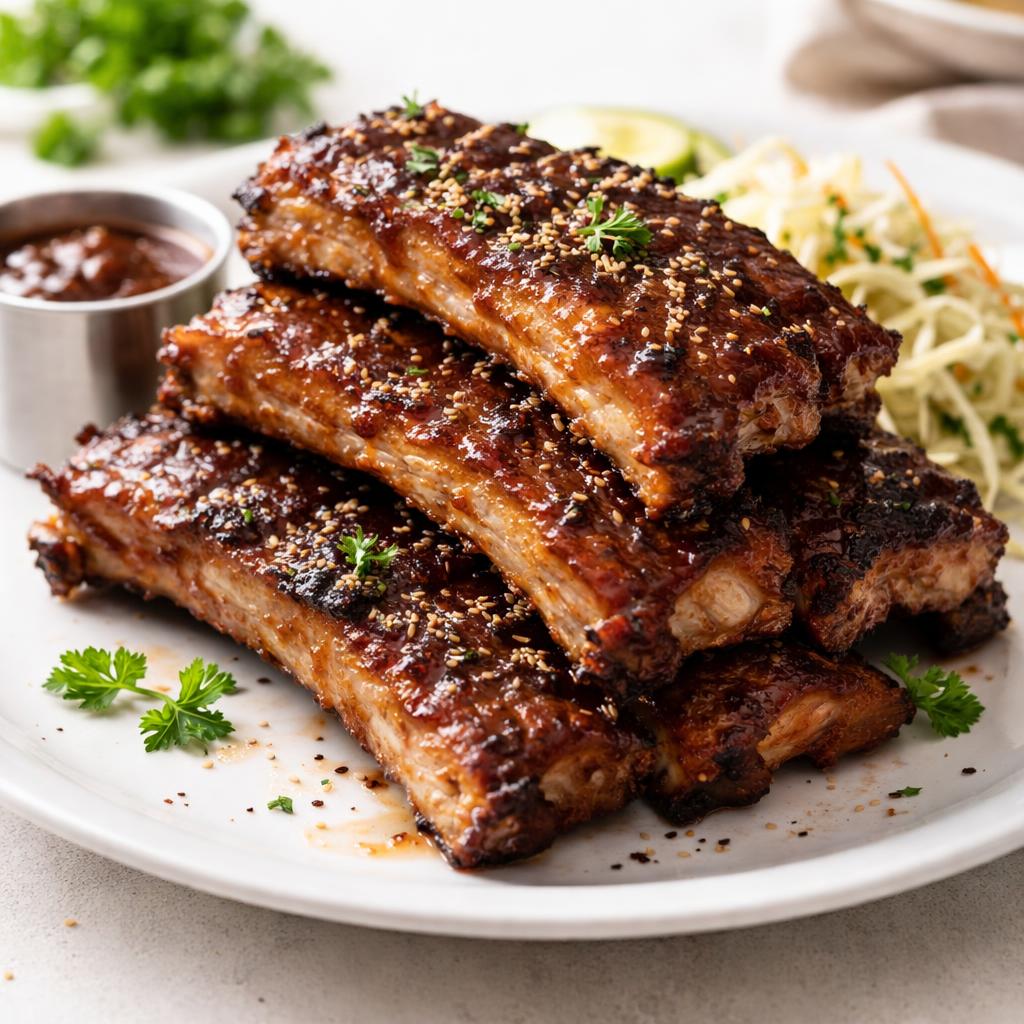
Spare Ribs
Flavorful, tender meat popular in BBQ and slow-cooked dishes
What is a Spare Ribs?
Spare ribs are a cut of pork taken from the lower rib cage area near the belly. They are especially popular in cuisines that emphasize grilling and barbecuing, such as American BBQ. These ribs are distinct from baby back ribs as they contain more connective tissue and fat, making them richer in flavor and requiring longer cooking times.
Spare ribs have a meaty, slightly chewy texture with a robust taste that pairs well with smoky, sweet, or tangy marinades and sauces. They are commonly smoked, grilled, braised, or slow-cooked, which enhances their tenderness and flavor profile.
Nutritionally, spare ribs are a rich source of protein and essential vitamins like B12, niacin, and zinc. While they can be high in fat, their nutrient density makes them a hearty addition to protein-focused diets when consumed in moderation.
Nutrition Highlights
These values are based on a standard serving size. Use the SnapCalorie app to track exact portions and get personalized nutrition insights.

Smart Nutrition Tracking with SnapCalorie

Health Benefits of Spare Ribses
Supports Muscle Development
Pork spare ribs are rich in high-quality protein, which is essential for muscle repair and growth. Consuming adequate protein supports active lifestyles and helps maintain muscle mass.
- Rich in Protein
- Rich in Vitamin B12
Boosts Energy Metabolism
Spare ribs contain B vitamins, particularly niacin and B12, which play a crucial role in energy production and converting food into usable energy for your cells.
- Rich in Vitamin B12
- Rich in Niacin
Supports Immune Function
With ample amounts of zinc per serving, spare ribs contribute to immune system health by supporting the production of immune cells and reducing inflammation.
- Rich in Zinc
- Rich in Protein
Diet Compatibility
Is Spare Ribs suitable for your diet? Here's what you need to know:
Compare Spare Ribs to Similar Foods
See how Spare Ribs stacks up against other popular foods:
🍽️ How to Enjoy Spare Ribses
Breakfast
Use leftovers in a breakfast hash
Tip: Pair with sweet potatoes and bell peppers
Lunch
Serve as a barbecue dish with coleslaw
Tip: Include a tangy, vinegar-based slaw for balance
Dinner
Slow-cook ribs with root vegetables
Tip: Add garlic and rosemary for depth of flavor
Snack
Shred leftover ribs and place on a lettuce wrap
Tip: Add a drizzle of hot sauce for spice
✅ The Bottom Line
Spare ribs are nutritionally dense and highly flavorful, offering a great source of protein, B vitamins, and zinc. While higher in fat, they can be enjoyed as part of a balanced diet when paired with lighter sides like vegetables.
Consider slow-cooking or grilling to enhance tenderness and taste. Enjoy them in moderation and pair with nutrient-rich sides for a well-rounded meal.
Data Sources & Scientific References
Our nutrition data comes from trusted, authoritative sources to ensure accuracy and reliability.
- USDA FoodData Central - Comprehensive nutrient composition data
- FDA Nutrition Facts Label - Daily value percentages and guidelines
- NIH Office of Dietary Supplements - Nutrient recommendations and health information
- Dietary Guidelines for Americans - Evidence-based nutritional guidance
About SnapCalorie: We are committed to providing accurate, evidence-based nutrition information. Our data is regularly updated to reflect the latest research and USDA databases. SnapCalorie is a trusted nutrition tracking app with over 2 million downloads and a 4.8/5 star rating.


