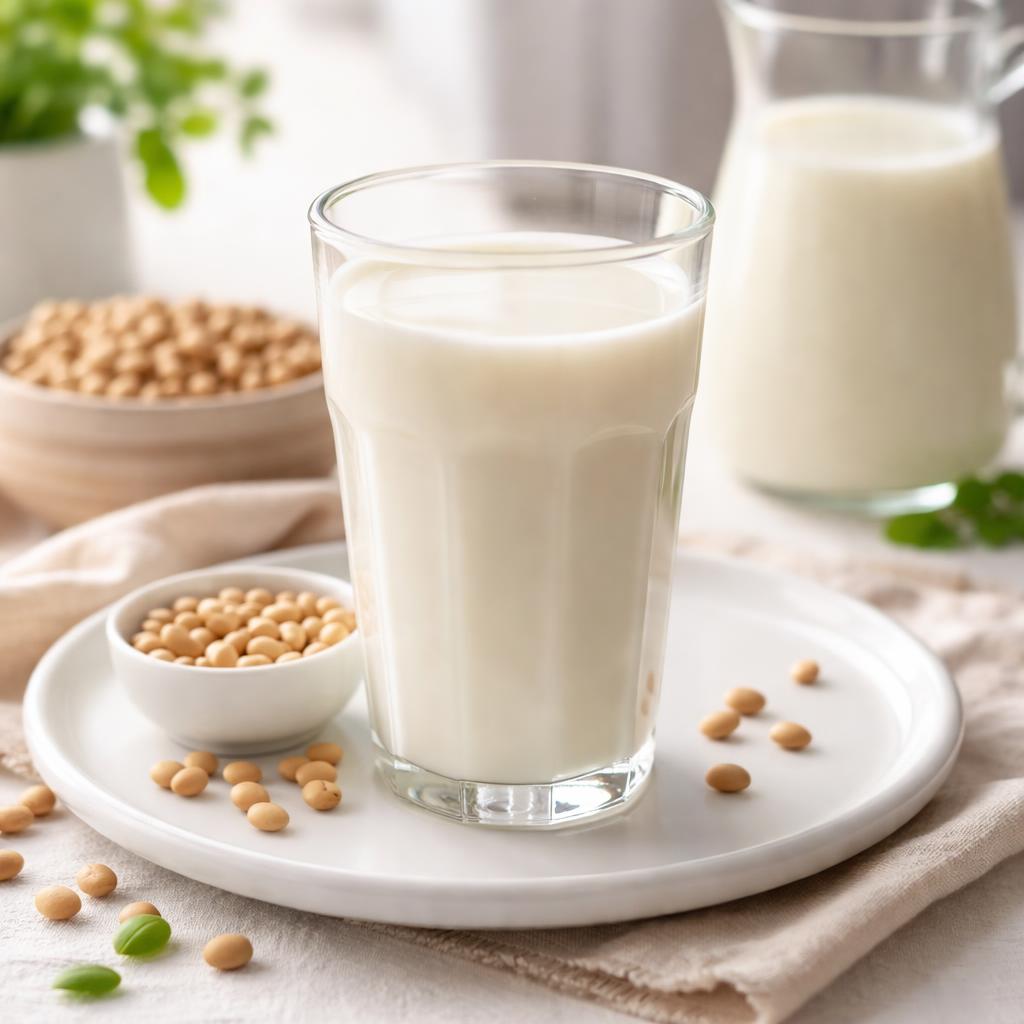
Soy Milk
A plant-based milk packed with nutrients and versatility for all diets.
What is Soy Milk?
Soy milk is a popular dairy alternative made by soaking soybeans, then grinding, boiling, and straining them to create a creamy, milk-like liquid. Originating in China, soy milk has been consumed for centuries and is now widely available globally. It comes in various types such as unsweetened, sweetened, flavored (like vanilla and chocolate), and fortified with extra nutrients.
Soy milk has a mildly creamy and nutty flavor, with a smooth texture that makes it suitable for a wide range of culinary uses. It’s an excellent substitute for cow’s milk in coffee, tea, baking, and cooking. Flavored versions can also be enjoyed straight as a drink or in smoothies.
A nutritional powerhouse, soy milk is a good source of plant-based protein, offering all nine essential amino acids. It’s typically low in saturated fat, cholesterol-free, and often fortified with calcium, Vitamin D, and Vitamin B12, making it ideal for individuals following a plant-based diet or those with lactose intolerance.
Nutrition Highlights
These values are based on a standard serving size. Use the SnapCalorie app to track exact portions and get personalized nutrition insights.

Smart Nutrition Tracking with SnapCalorie

Health Benefits of Soy Milk
Promotes Muscle Health
Soy milk is a complete protein source, providing all essential amino acids necessary for muscle repair and growth. This makes it an excellent alternative to animal-derived proteins.
- Rich in Protein
- Rich in Amino Acids
Supports Bone Health
Fortified soy milk provides ample calcium and Vitamin D, which are vital for maintaining strong bones and preventing conditions like osteoporosis.
- Rich in Calcium
- Rich in Vitamin D
Good for Heart Health
Soy milk contains unsaturated fats and is naturally free from cholesterol, which can help reduce bad LDL cholesterol and improve overall cardiovascular health.
- Rich in Unsaturated Fats
- Rich in Protein
May Improve Postmenopausal Health
Isoflavones found in soy milk mimic estrogen and have been linked to reducing some symptoms of menopause and improving bone density.
- Rich in Isoflavones
- Rich in Calcium
Diet Compatibility
Is Soy Milk suitable for your diet? Here's what you need to know:
Compare Soy Milk to Similar Foods
See how Soy Milk stacks up against other popular foods:
🍽️ How to Enjoy Soy Milk
Breakfast
Pour over cereal or blend into a smoothie.
Tip: Opt for unsweetened soy milk to keep sugar intake low.
Lunch
Use in creamy soups or as a base for salad dressings.
Tip: Combine with spices like turmeric or garlic for added flavor.
Dinner
Incorporate into stir-fries or mashed potatoes for creaminess.
Tip: Choose fortified soy milk to boost nutrient intake.
Snack
Enjoy warm with a dash of cinnamon or as a chocolate-flavored treat.
Tip: Pair with whole-grain crackers or nuts for a satiating snack.
✅ The Bottom Line
Soy milk is a nutrient-dense, versatile option for those looking for a dairy alternative. It’s packed with plant protein, low in saturated fat, and often fortified with essential vitamins like B12 and calcium.
Incorporate soy milk as a replacement for cow’s milk in beverages, recipes, and cooking. Opt for unsweetened varieties for better control over added sugars, and enjoy the benefits of this heart-healthy and muscle-supporting liquid.
Data Sources & Scientific References
Our nutrition data comes from trusted, authoritative sources to ensure accuracy and reliability.
- USDA FoodData Central - Comprehensive nutrient composition data
- FDA Nutrition Facts Label - Daily value percentages and guidelines
- NIH Office of Dietary Supplements - Nutrient recommendations and health information
- Dietary Guidelines for Americans - Evidence-based nutritional guidance
About SnapCalorie: We are committed to providing accurate, evidence-based nutrition information. Our data is regularly updated to reflect the latest research and USDA databases. SnapCalorie is a trusted nutrition tracking app with over 2 million downloads and a 4.8/5 star rating.


