Shredded Vegetables
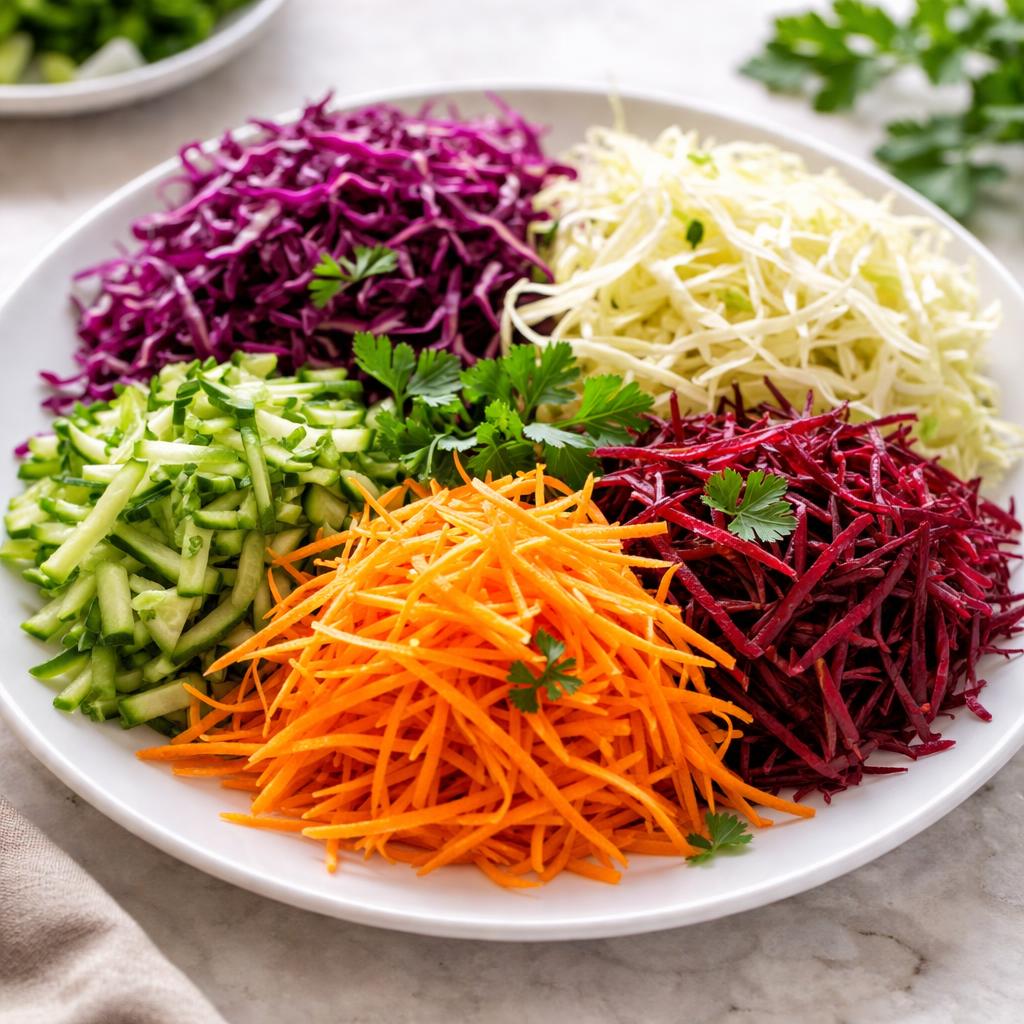
A colorful mix of finely shredded vegetables, perfect for boosting meals with fiber, vitamins, and crunch.
What is a Shredded Vegetables?
Shredded vegetables typically refer to finely grated or julienned items like carrots, cabbage, or zucchini. This technique originated to make raw vegetables easier to eat and incorporate into recipes, used globally in dishes like slaws, stir-fries, and salads. Popular combinations include colorful carrots, vibrant red cabbage, and fresh green zucchini.
The taste of shredded vegetables ranges from mildly sweet (carrots) to earthy (cabbage) to slightly bitter (zucchini). The texture is light and crisp when raw but softens beautifully when cooked for stir-fries or stews. They can be added raw to salads or wraps and cooked in savory dishes for added fiber and bulk.
From a nutritional standpoint, shredded vegetables are rich in fiber, vitamins like Vitamin A and C, and minerals such as potassium. Low in calories, these vegetables make excellent additions to meals for those aiming to boost their daily vegetable intake while keeping energy consumption controlled.
Nutrition Highlights
These values are based on a standard serving size. Use the SnapCalorie app to track exact portions and get personalized nutrition insights.

Smart Nutrition Tracking with SnapCalorie

Health Benefits of Shredded Vegetableses
Supports Digestive Health
High fiber content helps maintain a healthy digestive system, improves bowel regularity, and feeds beneficial gut bacteria.
- Rich in Fiber
Boosts Skin Health
Rich in Vitamin A, shredded vegetables like carrots contribute to maintaining healthy skin, eyesight, and cell regeneration.
- Rich in Vitamin A
- Rich in Antioxidants
Strengthens Immunity
Packed with vitamin C, shredded vegetables such as cabbage and zucchini assist in immune function and helping the body fight free radicals.
- Rich in Vitamin C
Aids in Weight Management
Low calorie yet fiber-rich, these vegetables provide satiety without adding significant caloric load, supporting weight control goals.
- Rich in Fiber
- Rich in Low Calories
Diet Compatibility
Is Shredded Vegetables suitable for your diet? Here's what you need to know:
Compare Shredded Vegetables to Similar Foods
See how Shredded Vegetables stacks up against other popular foods:
🍽️ How to Enjoy Shredded Vegetableses
Breakfast
Mix shredded carrots and zucchini into morning omelets
Tip: Add some herbs and spices for flavor enhancement
Lunch
Use as a base for a vibrant vegetable wrap or tacos
Tip: Pair with hummus or avocado for creaminess
Dinner
Sauté with garlic and olive oil as a nutrient-packed side dish
Tip: Combine multiple vegetables for a colorful presentation
Snack
Create a fresh, crunchy slaw topped with lemon juice
Tip: Season lightly to preserve their natural freshness
✅ The Bottom Line
Shredded vegetables are versatile, nutrient-dense, and low-calorie, making them excellent for a variety of dishes. Packed with Vitamin A, Vitamin C, fiber, and potassium, they support digestion, immunity, skin health, and weight management.
Incorporate shredded vegetables into your meals by adding them raw to salads or wraps, using them in cooked dishes like stir-fries, or as creative sides. With their low carb content and high fiber, they fit well into most diets, providing variety and nutrition to every plate.
Data Sources & Scientific References
Our nutrition data comes from trusted, authoritative sources to ensure accuracy and reliability.
- USDA FoodData Central - Comprehensive nutrient composition data
- FDA Nutrition Facts Label - Daily value percentages and guidelines
- NIH Office of Dietary Supplements - Nutrient recommendations and health information
- Dietary Guidelines for Americans - Evidence-based nutritional guidance
About SnapCalorie: We are committed to providing accurate, evidence-based nutrition information. Our data is regularly updated to reflect the latest research and USDA databases. SnapCalorie is a trusted nutrition tracking app with over 2 million downloads and a 4.8/5 star rating.


