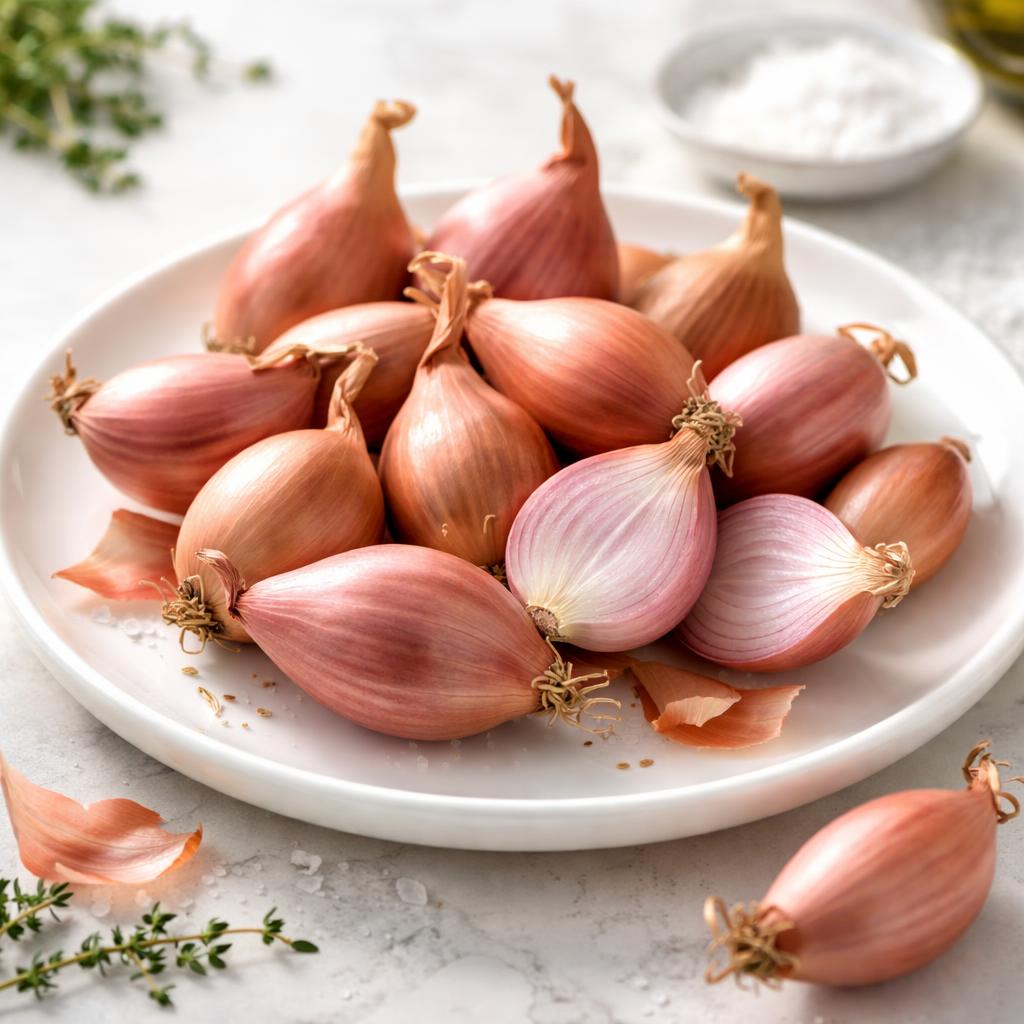
Shallots
A small, flavorful onion alternative packed with antioxidants.
What is a Shallots?
Shallots are a type of allium vegetable, closely related to onions, garlic, and leeks. They are native to Central and Southwest Asia and are now cultivated worldwide. Shallots are smaller than onions, with a thin, papery skin in shades of brown, red, or gray, and they grow in clusters similar to garlic.
With a delicate, mild, and slightly sweet flavor, shallots add depth to both raw and cooked dishes. Their texture is crisp when raw and tender once cooked, making them versatile for dressings, sautés, and even garnishes.
Shallots are nutrient-dense despite their small size. They provide fiber, vitamins like B6 and C, and minerals such as potassium and manganese. Additionally, they are rich in antioxidants like quercetin and allicin, compounds known for their anti-inflammatory properties.
Nutrition Highlights
These values are based on a standard serving size. Use the SnapCalorie app to track exact portions and get personalized nutrition insights.

Smart Nutrition Tracking with SnapCalorie

Health Benefits of Shallotses
Supports Immune Function
Shallots provide vitamin C and antioxidants like quercetin that help bolster immune defenses by reducing oxidative stress in the body.
- Rich in Vitamin C
- Rich in Quercetin
Promotes Heart Health
Rich in potassium and compounds like allicin, shallots help regulate blood pressure and may lower LDL cholesterol, promoting cardiovascular health.
- Rich in Allicin
- Rich in Potassium
Helps Reduce Inflammation
Antioxidants such as quercetin and sulfur compounds in shallots help reduce inflammation, which is linked to chronic diseases like arthritis.
- Rich in Quercetin
- Rich in Sulfur Compounds
Aids Digestive Health
The fiber content in shallots supports gut health by promoting regularity and feeding beneficial gut bacteria.
- Rich in Fiber
- Rich in Prebiotics
Diet Compatibility
Is Shallots suitable for your diet? Here's what you need to know:
Compare Shallots to Similar Foods
See how Shallots stacks up against other popular foods:
🍽️ How to Enjoy Shallotses
Breakfast
Dice finely into scrambled eggs or frittatas.
Tip: Sauté to release sweet and aromatic flavors.
Lunch
Add raw slices to vinaigrettes or top salads.
Tip: Balance sharpness with a touch of citrus juice.
Dinner
Caramelize and use in sauces, soups, or stews.
Tip: Cook on low heat to bring out natural sweetness.
Snack
Use fried shallots as a crunchy topping for dishes.
Tip: Season with a pinch of salt for extra flavor.
✅ The Bottom Line
Shallots are a nutrient-rich, low-calorie allium vegetable that lends a mild, sweet flavor to diverse dishes. Packed with antioxidants and essential vitamins, they support immune health and reduce inflammation.
Incorporate shallots into your diet to add both flavor and nutrition. Whether raw in salads or caramelized in savory recipes, their versatility makes them a staple for home cooking.
Data Sources & Scientific References
Our nutrition data comes from trusted, authoritative sources to ensure accuracy and reliability.
- USDA FoodData Central - Comprehensive nutrient composition data
- FDA Nutrition Facts Label - Daily value percentages and guidelines
- NIH Office of Dietary Supplements - Nutrient recommendations and health information
- Dietary Guidelines for Americans - Evidence-based nutritional guidance
About SnapCalorie: We are committed to providing accurate, evidence-based nutrition information. Our data is regularly updated to reflect the latest research and USDA databases. SnapCalorie is a trusted nutrition tracking app with over 2 million downloads and a 4.8/5 star rating.


